Reviewed · DACHAU MEMORIAL VISITS
From Munich: Dachau Memorial Site Full-Day Tour
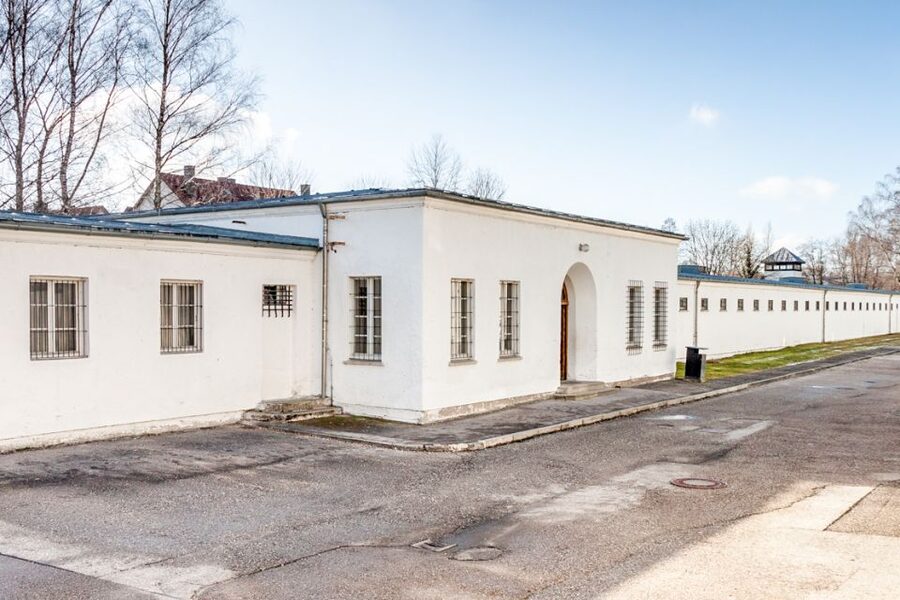
Dachau is one of those places that hits you fast, then stays with you long after you get back on the train. The reason this tour works so well is the structure: you travel in a group, then follow a Memorial-qualified guide through the camp’s most important areas. You’ll see Dachau’s entrance route and hear the story explained in context, from the camp’s opening in 1933 to the end of World War II.
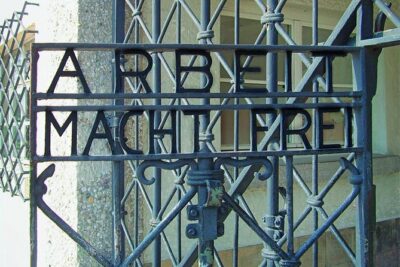
I love that the visit is guided by experts who can connect what you’re seeing to how the camp operated day to day. I also like the fact that you go inside key buildings rather than doing a quick walk-by, with stops that include the Jourhaus and the infamous gate area featuring Arbeit Macht Frei. Guides named in past groups include Marcin and Sam, and they’re consistently described as respectful and clear about what matters most.
One drawback to know up front: this is a graphic, emotionally heavy experience, and the tour is long. It runs about 4 hours inside the camp plus travel, and there’s no eating during the tour, so plan your water and snacks before you head in (and be ready for limited breaks).
Key things to know before you go
- Meet at Marienplatz, in front of Ludwig Beck: look for the white and blue umbrella and Dachau Tour signs
- About 4 hours inside the Memorial Site with a live English guide on the ground
- You pass the Jourhaus and the entrance gateway and keep moving through the camp’s main sites
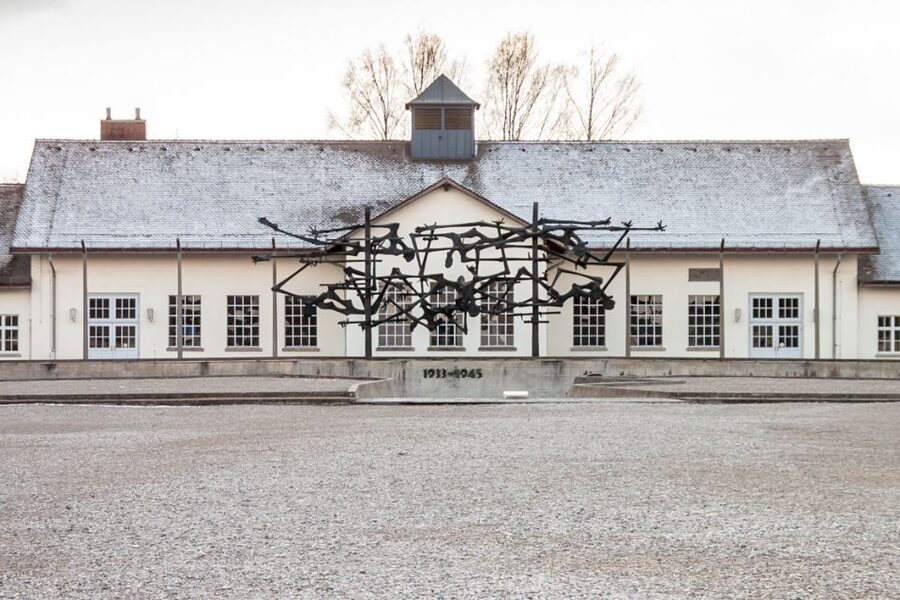
- Stops include Appellplatz, the Bunker, and Barrack X for the story behind camp life and punishment
- S.S. Training Facility (School of Terror) is part of the guided route, explained in context
- On-site rules matter: no video recording, and eating isn’t permitted during the tour
Getting from Munich to Dachau: the route you will actually use
You start in central Munich at Marienplatz, in front of Ludwig Beck (Marienplatz 11). The handoff is straightforward, because you’re told to look for a white and blue umbrella and tour signage. If you want this day to feel calm instead of rushed, show up a few minutes early, even if Munich public transit is usually easy.
From there, the plan is public transportation in a group: about 40 minutes by subway/metro, then around 10 minutes by bus/coach, before you reach the Memorial Site. After the visit, you head back the same way, arriving back at the meeting point in the late afternoon.
That transit routine is more than convenience. It matters because Dachau is not a casual detour. The tour is built around staying together so your guide can keep the historical flow intact without everyone arriving in different windows.
Other Dachau memorial visits from Munich:
- Dachau Concentration Camp Memorial Site Tour from Munich by Train
★ 4.5 · 5,637 reviews - From Munich: Dachau Memorial Site Day Tour
★ 4.8 · 2,723 reviews - From Munich: Dachau Memorial Site Half-Day Trip
★ 4.7 · 2,526 reviews
The 6-hour day plan: how the timing shapes the experience
This is a true day trip, not a short taste. Total time is about 6 hours, with roughly 2 hours of travel and the rest dedicated to the Memorial Site visit.
Inside the camp, you get a brief reset and then a longer guided walk, paced for comprehension. The schedule includes a break (about 15 minutes) and then a guided tour that runs for about 3 hours and 50 minutes. Expect the day to feel heavy because the subject matter is heavy, even if the guide keeps the pace organized.
Also note what you should bring into your headspace: you’ll be hearing about registration, daily operations, and the punishments prisoners faced, as well as the camp’s evolution through its three phases. That kind of storytelling takes time, and the schedule reflects that.
Jourhaus and the entrance gateway: why this comes first
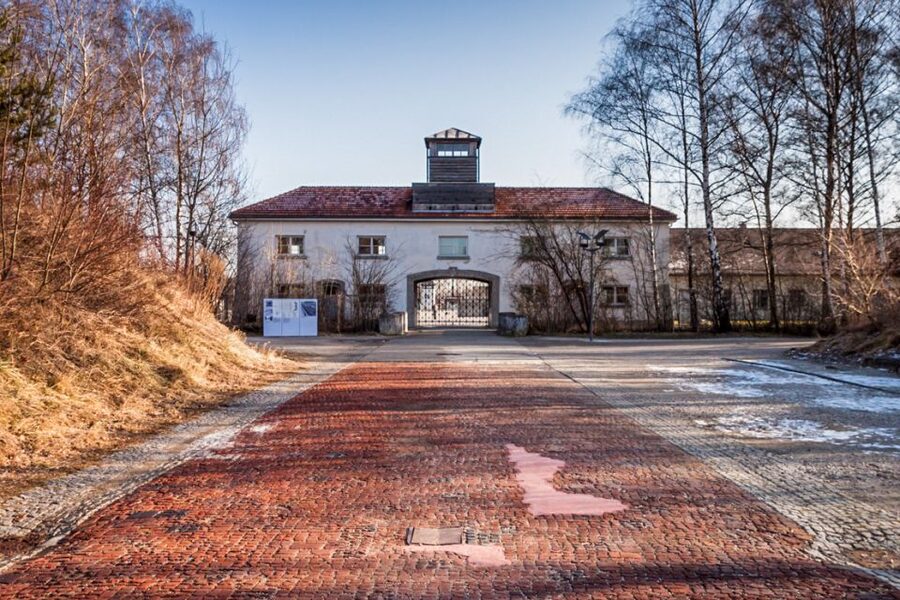
The tour’s early route is deliberate. You move through the camp’s entrance building and gateway area, and you pass the Jourhaus, where the infamous message Arbeit Macht Frei is associated with Nazi deception and terror. Seeing it in place, not as a headline, changes the way the words hit you.
What I like about starting here is that it grounds everything that follows. Once you’ve seen the entry point and the signs, the guide can explain why the Nazis designed the camp experience to control prisoners psychologically, not just physically.
You’ll also get guided context on the logic of the space, including how the entrance functioned as the threshold into a system of punishment. It sets up why later stops like Appellplatz, barracks, and the Bunker are more than buildings.
Dachau from 1933 to 1945: the camp’s phases in plain language
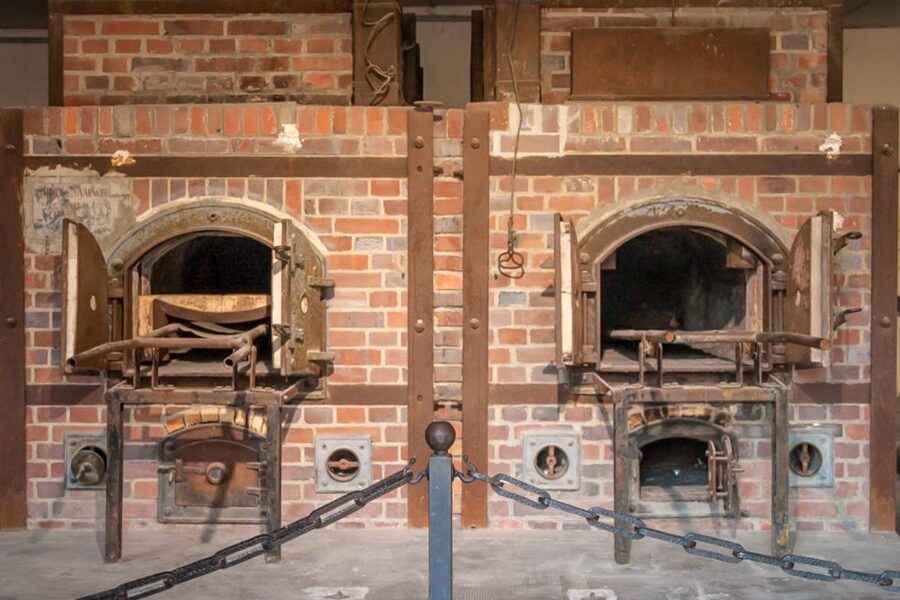
This is not just a photo tour of ruins. Your guide explains why Dachau was opened, who the first prisoners were, and how the camp’s purpose and operations changed over time. You’ll hear about Dachau as the first permanent concentration camp of the Nazi regime, and how it lasted for the full 12 years of Nazi rule, from 1933 through 1945.
The guide covers three phases of the camp, plus its evolution and development. That matters because people often assume a concentration camp was just one unchanging setup. A phased explanation helps you understand how terror was adapted and intensified as the regime’s needs changed.
In addition, you’ll get a sense of daily workings, from registration of new prisoners to the way trials and punishments were carried out. The tour is built to connect what you see on the ground with how the machinery of repression worked.
Also reviewed in and around Munich:
- From Munich: Neuschwanstein & Linderhof Castle Full-Day Trip
★ 4.5 · 12,494 reviews - Neuschwanstein & Linderhof Castle-Fairytale Day Tour from Munich
★ 4.5 · 7,275 reviews - Munich: Third Reich & WWII Walking Tour
★ 4.6 · 6,181 reviews - Neuschwanstein Castle Tour from Munich
★ 4.5 · 5,117 reviews
Appellplatz, Barrack X, and the Bunker: where the system shows itself
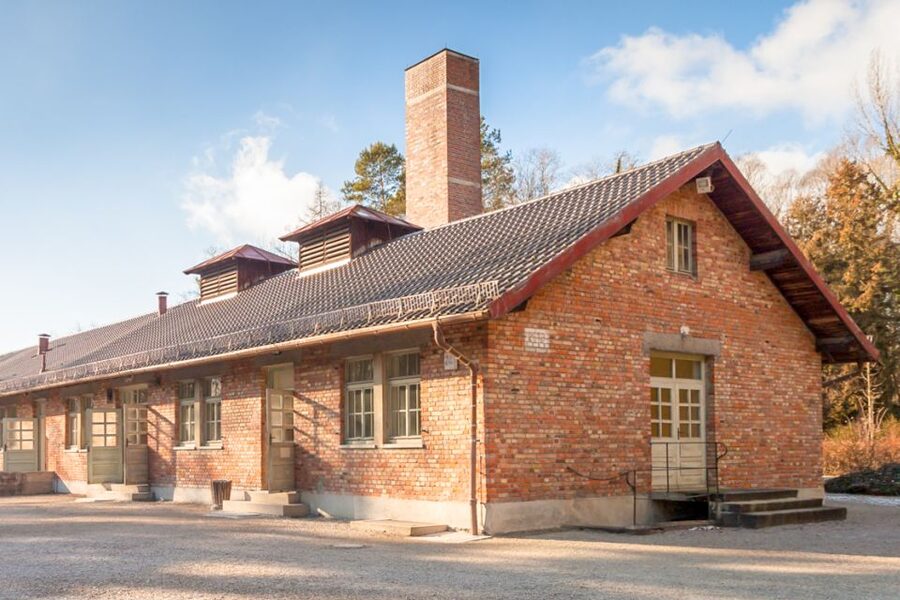
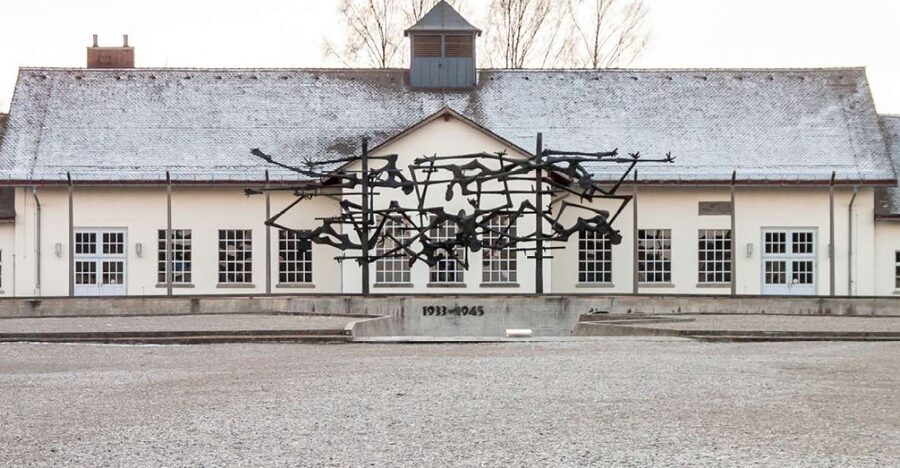
Once you move deeper into the camp, the big sites turn into markers for how the camp functioned. The route includes Appellplatz, the main assembly area, where the camp’s routine and control systems played out. You’ll also see barracks, including Barrack X, and you’ll visit the Bunker, which is described in the tour context as part of the camp’s punishment system.
The value here is not the shock factor. It’s the clarity. Your guide explains how these areas fit together as one operation, not separate scenes. One guide named in prior groups, Adam, was especially noted for pacing and for answering questions in a way that kept the group oriented while still allowing moments to look and absorb.
This is also where you’ll feel the emotional weight most strongly. The Bunker and punishment-related areas are where the story shifts from description to consequence. You may not be able to process everything in one pass, and that’s normal.
Inside the story of cruelty: S.S. Training Facility, School of Terror
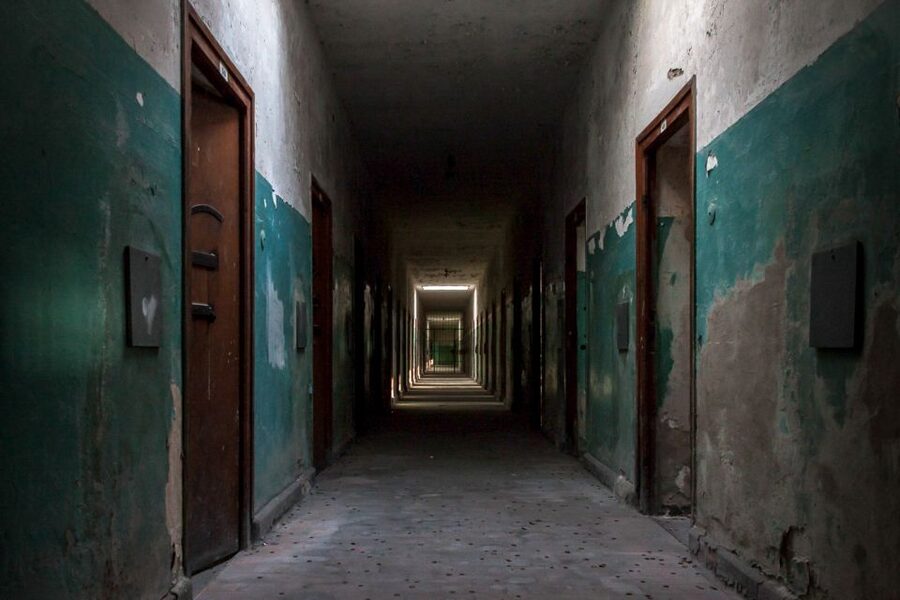
Another stop that gives the tour its sharp edge is the S.S. Training Facility, also known as the School of Terror. The guide frames this building so you understand it as part of the broader Nazi project, not only as a local prison setup.
Why it matters for you: it expands the story beyond prisoners and guards you can picture in your head. It shows how the regime treated brutality as something taught, systematized, and normalized.
Expect your guide to connect that facility to the camp’s other functions, including how punishment and coercion were carried out as routine practice. If you only visit for the main camp visuals, you miss that bigger picture. This tour helps you see it.
Memorial-qualified guiding: what makes the tour feel right, not just informative
A good guide can make a difficult place understandable without turning it into a lecture. That is exactly what many groups highlight about this experience: guides like Marcin, Sam, Adam, Hein, Keith, and Scott are repeatedly described as organized, respectful, and able to answer questions clearly.
You also get something practical: the guide keeps the group together and manages the walk so everyone follows the same route. In one set of comments, a small-group format was mentioned, with a guide coordinating for a group size of up to 14 people. That kind of structure matters because Dachau is not a place you want to navigate alone while your brain is absorbing difficult material.
Another theme from named guides: they often add human context. Adam was specifically described as sharing survivor stories and personal knowledge from learning directly through survivor accounts, and Keith was praised for bringing a real sense of why memorials like this still matter today.
One more tip you should take from this style of guiding: Adam encouraged people to read the text on site, not just look at images. That advice is simple, and it helps you slow down in the right places.
Timing, comfort, and what to bring for a tough day
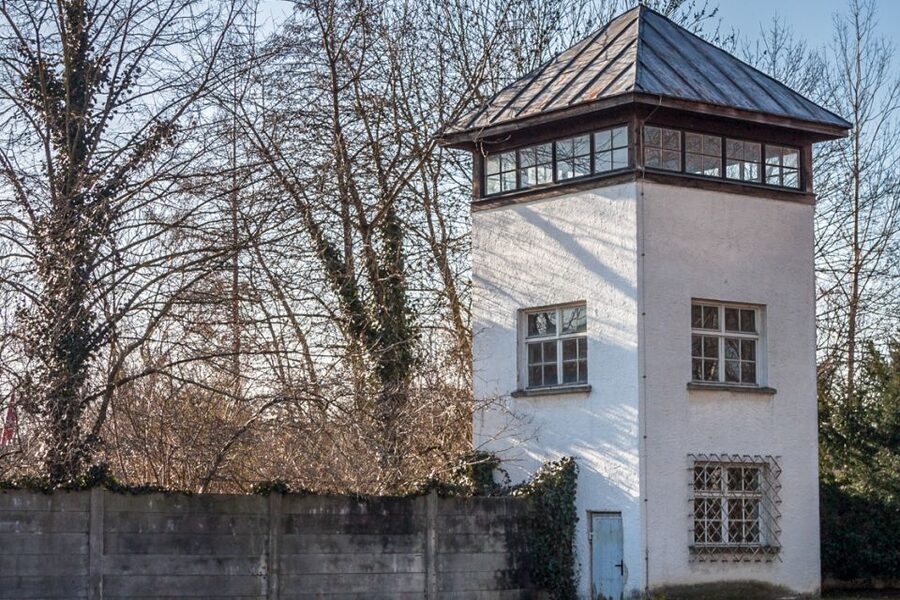
Your feet will do a lot of work here, so start with basics. Bring comfortable shoes and dress for weather, since you’ll be outdoors before and after the guided segments. Pack water, and even though there’s a stop for a break, keep hydration in mind for the full day.
Food rules are important. You can bring snacks, but it is not permitted to eat food while on tours at Dachau. The practical workaround is to eat a big breakfast and, if you need it, bring something to eat on the train segment. This keeps you from running into hunger at the wrong time, which can make a heavy day even harder.
Also watch the pacing of bathroom access. There’s a break included, but during the guided walk you will be moving between key buildings. One note from past groups emphasized that restroom use can be limited between buildings, so plan to use facilities at the available break windows.
Rules on site include: no smoking, no alcohol and drugs, and no video recording. Those limits are part of respecting the Memorial Site environment.
Price and value: is $51 a fair deal from Munich?
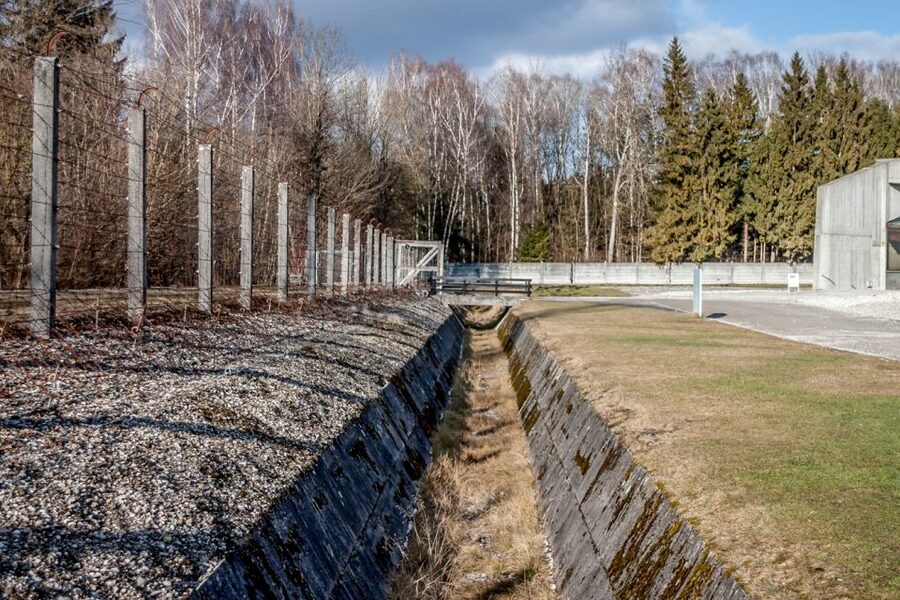
At $51 per person, the cost is not just paying for a bus ticket. You are paying for an organized day trip that includes the train fee, the bus fee, and a live English guide.
If you try to piece this together yourself, you’ll likely spend time coordinating transit and then still face the question of whether to guide yourself through a complex, emotionally loaded site. This tour gives you a guided route and a narrative thread, which is hard to replicate well on your own.
Also, your time inside the Memorial is a key value piece. With about 4 hours inside the camp, you’re not doing a rushed stop. You get the structure needed to understand the camp’s significance as the first permanent Nazi concentration camp, and you’re shown the major locations the story depends on.
Who this tour suits, and who should rethink the plan
This tour is a strong fit if you want your visit guided by Memorial-qualified explanations and you prefer a clear route rather than figuring out what to see next. It also works well for English speakers who want the story told in a focused way, since the tour is listed as English and runs on a fixed plan.
It may not fit you if you’re traveling with young kids. Children aged 13 or under are not permitted, and children aged 14 and over are only welcome if accompanied by parents who understand the graphic nature of the content, with proof of age possibly required. Memorial Site guidelines also indicate that some exhibits and themes are not suitable for those under 14.
It is also listed as not suitable for people with mobility impairments, not suitable for wheelchair users, and not suitable for people with respiratory issues. If any of those apply to you, you should think carefully about comfort and route demands before booking.
Finally, consider how you handle emotionally intense material. This is one of the darkest chapters of recent human history, and the tour format is designed to face it directly, with reflection and guided context, not avoidance.
Should you book this Dachau Memorial Site full-day tour?
If you want a focused visit that helps you understand Dachau through major sites like the Jourhaus, Appellplatz, Bunker, and Barrack X, and you value a Memorial-qualified English guide, then yes, I think you should book this. The price reflects the fact that you’re paying for transportation plus a guided narrative built for this specific place.
Book it especially if you feel uneasy trying to navigate alone while processing difficult content. This tour’s biggest strength is the guided structure, and that’s what turns a visit from a list of locations into a coherent, teachable experience.
Skip or rethink if you need more flexibility than a set route provides, if your group includes someone under the age threshold, or if mobility or respiratory needs make the tour unrealistic. In those cases, you might be better off choosing a different format that fits your constraints.
FAQ
How long is the Dachau Memorial Site full-day tour from Munich?
The tour lasts about 6 hours total, including about 4 hours visiting inside the camp and about 2 hours of travel time.
Where do I meet the guide in Munich?
Meet your guide on Marienplatz, in front of the department store Ludwig Beck (Marienplatz 11). Look for a white and blue umbrella and signs advertising the Dachau Tour.
What language is the tour in?
The live tour guide provides commentary in English.
Is this tour suitable for children?
Children aged 13 and under are not permitted. Children aged 14 and over are welcome if accompanied by parents who understand the graphic nature of the tour content, and proof of age may be required.
Are there any rules about food and recording on site?
Smoking is not allowed, and you cannot use alcohol or drugs. Video recording is not permitted, and it is not permitted to eat food while on tours at Dachau.
Is hotel pickup included?
No. Hotel pickup and drop-off are not included. The tour ends back at the meeting point.
Recently added around Munich
- München: Vegetarische Viktualienmarkt-Probiertour Deutsch★ 4.8 · 6 reviews
- Private Transfer from Munich to Vienna with 2 hours for sightseeing★ 4.5 · 6 reviews
- Munich Walking Quiz: Explore and Discover the City’s Highlights★ 5.0 · 7 reviews
- Walking Tour on Resistance to Nazism in Munich★ 5.0 · 8 reviews
- 2 hour Sights Guided E-Scooter Tour in Munich★ 4.0 · 6 reviews
- Private Transfer from Munich to Salzburg with 2 hours for sightseeing★ 4.5 · 13 reviews
- From Munich: Neuschwanstein Castle and Linderhof Private Tour★ 5.0 · 13 reviews
- Paul’s Private Tour Munich Highlights★ 5.0 · 3 reviews
Dachau Memorial Visits, compared.
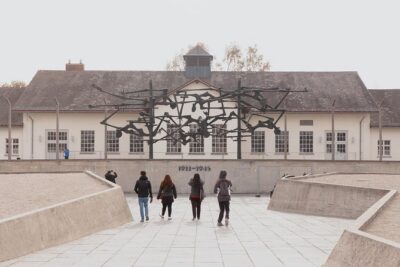
Dachau Concentration Camp Memorial Site Tour from Munich by Train
Read our review →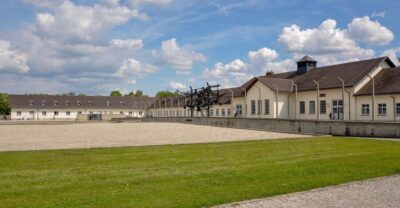
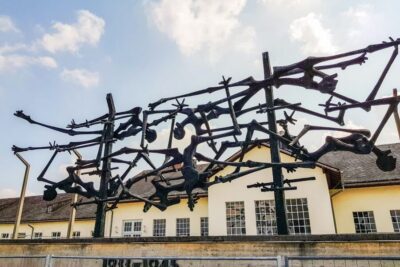
Dachau Concentration Camp Memorial Tour with Train from Munich
Read our review →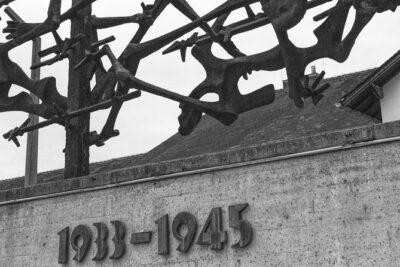
Early-Start Dachau Memorial Half-Day Tour from Munich
Read our review →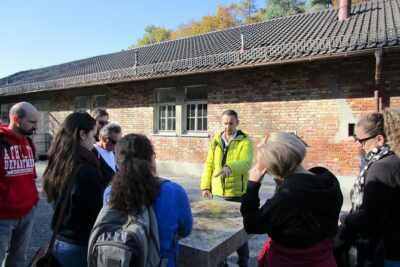
Guided Dachau Concentration Camp Memorial Site Tour with Train from Munich
Read our review →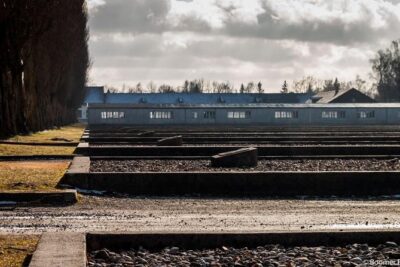
Full-Day Dachau Concentration Camp Memorial Site Tour from Munich
Read our review →
Dachau Small-Group Half-Day Tour from Munich By Train
Read our review →Browse the lists this tour appears in