Reviewed · THIRD REICH & WWII WALKING TOURS
Walking Tour on Resistance to Nazism in Munich
This walking tour is interesting because it takes you off the museum-only path and puts resistance in Nazi Germany right onto Munich sidewalks. You walk past places tied to power, censorship, and plots, then end at memorials for people who chose risk over obedience, step by step.
I love two things most. First, the pacing is friendly: it is a 2 hours 30 minutes route with brief talks at each location. Second, the plan keeps costs down, since the listed stops are set up with free admission. One possible drawback: the theme is heavy and the story moves fast, so if you prefer light sightseeing, you might need extra breaks.
Key highlights
- Short talks, clear themes at eight major resistance-related locations across central Munich
- Munich-specific resistance stories, from organized groups like the White Rose to single-person action like Georg Elser
- Art and propaganda, including Nazi attacks on what art could say and show
- Church, the Law T4 topic, and moral pushback, not just politics
- A route with a real sense of momentum, because the walk is planned from Odeonsplatz to Georg-Elser-Platz
- Guides who explain in a friendly, question-friendly way, with names you may hear like Laura, Maca, Javier, Jaime, or Julieta
Munich’s resistance walk: where you start, where you end, and how it moves
You meet at Odeonsplatz (Odeonspl., 80333 München) at 3:00 pm, and you finish at Georg-Elser-Platz (80799 München-Maxvorstadt). The route is designed to feel like a guided “tour of ideas” mapped onto actual streets, not a long slog where you stare at plaques.
You should expect a compact group, capped at 25 people. That matters because it makes it easier to hear the guide and ask questions, especially when the subject is sensitive and complicated. Also, this is a mobile-ticket style experience, so you can keep things simple on your phone.
Logistically, it is near public transportation and most people can participate. If you are tight on energy, this still helps: each stop is around 20 minutes, so you get built-in pauses even when the topic gets emotionally heavy. The whole story takes about 2 hours 30 minutes total, give or take.
Other Third Reich and WWII history walks in Munich:
- Munich: Third Reich & WWII Walking Tour
★ 4.6 · 6,181 reviews - Third Reich Walking Tour Munich
★ 4.5 · 4,291 reviews - Munich: Birthplace of the Third Reich Guided Walking Tour
★ 4.6 · 771 reviews
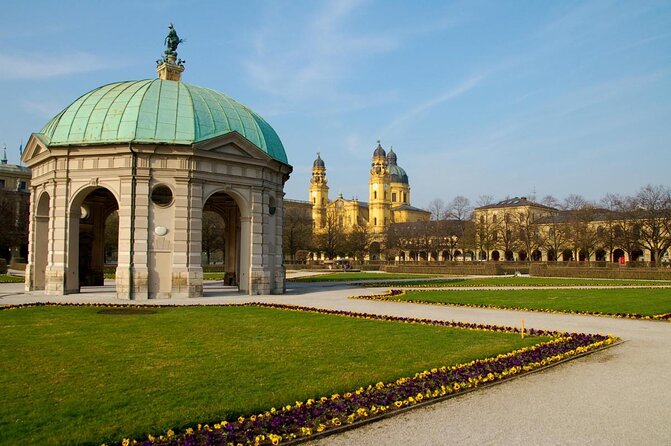
Stop 1 at Hofgarten: royalty, power, and the Nazi takeover mood
You begin at Hofgarten, and the talk starts with a blunt point: daily life shifted dramatically after the Nazi regime came to power. From here, the guide sets the stage with how the royal family lived during the Nazi period and what the political situation looked like around them.
This first stop works well because it grounds you in the idea that history is not only what happens in speeches or in documents. It is also how elites live, how systems operate, and how public life changes when a dictatorship tightens control.
If you like context, you will appreciate how this opening frames the rest of the route. The drawback is that the mood is already serious, so this is not the “warm-up and then sightseeing” kind of walk.
Stop 2 at Bayerische Staatskanzlei: political resistance and the Sopade thread
Next you head to Bayerische Staatskanzlei, where the focus turns to political parties resisting the Nazi regime. You also learn about the Sopade, which the guide connects to organized resistance and opposition to dictatorship.
This section is valuable because it gives you more than generic “people were brave” energy. You get a clearer sense that resistance was not only underground activism. It also came from political networks and parties trying to push back against a regime that wanted to control everything.
One practical note: the whole walk is timed, and every stop has a similar length. If you tend to ask lots of questions, plan to keep your questions short so you do not slow the group too much.
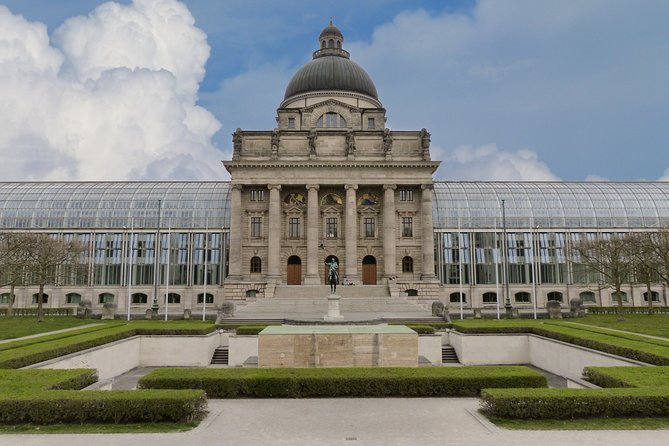
Stop 3 at Prinzregentenstraße: Luftwaffe Command Center and resistance within the militia
At Prinzregentenstraße, you learn about the building of the former Luftwaffe Command Center and discuss resistance within the militia itself. This is a strong reminder that dictatorship does not only face resistance from outsiders.
Hearing about resistance inside military structures can be uncomfortable, but it is also one of the most important parts of the tour. It challenges the simple story that resistance came from only civilians or only from the margins. Here, you see how difficult it could be to stand against orders when the system is built to punish disobedience.
This stop also tends to stick with people because the setting is so connected to power and war. You walk away thinking about how buildings can “hold” choices and fear at the same time.
More walking tours in Munich:
- Munich: Old Town & Viktualienmarkt City Walk in German
★ 4.7 · 2,304 reviews - Munich: Night Watchman Walking Tour
★ 4.7 · 2,092 reviews - Munich Ghosts and Spirits Evening Walking Tour
★ 5.0 · 1,900 reviews - Munich Old Town Walking Tour
★ 4.5 · 1,287 reviews
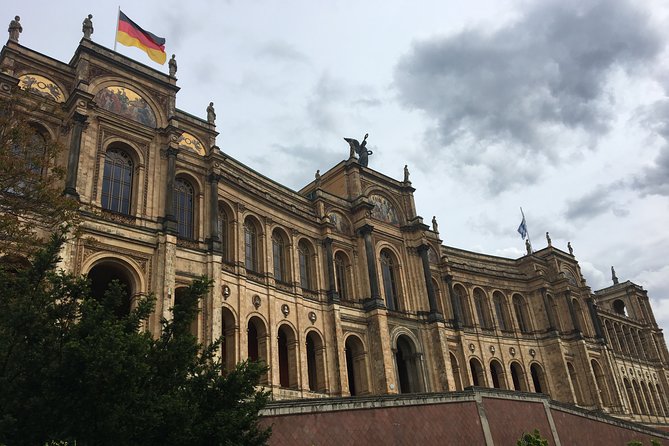
Stop 4 at the Bavarian National Museum: the Valkyrie Operation explained through place
You then move to the Bavarian National Museum, where the guide talks about what happened in the well-known Valkyrie Operation. Even if you already heard the name before, connecting it to a specific location and a guided explanation helps you understand the story as something rooted in people, timing, and risk.
This stop is a good midpoint check. You have already heard about political opposition, resistance within organized structures, and the role of elite power. Now the tour ties that tension into a high-profile plot connected to the dictatorship’s leadership.
If you want a tour that keeps momentum, this is one of the better points for it. If you want pure emotional stories only, this might feel more strategic than personal. You decide what you want from your history walk.
Stop 5 at Haus der Kunst: Degenerate Art, censorship, and propaganda control
At Haus der Kunst, the theme shifts to what Nazism tried to do to culture. You learn about the censorship of art, the exhibition of Degenerate Art, and how the press was managed through the regime’s propaganda apparatus.
This is one of the most practical stops, even though it is about politics. You start noticing the same mechanics today: control the messages, frame what is acceptable, and punish what challenges the worldview.
You will likely leave with a better eye for how museums, newspapers, and public communication can be weaponized. It is also a reminder that resistance is not only about fighting in obvious ways. Sometimes it is about defending the right to think, create, and speak.
One consideration: if you are sensitive to heavy moral themes, this stop can feel intense because it shows how systems attacked human expression. Still, it is also a key piece of understanding how dictatorship sustains itself.
Stop 6 at Ludwigskirche: the Church, Nazism, Law T4, and religious resistance
At Ludwigskirche, the tour focuses on the relationship between the Church and Nazism, including the topic of Law T4 and how religious communities resisted the regime. The guide keeps the story grounded in the question that matters: what do institutions do when the state demands obedience to cruelty?
This is one of those segments where the guide’s tone really matters. The best guides keep it fair and clear, balancing “what happened” with “why it mattered.” From the feedback about guides like Laura, Maca, Javier, Jaime, and Julieta, the consistent theme is friendly explanations and an ability to answer questions, which helps a lot at stops like this.
If you are coming into the walk mainly for names and dates, this stop may feel more idea-driven. That can be a good thing. It forces you to connect resistance to ethics, not just to events.
Stop 7 at DenkStatte Weisse Rose: the White Rose and the courage to refuse
Then you reach DenkStatte Weisse Rose, where you meet the White Rose, Munich’s best-known resistance group. This is often the emotional core of the route because it connects resistance to a clear group identity and a recognizable legacy.
What I like here is the way the guide treats the group as people with choices, not as a myth you read about later. When a tour does that well, you remember it longer than the architecture.
This is also a good moment to slow down. Even if the guide keeps moving, give yourself a second to absorb why a memorial exists here at all. The route has been setting up mechanisms of control, now it shows how resistance can work at human scale.
Stop 8 at Türkenstraße: Georg Elser Memorial and the idea of attentive resistance
Your final stop is the Georg Elser Memorial, reached from Türkenstraße. Here the guide discusses how Georg Elser was attentive against the life of the Führer himself, framing it as resistance through focus and action.
This ending matters because it reframes resistance again. Earlier stops cover organized opposition, military resistance, censorship, and public institutions. Here, you close with the idea that resistance can also be singular, careful, and driven by urgency.
If you want a strong finale, this one delivers. You start at a symbol of power and end with a reminder that dictatorship was never absolute. It always had cracks, and people noticed them.
How good is it for learning: what you will come away understanding
This walk is built around a simple learning arc. You see how the regime took control. Then you follow how different groups pushed back, through politics, culture, faith, and direct action.
I especially like the way the route covers multiple “fronts” at once. Many history tours focus only on one angle, like battles or famous trials. Here, you get a spread: royal life and politics, armed structures, artistic censorship, Church dynamics around Law T4, and resistance organizations like the White Rose.
You will also get better at reading Munich itself. After eight stops, you start noticing that buildings and institutions are not neutral backdrops. They are tied to decisions, and decisions have moral consequences.
What to know before you go (so it feels worth your time)
The price is $19.49 per person, which is pretty reasonable for a guided 2.5-hour walk that keeps entry costs low. You are paying mostly for interpretation and route design, not for museum tickets. And since the stops are listed with free admission, the value stays steady.
A mobile ticket is convenient, especially if you are moving through the city and do not want extra paper. The group size cap also helps, since it makes the talk easier to follow on the street.
The biggest “prep” item is mindset. This tour covers oppression, censorship, and resistance against terror. Dress comfortably for walking, and bring the kind of attention you would bring to a serious documentary.
If you like your history as a story you can walk through, this fits. If you want pure entertainment or casual photo stops, you might feel the tone is too heavy.
Should you book this Resistance to Nazism walking tour in Munich?
I think you should book it if you want a guided way to understand resistance beyond slogans. The route links real places to specific resistance themes, from political opposition and the Sopade to the White Rose and the Georg Elser Memorial. The pacing is short enough to stay focused, and the free-entry approach makes it good value at $19.49.
Skip it if you are looking for light, first-day orientation. This walk is serious, and it expects you to take the moral weight of the subject seriously too. If you want your Munich days to mix in history without the emotional heaviness, you might pair it with something quieter on another day.
FAQ
Where does the walking tour start and end?
The tour starts at Odeonsplatz (Odeonspl., 80333 München) and ends at Georg-Elser-Platz (80799 München-Maxvorstadt).
What time does the tour begin?
The scheduled start time is 3:00 pm.
How long is the tour?
The duration is about 2 hours 30 minutes.
How much does it cost?
The price is $19.49 per person.
Do I get a mobile ticket?
Yes, this experience uses a mobile ticket.
Is there a limit to group size?
Yes, the tour has a maximum of 25 people.
Can I cancel for a full refund?
Yes. You can cancel up to 24 hours in advance for a full refund. If you cancel less than 24 hours before the start time, the amount paid is not refunded.
Recently added around Munich
- München: Vegetarische Viktualienmarkt-Probiertour Deutsch★ 4.8 · 6 reviews
- Private Transfer from Munich to Vienna with 2 hours for sightseeing★ 4.5 · 6 reviews
- Munich Walking Quiz: Explore and Discover the City’s Highlights★ 5.0 · 7 reviews
- 2 hour Sights Guided E-Scooter Tour in Munich★ 4.0 · 6 reviews
- Private Transfer from Munich to Salzburg with 2 hours for sightseeing★ 4.5 · 13 reviews
- From Munich: Neuschwanstein Castle and Linderhof Private Tour★ 5.0 · 13 reviews
- Paul’s Private Tour Munich Highlights★ 5.0 · 3 reviews
- Ten Munich Old town Sights in a Private Express Walking Tour★ 5.0 · 9 reviews
Third Reich & WWII Walking Tours, compared.
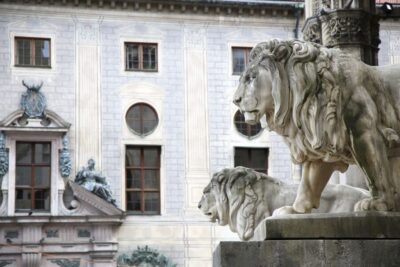
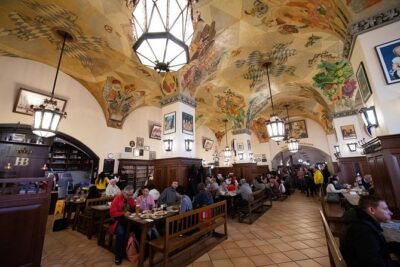

Birthplace of the Third Reich Guided Walking Tour
Read our review →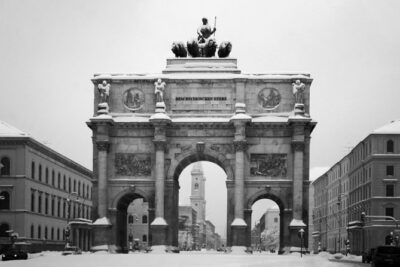
Munich World War II Sites Including Dachau Concentration Camp
Read our review →
Munich City Walking Tour, includes Third Reich & Viktualienmarkt
Read our review →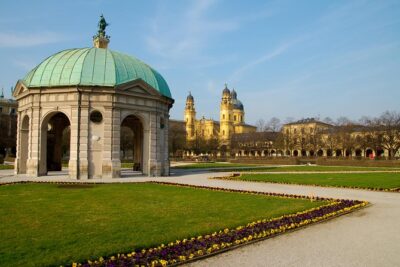
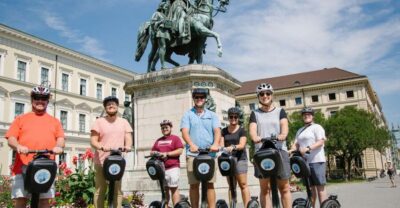
Munich 3-Hour Segway Tour: Nazi Munich & Royal Architecture
Read our review →
Dachau Concentration Camp Memorial Site And Third Reich Day Tour From Munich
Read our review →Browse the lists this tour appears in