Reviewed · HALF-DAY
Munich: Private Half-Day Guided Walking Tour
What makes this Munich tour interesting is how quickly it turns famous landmarks into real stories you can actually picture. You start in the Old City and walk through key chapters of Munich culture, from royal power to World War II history, all on foot with a live guide.
I love how the route threads together the classic must-sees in one smooth morning or afternoon plan. Marienplatz to Frauenkirche gives you an instant feel for the city’s scale and style, and the pacing is steady enough to take photos without feeling rushed.
One possible drawback: it is still a walking tour in a compact center, so if you want lots of sit-down time, you may find 4 hours a little tight. Also, no food or drinks are included, so plan a snack or pre-arrange a café stop when you finish.
Key highlights at a glance
- Private, hotel start and end so you do not waste time figuring out where to meet
- Bilingual local guide with strong history and architecture context
- Marienplatz and Viktualienmarkt to get the old-meets-daily-life Munich vibe
- Frauenkirche and other churches that make the skyline make sense
- Big-name sights plus harder stops tied to WWII, including Nazi-era remnants
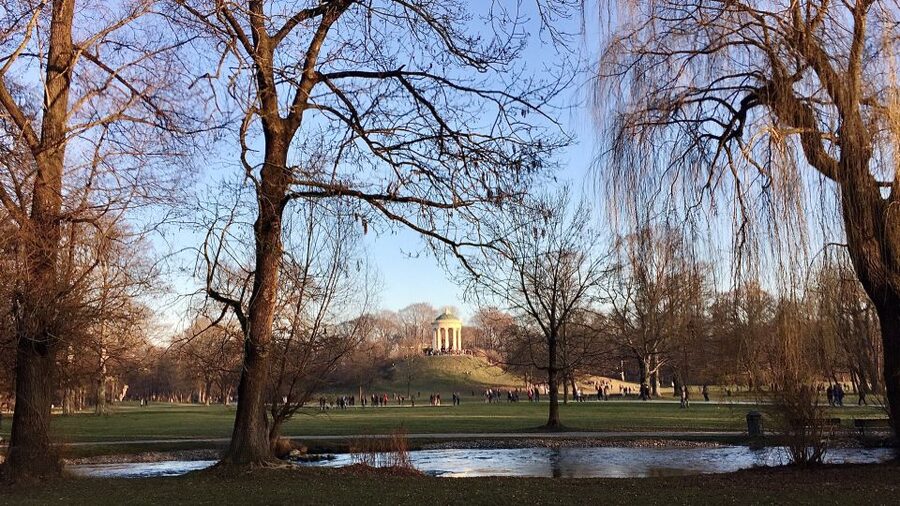
- Optional English Garden views if timing allows, including Monopterus area and tea house spots
A 4-hour private walk that keeps Munich organized in your head
This is a half-day tour, and that matters more than people think. Munich can sprawl, but the best parts are close enough that a guide can stitch them together into a clear storyline. In just 4 hours, you get the “why” behind what you are seeing, not only the “what.”
You are in a private group, which usually means you can move at a sensible pace and ask follow-up questions. If your group is larger, you get headsets so you can still hear instructions and explanations without leaning in.
You also do not have to plan the logistics much. The tour includes hotel start and end, plus pickup, so you meet your guide at your accommodation and finish there too.
Practical note: it is walking. You will spend time on sidewalks and in squares. If your mobility needs are tight, the tour is listed as wheelchair accessible, but you should still expect some outdoor time and uneven city surfaces.
More walking tours in Munich:
- Munich: Third Reich & WWII Walking Tour
★ 4.6 · 6,181 reviews - Third Reich Walking Tour Munich
★ 4.5 · 4,291 reviews - Munich: Old Town & Viktualienmarkt City Walk in German
★ 4.7 · 2,304 reviews
Start at Marienplatz and learn how Munich runs on public space
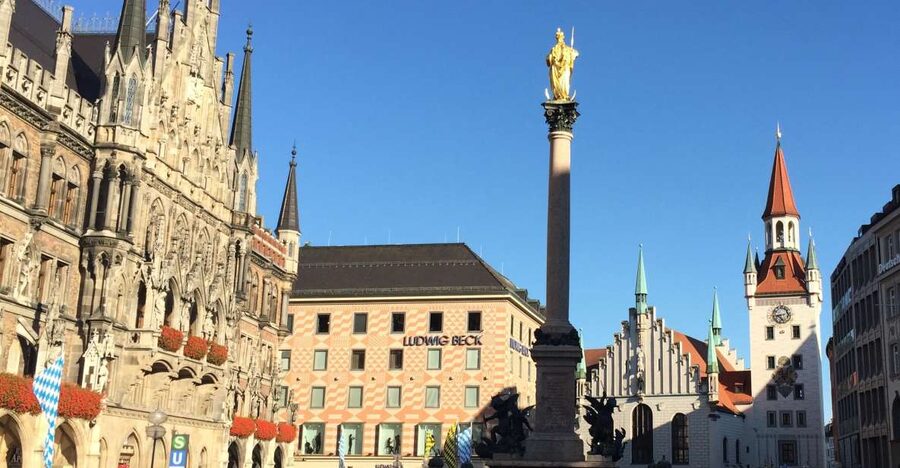
The tour kicks off in the center where Munich’s civic pride shows up every day: Marienplatz. From here, the Town Hall (Rathaus) and the surrounding square give you a strong sense of how the city organized itself around power, ceremony, and daily life.
Right after that, you shift toward Viktualienmarkt, Munich’s food market area. Even if you do not stop to buy anything, this is one of those places where you can instantly feel the city’s rhythm. It helps to see how “tourist Munich” and “real Munich” share the same streets.
Then you move to Church of Our Lady (Frauenkirche). This is not only a photo stop. With a good guide, it becomes a lesson in why Munich’s religious and civic architecture looks the way it does, and how those shapes affect the city’s skyline.
If your goal is to get your bearings fast, this opening stretch does the job.
Rathaus, Maximilian streets, and the palaces that explain the city’s taste
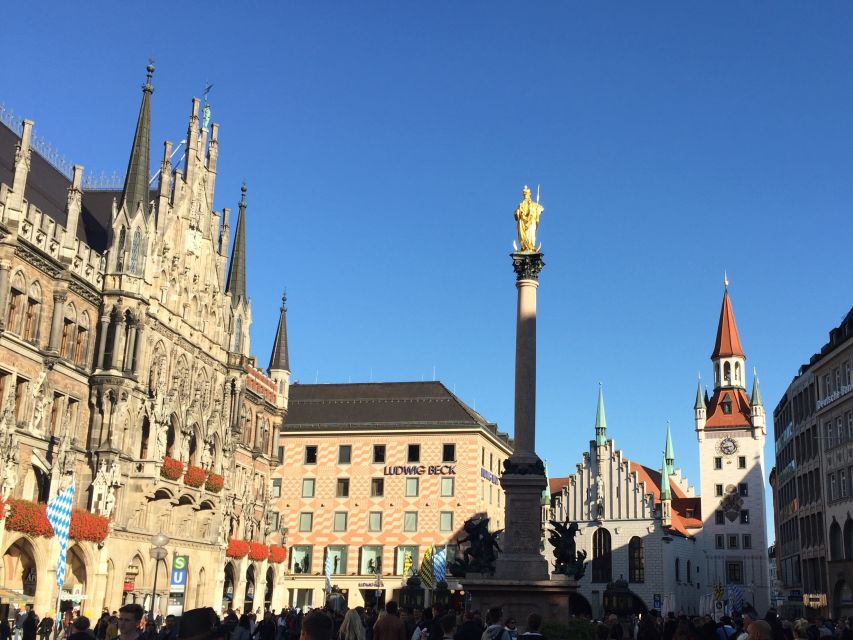
After the Old City core, the tour steps into the grander side of Munich with sights that signal wealth, rule, and style.
You will see Maximillians St. as part of the route, which helps connect the more decorative, official-looking parts of the city. Think of it as the bridge between market energy and royal architecture.
Then comes the Residenz Palace. This is where you start understanding Munich as a seat of power. Even if you only see key exterior views on a walking plan, the guide can explain how palaces functioned politically, not just aesthetically.
Following that, you visit Hofbräuhaus, a name that is famous far beyond Germany. Here’s the useful part: you are not just standing in front of a big beer hall. You get historical context for why places like this matter culturally, and how hospitality and public life fit into Munich’s story.
Churches, synagogues, and the architecture you might otherwise miss
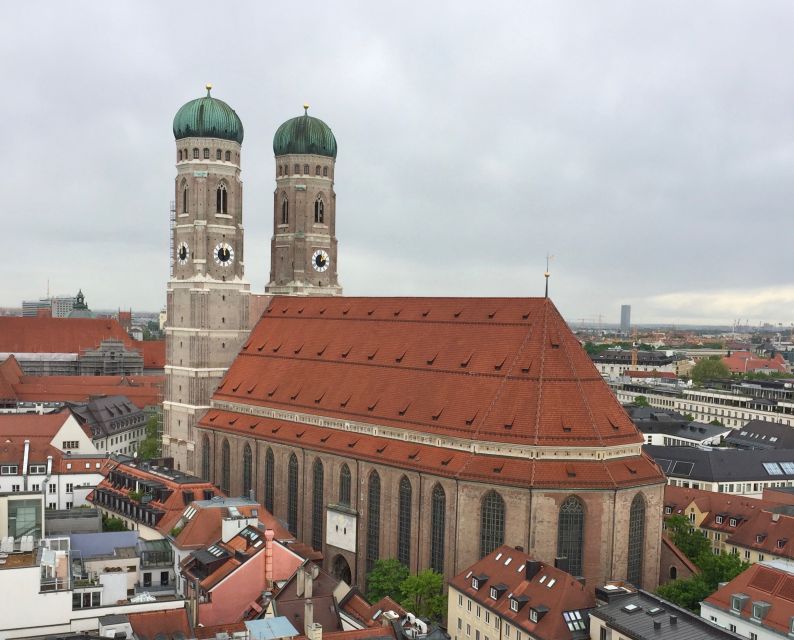
Munich has more than one kind of sacred space, and this tour uses that to broaden what you notice.
You will visit Frauenkirche early, then later encounter additional church stops including Asam’s Church. Each one offers a different architectural personality, and that contrast is a quick education in how Munich’s religious art and design evolved.
The tour also includes a visit connected to the city’s Jewish history, the Synagogue stop on the walking route. This is valuable because it shifts the story away from a single narrative and reminds you Munich has multiple communities that shaped the city.
If you like looking up at façades, cornices, towers, and the way buildings frame streets, you will get a lot out of this part. Your guide’s job here is to point at details and explain why they were chosen, not only where to stand for a picture.
Other reviewed options in Munich
- Munich Private Tour with a Local – Highlights & Hidden Gems
★ 5.0 · 469 reviews - Mike’s Neuschwanstein & Linderhof Private Tour from Munich
★ 5.0 · 197 reviews - Dachau Concentration Camp Private Tour by Train from Munich
★ 5.0 · 185 reviews - Fall in Love with Munich in a Private Old Town Walking Tour
★ 5.0 · 182 reviews
WWII history in the city center, handled with context

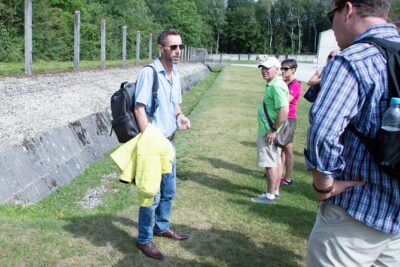
One of the strongest reasons to book a guided tour in Munich is that the city contains real places tied to modern history. On this walk, you pass through areas that connect to Hitler and World War II, and you also come across Munich Nazi Remnants.
This part can feel heavy. The difference is that you are not guessing. You get a guided explanation that helps you understand what you are looking at and why it matters. That turns a confusing set of buildings and memorial cues into something coherent.
You also visit the House of Art as part of the broader route. With the right commentary, that stop helps explain how art, politics, and public messaging can overlap.
I appreciate that the tour does not treat history like a checklist. The points are tied together so the streets feel less random.
Eisbach Surfers, a corporate HQ, and the Munich of today
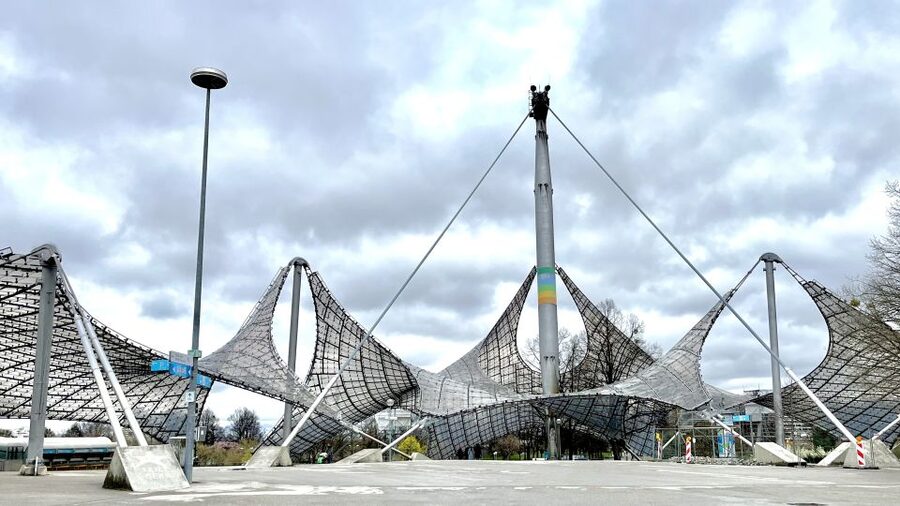
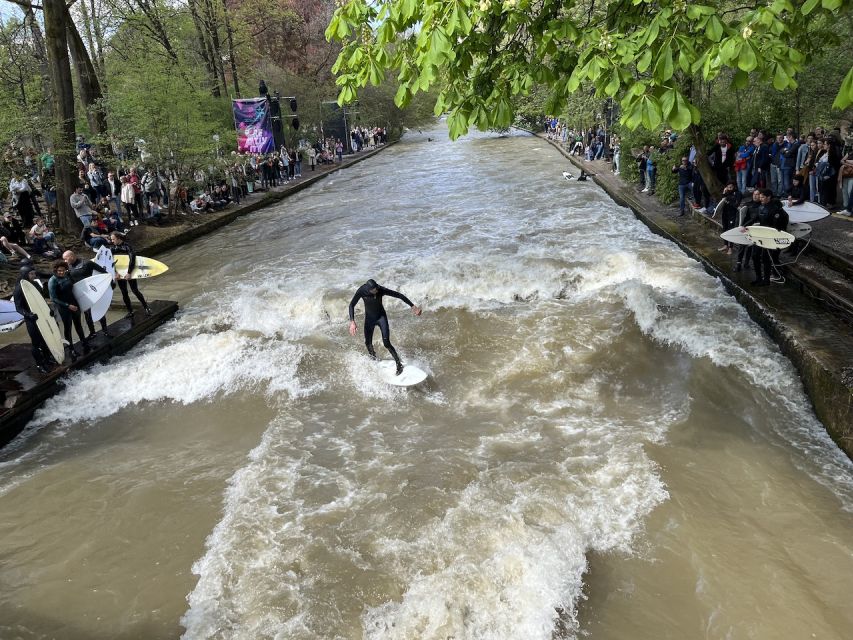
Not every moment needs to be solemn. This tour makes space for the everyday Munich you will still remember after the history.
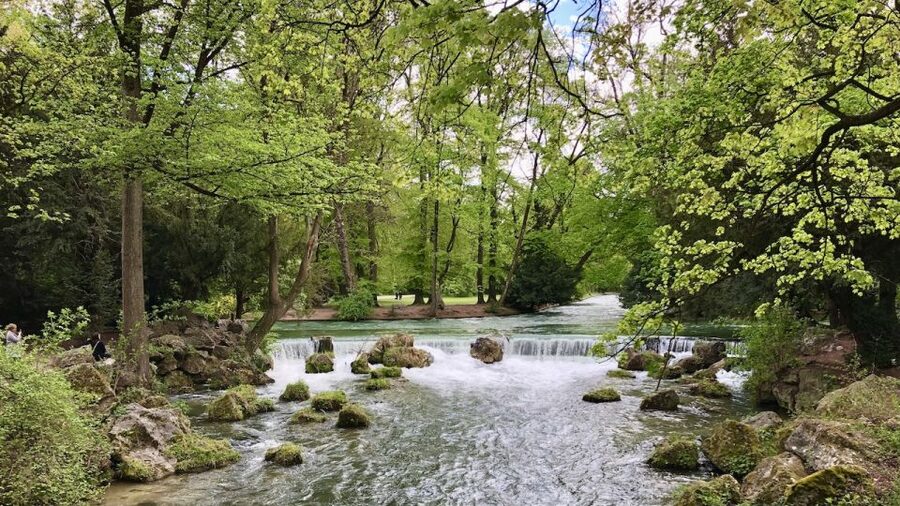
You will see Eisbach Surfers, a spot that shows how locals use the city in surprising ways. The guide frames it so you understand why this kind of scene became part of Munich’s identity.
Then there is a brief mention of a very discrete global corporate headquarters. Even if that sounds like an odd inclusion, it works as a reminder that Munich is not only museums and monuments. Modern business and daily routine exist beside old walls.
This is also where the tour covers modern life themes like business and economic features. That sort of context is what helps you stop seeing Munich as a set of photos and start seeing it as a functioning city.
Optional English Garden time: Monopterus, tea house, Chinese Tower, and Lake House
Timing matters, because this tour may add extra time if the schedule allows. If you have the daylight and energy, the English Garden option is a smart addition.
On the route, you might see areas around the Monopterus, plus the Japanese Tea House and the Chinese Tower beer garden. You may also have time for a Lake House viewpoint depending on the flow of the walk.
This is not a random detour. It gives you a breather after dense city center history and architecture. More importantly, it shows how Munich handles green space and leisure.
Practical tip: wear comfy shoes for this part too. The English Garden areas can involve paths and more time outdoors, even if the sights are close together.
Schwabing, the University area, Königsplatz, and the Gallery Quarter
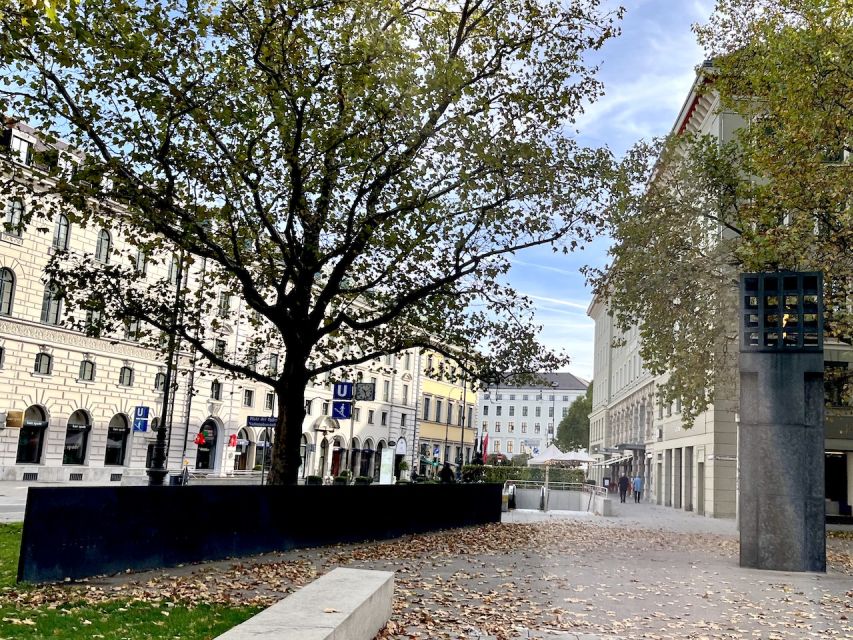
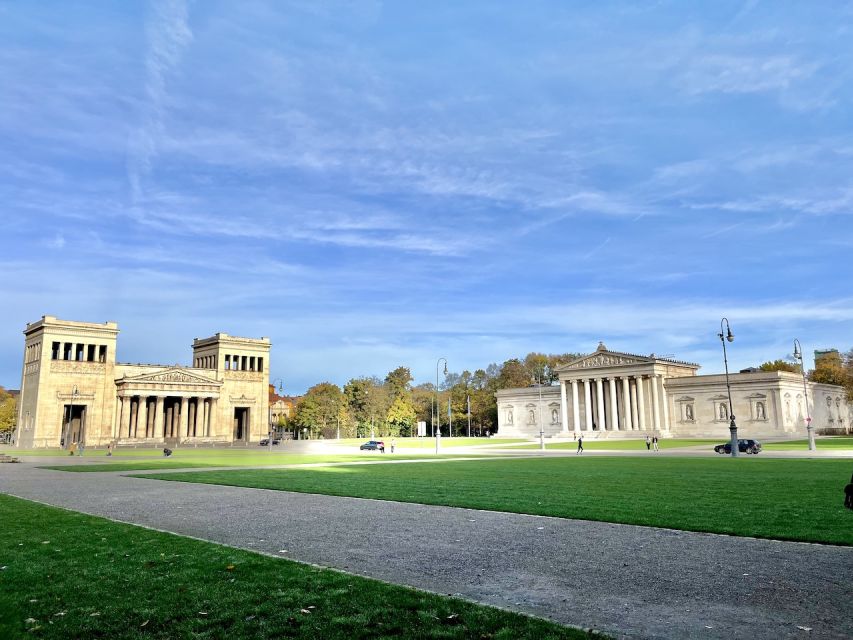
Toward the later portion of the tour, the walk shifts beyond the absolute center. You head toward Schwabing and the University of Munich, stopping at an area tied to a scene of “great tragedy and triumph.” You also make it to Königsplatz and the Gallery Quarter.
This segment gives you a different visual feel than the Old City. The architecture and street scale change, and the guide’s historical framing helps you see how Munich’s culture moved through different eras.
If you are into art-adjacent travel, this is a useful finish. Königsplatz sets up the right mood for the Gallery Quarter because it feels more formal and architectural, not just commercial or ceremonial.
You end back at your accommodation, which is perfect for recharging without planning transit.
Why the guide can make or break a city tour
The quality of the guide is the whole point here. This is one of those tours where the itinerary alone would be fine, but the storytelling is what makes it memorable.
In the feedback I’m using to understand the experience, two names come up. Julian is described as fabulous, friendly, and adaptable to what people want to focus on. That matters because Munich’s history is broad, and not everyone wants the same balance of palaces, churches, and wartime history.
Another guide, Gale, gets strong praise for being a history expert who has lived in Munich for around 40 years. That kind of long-term perspective is gold for walking tours, because you get local interpretation, not only textbook facts.
If you care about context, this is the right kind of guide.
Price and value: $336 per group for a guide-led overview
The price is listed as $336 per group up to 35, and the tour lasts 4 hours. On paper, that can look steep or reasonable depending on how many people you have.
Here’s the value math that usually works: if you are traveling as a small group, you pay for a private guide and the time saved by not coordinating multiple transit hops. If you are a family or group of friends who want a curated history and architecture walk, it often comes out as good value compared with doing the same route with separate tickets and guide services.
What makes the spend feel justified is what is included:
- Private walking tour
- Hotel start and end
- Bilingual local guide
- Pickup included
What is not included is also clear: food, drinks, snacks, transport. That is normal for walking tours, but you should plan for it. If you hate last-minute snack hunting, pick a target café right after the tour ends.
Who should book this Munich private half-day walk
This tour fits best if you want:
- A guided path through the Old City highlights without charting a route yourself
- Strong architecture context, especially for major churches and palaces
- A humane, guided look at World War II-era history and its visible traces
- A mix of formal sights and modern Munich moments like Eisbach Surfers
It also works well for first-timers who want an overview with enough detail to guide your next self-guided stops. If you already know Munich well and want deep, museum-level time, you might feel this is too broad for a full afternoon. But as a practical orientation, it performs.
Should you book this tour or skip it?
Book it if you want your Munich day to feel organized, explained, and efficient. This is especially smart if you care about what buildings meant historically, not only what they look like now.
Skip it if you prefer total independence and you are comfortable reading on your own through the city’s sights. Also consider skipping if your mobility limits mean you cannot handle long outdoor walking, even with wheelchair accessibility listed.
If you do book, do one simple thing: bring questions. This type of private tour is built to flex with your interests, and that usually turns a good walk into a memorable one.
FAQ
How long is the Munich private walking tour?
The tour runs for 4 hours.
What is the price?
The price is $336 per group, up to 35 people.
Is this a private group tour?
Yes, it is listed as a private group.
Where do we meet the guide?
Pickup is included. You provide your hotel or the address of your accommodation, and the guide meets you there.
What language is the guide?
The guide is listed as English (with a bilingual local guide included in the activity details).
What’s included in the tour price?
Included items are hotel start and end, a bilingual local guide, and a private walking tour.
What is not included?
Food, drinks, snacks, and transport are not included.
Is the tour wheelchair accessible?
Yes, the tour is listed as wheelchair accessible.
Which sights does the tour cover?
The tour includes stops such as Marienplatz, Rathaus, Viktualienmarkt, Frauenkirche, the Synagogue, Asam’s Church, Residenz Palace, Hofbräuhaus, House of Art, Munich Nazi Remnants, Eisbach Surfers, and Königsplatz, plus possible English Garden stops if time allows.
Is there free cancellation?
Yes. Free cancellation is available up to 24 hours in advance for a full refund.
Recently added around Munich
- München: Vegetarische Viktualienmarkt-Probiertour Deutsch★ 4.8 · 6 reviews
- Private Transfer from Munich to Vienna with 2 hours for sightseeing★ 4.5 · 6 reviews
- Munich Walking Quiz: Explore and Discover the City’s Highlights★ 5.0 · 7 reviews
- Walking Tour on Resistance to Nazism in Munich★ 5.0 · 8 reviews
- 2 hour Sights Guided E-Scooter Tour in Munich★ 4.0 · 6 reviews
- Private Transfer from Munich to Salzburg with 2 hours for sightseeing★ 4.5 · 13 reviews
- From Munich: Neuschwanstein Castle and Linderhof Private Tour★ 5.0 · 13 reviews
- Paul’s Private Tour Munich Highlights★ 5.0 · 3 reviews
Half-Day, compared.
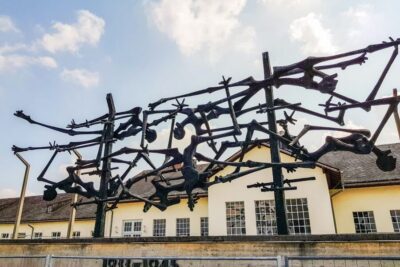
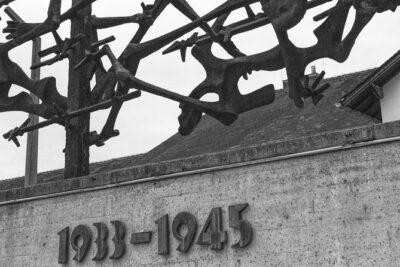
Early-Start Dachau Memorial Half-Day Tour from Munich
Read our review →
Dachau Small-Group Half-Day Tour from Munich By Train
Read our review →
Half-Day Skip-the-Line Neuschwanstein Castle Tour
Read our review →
Munich Private & Personalized Half-Day Tour with a Local Guide
Read our review →