Reviewed · RICKSHAW TOURS
Exploring Munich in a Rikscha
Munich can feel big and spread out, so I love experiences that help you get oriented fast and still see the classics. A modern rickshaw tour does exactly that, rolling you through Marienplatz and the historic center, then out to the English Garden with a guide who connects the dots from Munich’s early days to the Second World War and the city you see now.
The main drawback to keep in mind is comfort expectations. The rickshaw setup is practical, more like a simple bike with a seat than a cushy vehicle, and if rain hits, you’ll want to be ready for a wetter ride, since an open-air setup means weather matters more here than on a bus.
Key things you’ll notice right away
- Private group pace that lets you actually hear the guide, not just catch snippets while moving
- Marienplatz to English Garden in one sweep, so you do not waste half a day planning segments
- Pablo Catalan’s style coming through as history-focused, fun, and safety-minded
- Guided stop structure with short guided segments at each landmark so you stay on track
- Modern rickshaw reality: it is functional and close, not luxury transport
- Rain factor: plan for weather, since open-air touring has limits
Why a rickshaw tour makes Munich click
Munich is the kind of city where the “must sees” are close enough to connect, but still far enough that walking everything can turn into a grind. On a rickshaw, you trade stairs and long stretches for short bursts of movement, then guided stops where you can listen and look.
What I like most is the balance. You still see real streets and squares, not just windows from a vehicle, and the guide uses the places as anchors for stories. That matters in Munich, because the city’s look today is shaped by how it was built, what happened in the 20th century, and what the city chose to keep or rebuild.
Eco-friendly transportation is part of the pitch, but the practical benefit is simple: it keeps you moving through the center at a human pace. You get a sense of layout, direction, and neighborhoods without feeling like you are in a hurry.
More rickshaw rides through Munich:
- Munich: Old Town and English Garden Rickshaw Tour
★ 4.9 · 112 reviews - Private Munich Rickshaw City Tour and English Garden
★ 5.0 · 49 reviews - Private and full rickshaw tour in the English Garden
★ 4.5 · 10 reviews
Starting at Burgstraße 2, the easiest “first step” in Munich
Your tour starts at Burgstraße 2, in front of the Garibaldi wine shop, just a few steps from Marienplatz. That is a smart choice because you begin right where many first-time itineraries start, which makes it easier to match the tour with whatever you do afterward.
If you are coming from nearby hotels, you will probably find this spot straightforward to reach on foot or by short rides. I suggest arriving a few minutes early, because the rickshaw boarding and positioning takes a little time and you want to start smoothly.
Also note the group format. Each rickshaw can take a maximum of two adults and one child, and wheelchair access is not listed as suitable. If you are traveling as a couple or with one young person, this format is built around that size.
Marienplatz: the square that teaches Munich’s rhythm
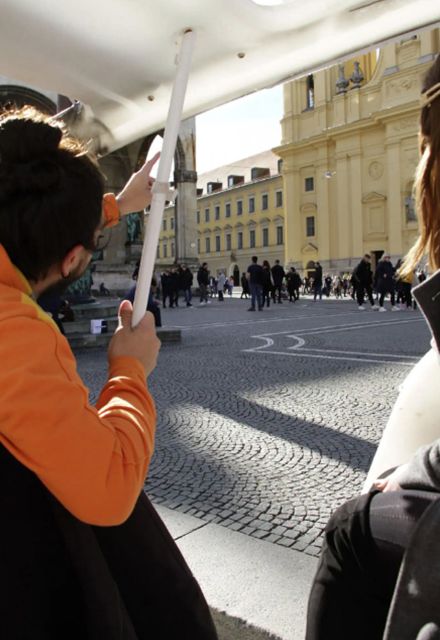
Your first major stop is Marienplatz, the iconic city square where Munich’s identity is always on display. In about 10 minutes of guided time, you get the “why this place matters” explanation that helps the photos make sense later.
Marienplatz is not just pretty architecture. It is also about how the city organizes public life in the center. When you pause here, you get a quick lesson in scale, street lines, and the feeling of a central gathering space that still functions as a civic hub.
A quick guided segment is a plus when you have limited time. You get the essentials without dragging out the start of the tour, and it sets the tone for everything else you will see.
Max-Joseph-Platz: regal energy without the big-city confusion
Next is Max-Joseph-Platz for another 10 minutes. This stop helps shift you from the square’s everyday heart toward the more formal, power-linked side of Munich’s history.
The value here is context. Even if you are not trying to become a building historian, having a guide point out what the space represents makes the city feel more legible. It is the kind of “small explanation, big payoff” moment, because it changes how you read the street corners and facades as you roll by.
One practical consideration: short stops mean you should keep your attention tight. If you wander off for quick selfies, you might miss a key story beat the guide is delivering.
Also reviewed in and around Munich:
- From Munich: Neuschwanstein & Linderhof Castle Full-Day Trip
★ 4.5 · 12,494 reviews - Neuschwanstein & Linderhof Castle-Fairytale Day Tour from Munich
★ 4.5 · 7,275 reviews - Munich: Third Reich & WWII Walking Tour
★ 4.6 · 6,181 reviews - Dachau Concentration Camp Memorial Site Tour from Munich by Train
★ 4.5 · 5,637 reviews
Munich Residenz: a quick guided taste of the old-world center
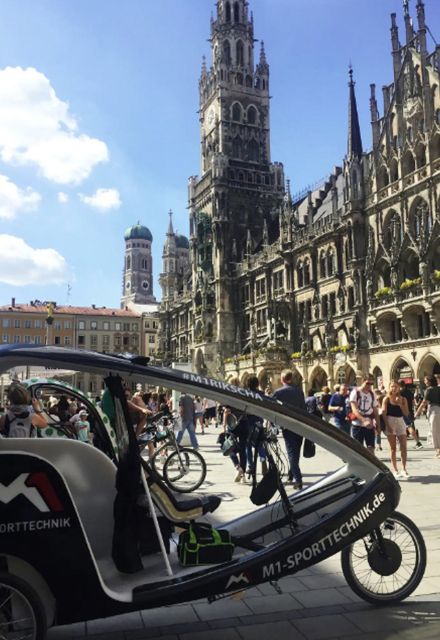
You then head toward the Munich Residenz area for 10 minutes of guided touring. The Residenz is famous for its royal connections, so the goal of this stop is less about a full museum visit and more about giving you a grounded understanding of what you are looking at.
This is one of those moments where guided time is more valuable than trying to “figure it out” alone later. You get explanations that help you connect royal-era Munich to how the city developed around these seats of influence.
The drawback is also built in: this is not a long interior visit. If you want deep, ticketed exploration, you will likely treat this stop as a high-impact teaser, then come back on your own for more.
Odeonsplatz: where Munich signals tradition and authority
After that, you roll to Odeonsplatz for 10 minutes. This stop tends to land well because it feels like a hinge between grand architectural presence and the wider street life you will experience across the old center.
In a short guided segment, you mainly get the “what it is” and “why it matters.” That can still be enough to change how you move through Munich afterward, because you stop seeing landmarks as random photo spots and start seeing them as parts of a bigger civic story.
I also like how the itinerary keeps spacing consistent. About 10 minutes at each stop keeps the pacing lively, and it helps you manage energy without feeling rushed.
English Garden: the reset after the historic core
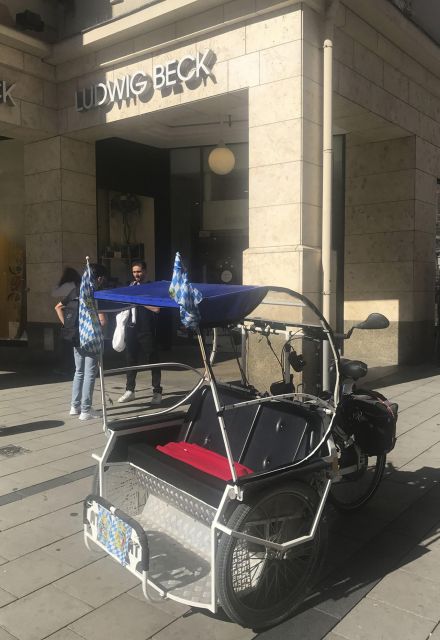
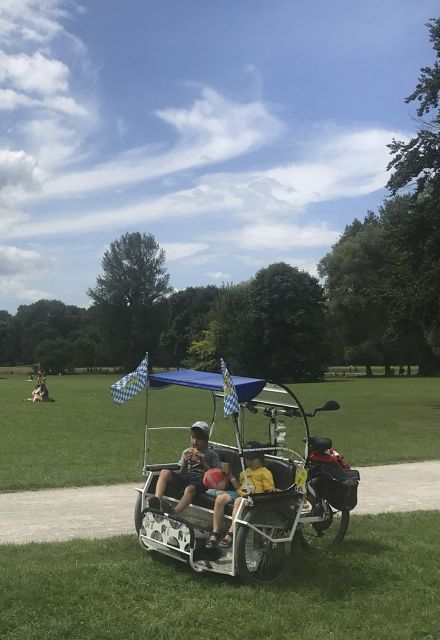
Your longest segment is the English Garden, with about 20 minutes of guided time. This is where Munich shifts from stone-and-street history toward open space and a different kind of city experience.
The practical benefit is huge. After several central squares and historic areas, you get a chance to breathe, look at the greenery, and feel what makes Munich liveable beyond monuments. The guide’s stories add meaning here too, so you are not just looking at trees and paths.
One tip for getting more out of the English Garden part: keep your eyes up and wide. The English Garden is not only a single view, it is a system of paths and spaces. Even in a short guided block, you can absorb the overall vibe if you stay present instead of focusing on one photo spot.
The stories you get on the ride, from foundations to WWII to today
The tour’s concept is history with purpose, not history for its own sake. You are guided through a chain of landmarks where each stop relates to the next era the city lived through.
The description specifically frames stories around Munich’s foundation, the Second World War, and modern life. That is a strong structure because it mirrors how cities actually evolve: early identity, disruption and rebuilding, then daily reality.
What you should look for while you ride is the connective tissue. Instead of treating each place as a separate postcard, try to track how the guide links architecture, public space, and the city’s changes over time. You’ll leave with a better sense of why Munich looks the way it does today.
How the rickshaw ride feels in real life
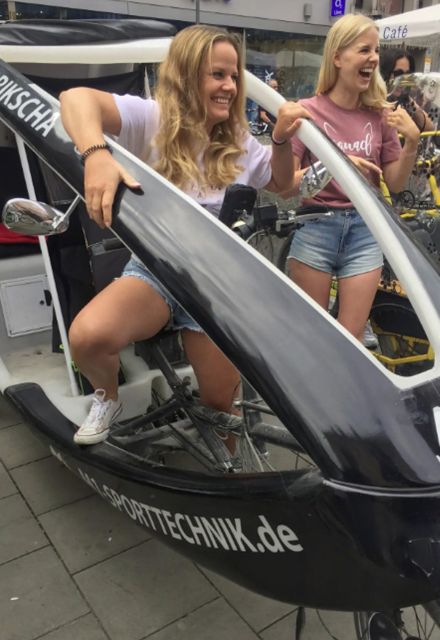
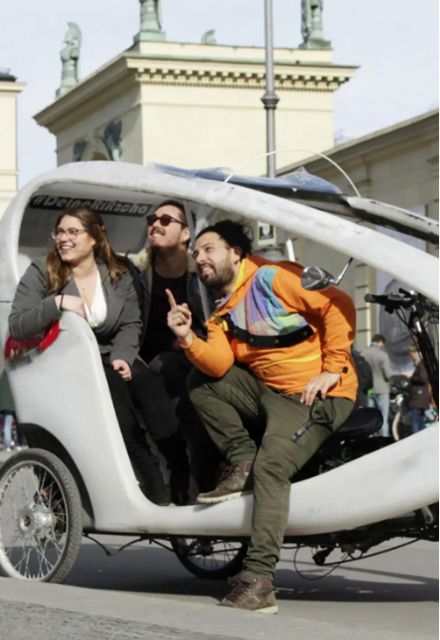
This is an open-air rickshaw experience, and the comfort level is best described as practical. Based on what people noted, the rickshaw can look simpler than some photos suggest, more like a bike-style setup with a seat. That does not make it bad, but it does mean you should avoid expecting luxury transportation.
The good news is that the guide-driver focus matters. Pablo Catalan is described as a safe driver, and that is exactly what you want on a street ride through a busy old town. When you feel steady, you can focus on the guide’s history and the scenery rather than worrying about the ride.
Weather is the other big practical variable. If it is rainy, the open design can mean you will get more wet than you would in a closed vehicle. If you tend to run cold, bring a light rain layer even if rain is not guaranteed.
Languages and guide style: you can fit this to your comfort
The tour is offered with live guiding in English, German, or Spanish. That is a helpful option if you want your history and details in a language you can follow without effort.
Pablo Catalan is the named provider, and people highlight a combination of intelligence, enthusiasm, and clear storytelling. In practice, that means you are likely to walk away with facts you can actually remember because they attach to places you saw with your own eyes.
If you are the type who likes your tours structured, the itinerary’s stop format works well. Short guided blocks keep the pace steady, and they give you a clean “what we did” feeling at the end.
Price and value: $116 for a small private group
The price is $116 per group, up to 2 people. For Munich, that can be a smart move if you want private attention without committing to a full day of expensive tours.
Here is how I think about the value. You are paying for three things at once: a guide to connect the story across multiple landmarks, a rickshaw ride that saves time and legs in the center, and the convenience of a route that covers both the old city and a major green space.
It can feel especially worthwhile for couples or two friends who want the flexibility of a private pace. If you are traveling solo, you might still find it appealing because the private group format keeps the experience personal, but the per-person cost depends on how you compare it to your other plans.
Who this rickshaw tour is best for
This tour is a strong fit if you want a first-timer overview with real context. I think it works especially well for people who want to see Marienplatz, key historic squares, and the English Garden without mapping all the logistics alone.
It is also a good choice if you like stories. The tour is designed around guided history, including World War II and the city’s present-day identity. If you prefer learning while moving, this format suits you.
On the other hand, I would be cautious if you need wheelchair access, since it is not suitable for wheelchair users. Also, if your priority is long museum time, this is not that kind of tour. It is a guided hit list with short stops, not a full deep-dive into interiors.
Should you book this rickshaw tour?
Yes, I would book it if your goal is to get oriented and see Munich’s headline spaces in about an hour, with guidance that makes the history feel connected. The private-group size, the English Garden highlight, and the focus on place-based stories are a winning combo for first-time visitors.
Skip it or plan around its limits if you want a lengthy stop for major museums or if rain and comfort issues would stress you out. In fair weather, the ride and the pacing should feel straightforward. In wet weather, bring a rain layer and set your expectations for an open-air street experience.
If you fit the sweet spot, you get a lot of Munich in a small amount of time, and you leave with a clearer mental map of the city, not just photos.
FAQ
Where does the tour start?
The meeting point is at Burgstraße 2, in front of the Garibaldi wine shop, a few steps from Marienplatz.
How long is the rickshaw tour?
The duration is listed as 1 hour.
What places do we visit?
You will visit Marienplatz, Max-Joseph-Platz, the Munich Residenz area, Odeonsplatz, and the English Garden.
How much does it cost?
The price is $116 per group, for up to 2 people.
What languages are available for the live guide?
The guide is available in Spanish, German, and English.
Is this a private tour?
Yes, it is listed as a private group experience.
What is the maximum number of people per rickshaw?
Each rickshaw accommodates a maximum of 2 adults and 1 child.
Is the tour wheelchair accessible?
No, it is not suitable for wheelchair users.
Recently added around Munich
- München: Vegetarische Viktualienmarkt-Probiertour Deutsch★ 4.8 · 6 reviews
- Private Transfer from Munich to Vienna with 2 hours for sightseeing★ 4.5 · 6 reviews
- Munich Walking Quiz: Explore and Discover the City’s Highlights★ 5.0 · 7 reviews
- Walking Tour on Resistance to Nazism in Munich★ 5.0 · 8 reviews
- 2 hour Sights Guided E-Scooter Tour in Munich★ 4.0 · 6 reviews
- Private Transfer from Munich to Salzburg with 2 hours for sightseeing★ 4.5 · 13 reviews
- From Munich: Neuschwanstein Castle and Linderhof Private Tour★ 5.0 · 13 reviews
- Paul’s Private Tour Munich Highlights★ 5.0 · 3 reviews
Rickshaw Tours, compared.
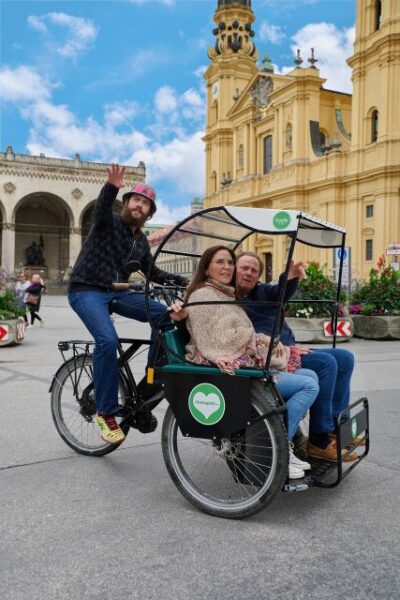
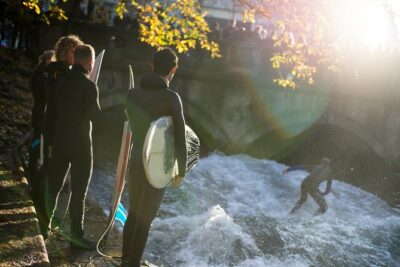
Private Munich Rickshaw City Tour and English Garden
Read our review →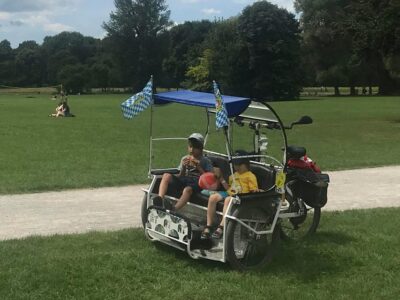
Exploring Munich by Pedicab: Premium Two Hour Tour
Read our review →
Private and full rickshaw tour in the English Garden
Read our review →

Browse the lists this tour appears in