Reviewed · NIGHT WATCHMAN & GHOST TOURS
München: Stadtführung Henker, Huren, Hexen in GERMAN
Munich can be gorgeous, then suddenly, it gets complicated. This Henker, Huren, Hexen city tour is interesting because it forces you to look at famous spots like the Frauenkirche through the lens of fear, punishment, and power. You walk real streets, but the stories pull you into the darker machinery of the city.
What I like most is how it stays practical and place-based, from the Neuhauser Tor where people were led out for execution to the church stops that anchor the narrative. The other big plus is the guide’s storytelling, including why certain headquarters were outside the city and why prostitution ended in the 1970s. One drawback to consider: the tour is in German, and in crowded church areas it can be tough to catch every word.
Key highlights worth showing up for
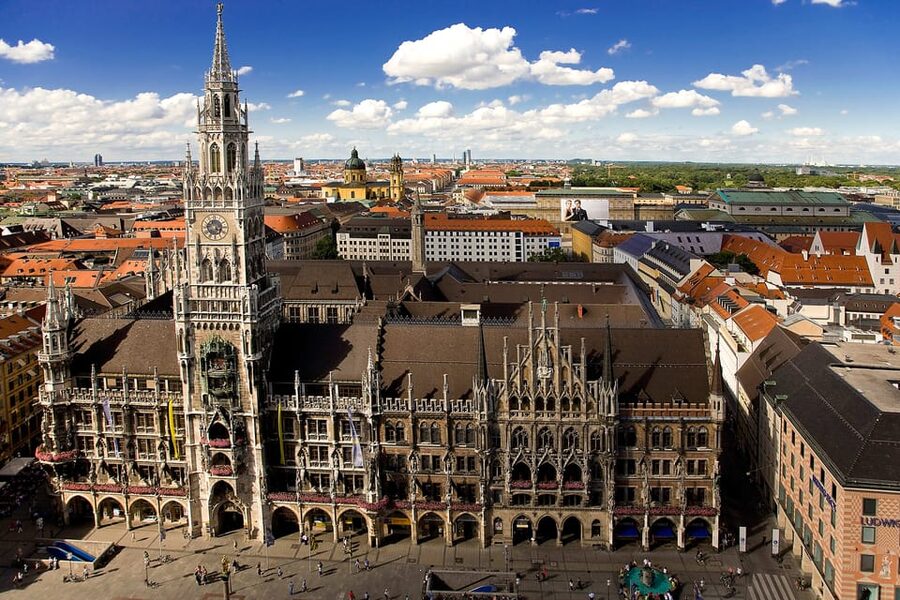
- Neuhauser Tor: where delinquents were led out for execution
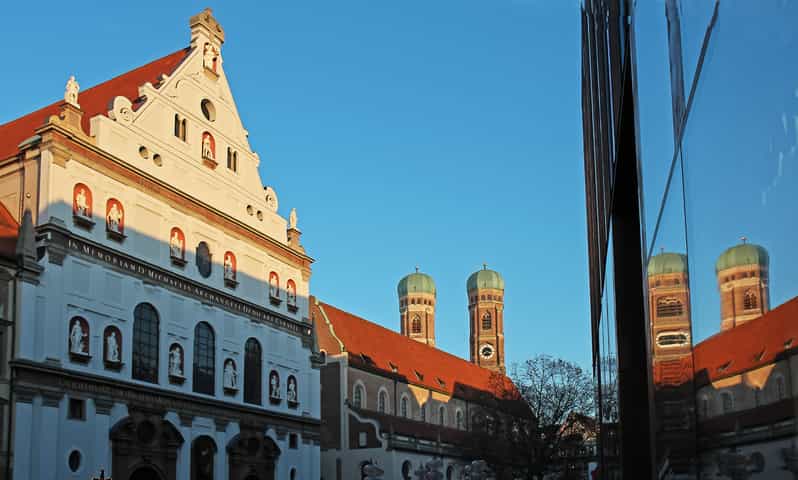
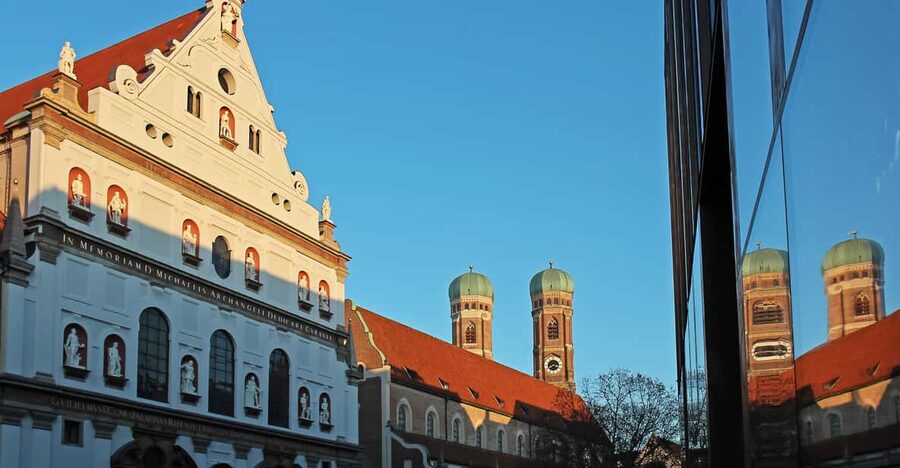
- St. Michael’s Church and Frauenkirche: iconic churches tied to the tour’s theme
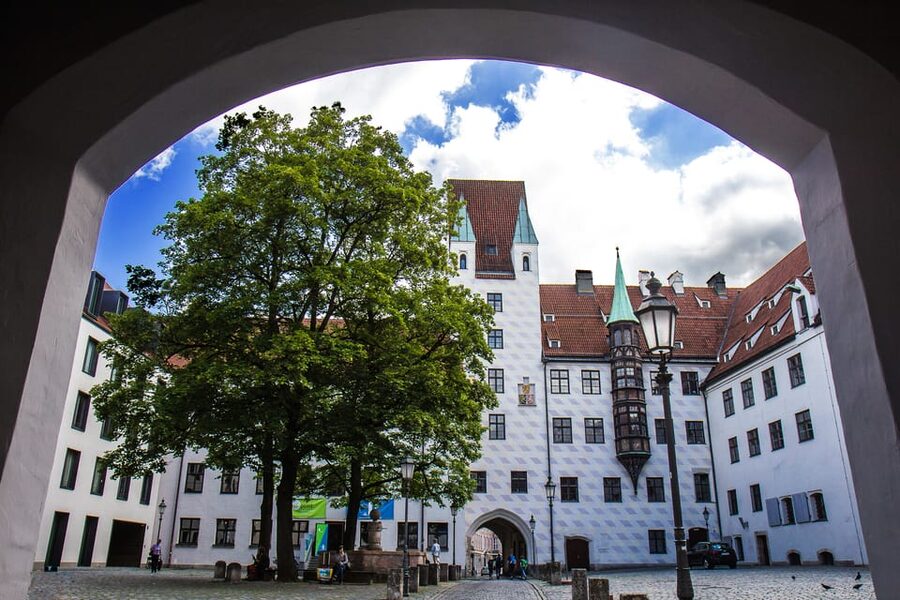
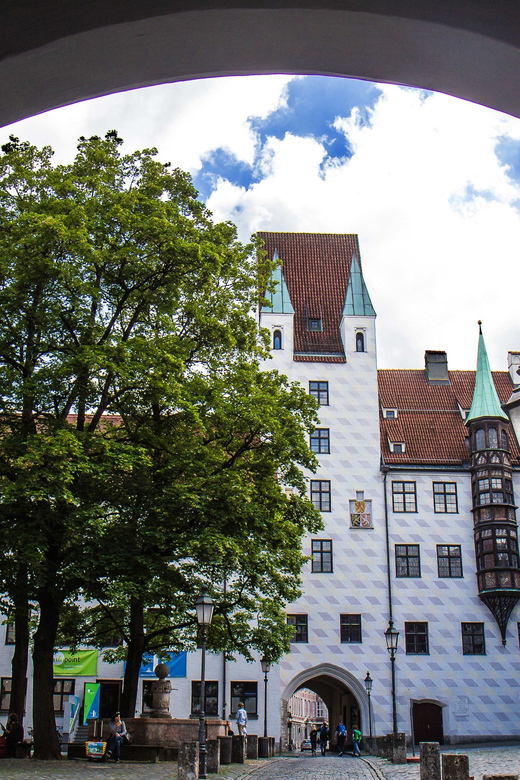
- Alter Hof (Old Court of Munich): a power center your guide connects to the story
- Historic salt road and the former Jesuit college: route details that frame the witch hunts
- Shared group or private tour: you can match the vibe to your comfort level
- No reenactments: it’s guided history, not a stage show
A “dark history” walk with real Munich landmarks
This is not one of those tours that throws spooky words at you and calls it a day. The point is to connect three themes that were often discussed separately, but in the city’s machinery, they overlapped: executioners, prostitution, and witch hunts. And you don’t learn it from a screen. You learn it from moving through central Munich, stopping at places that still shape how you see the streets today.
You should also know what the tour does not do. There are no actors and no reenactments. That matters, because it keeps the mood more grounded. It is storytelling with context, not a horror performance. You’ll still be dealing with grim topics, but it’s history talk, guided by where you are standing.
The standard format is about 2 hours, in German. That time window is a big part of the value. You get enough stops to make the theme feel connected, without turning it into a long slog through the entire center.
More night watchman and ghost walks after dark:
- Munich: Night Watchman Walking Tour
★ 4.7 · 2,092 reviews - Munich Ghosts and Spirits Evening Walking Tour
★ 5.0 · 1,900 reviews - Munich: Night Watchman Torch Tour in German
★ 4.8 · 1,280 reviews
Meeting at Neuhauser, then stepping into Munich’s justice system
Your tour starts under the Neuhauser archway. Look for the guide wearing a big blue bag with white words reading Weis(s)er Stadtvogel. This is an easy way to find the group, and it’s a nice change from meetups where everyone plays “guess the tour guide.”
From there, you begin at the Neuhauser Tor, described as the place where delinquents were led out of the city to be executed. That opening moment sets the tone fast. Instead of starting with vague medieval mood, you start with logistics: movement, authority, and punishment. It’s also a smart way to get you comfortable with the idea that execution was public, and the city had a system for it.
And once you’re oriented, the guide can do the real work: linking the city’s power structure to the people who carried out that power, and to the people who got caught in its web.
Frauenkirche and St. Michael’s: two churches, one theme of control
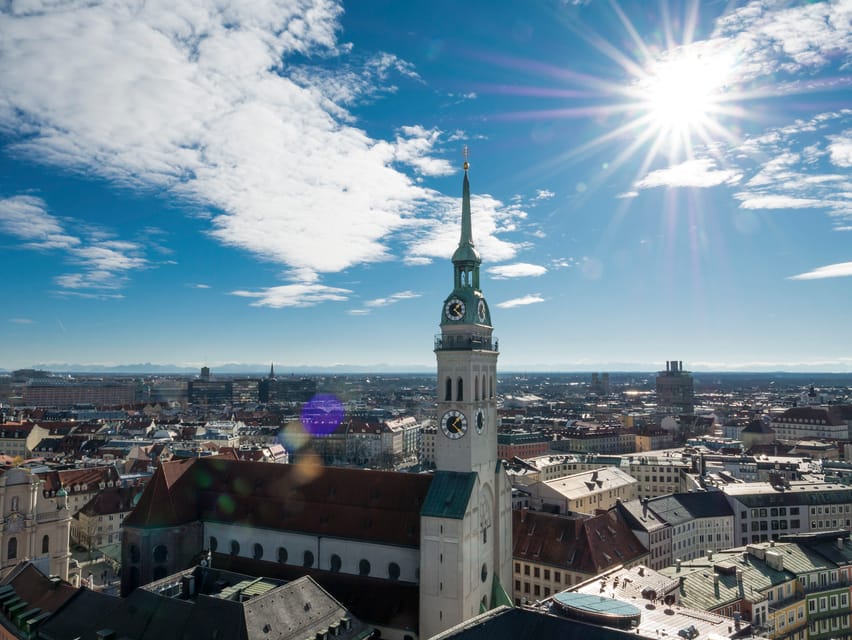
One reason this tour has staying power is that it uses churches as more than photo backdrops. You visit St. Michael’s Church and you see the Frauenkirche, the best-known landmark in Munich’s center. But the tour isn’t about architectural trivia. It’s about how institutions and authority shaped lives, and how the same city that built grand religious spaces also ran harsh justice.
At the Frauenkirche, the guide’s theme comes into focus. You’ll hear how Munich’s dark history shows up in the city’s everyday spaces, and why fear and punishment were not random events. They were organized, and they were connected to people who held jobs that most modern visitors never think about.
St. Michael’s gives you a different angle, letting your guide keep the story moving while keeping the setting visually memorable. If you like walking tours that make you look at well-known buildings with fresh eyes, this pairing is a strong one.
Practical note: churches can be crowded and echo-y. In at least one case, a guest found parts of the talk hard to understand in busy areas. If you want to follow every detail, try to keep your position near the guide when the group stops, and don’t let yourself drift to the back right away.
Alter Hof: the Old Court of Munich and the idea of power
The tour also passes the Alter Hof, the Old Court of Munich. This matters because it shifts the story from street-level punishment to decision-making. Courthouses, courts, and centers of rule are where you expect systems to start, and where you expect enforcement to stay connected to policy.
When you stand by the Alter Hof, you can feel why your guide keeps talking about how the city was run. You’re not just collecting grim facts. You’re learning how power worked in practice: who controlled what, and how the city maintained order.
This is one of the most satisfying parts of the tour because it helps you resist the temptation to treat execution, witch hunts, and prostitution like separate “urban legends.” Instead, you see them as different sides of the same historical machine.
Also reviewed in and around Munich:
- From Munich: Neuschwanstein & Linderhof Castle Full-Day Trip
★ 4.5 · 12,494 reviews - Neuschwanstein & Linderhof Castle-Fairytale Day Tour from Munich
★ 4.5 · 7,275 reviews - Munich: Third Reich & WWII Walking Tour
★ 4.6 · 6,181 reviews - Dachau Concentration Camp Memorial Site Tour from Munich by Train
★ 4.5 · 5,637 reviews
The salt road and the former Jesuit college for witch-hunt context
Midway through, the walking route follows the historic salt road and reaches a former Jesuit college, where the guide explains witch hunts. Salt might sound like a background detail, but here it works like a clue. Trade routes and travel corridors are how ideas move, how authorities consolidate, and how people come under scrutiny.
The Jesuit connection also helps you understand why fear could become official. Religious education and institutional influence mattered, and the guide uses that setting to talk through how witch hunts were carried out and justified.
This stretch is also where the tour starts to feel like a story with chapters, not a list of stops. You get the sense that the guide is building toward a specific point: these were not isolated episodes. They were connected to how Munich thought about wrongdoing, belief, and obedience.
Executioners, prostitutes, and witches: what they had in common
The tour’s central concept is the link between executioners, prostitutes, and witches. The guide explains how in Munich’s system, people associated with enforcement and punishment were not always separate from the city’s sexual economy and policing. In this telling, executioners were part of the city’s organized control, and their work overlapped with other roles, including acting as pimps.
That can sound shocking, but it’s one of the reasons the tour is popular. It gives you a fuller picture of how jobs and social systems worked in the past. People were not always divided into the tidy categories we like today. The city’s rules and labor needs shaped who did what, and how authority managed both crime and “morality.”
You’ll also hear why certain headquarters were located outside the city. That detail adds a layer of realism. It implies the city had practical reasons for where enforcement infrastructure sat, not just symbolic ones. And you’ll learn about why prostitution ended in the 1970s, which pulls the story forward into the modern era and helps you understand that “dark history” does not live only in centuries you already feel removed from.
Shared group vs private tour: pick the format that fits your tolerance for heavy topics
You can choose between a shared group or a private tour. That choice matters more than you might think, because the themes are heavy. In a shared group, you get energy from others and a sense that this is a normal thing to learn in public. In a private tour, you get more control over pace and questions.
If you know you’ll want to ask follow-ups about what you’re hearing, private can help. If you just want to hear a strong guide and walk comfortably beside the group, shared is fine.
Either way, the structure stays consistent: guided walking, multiple landmarks, and German narration.
Weather, shoes, and what can trip up your experience
This tour runs rain or shine, so plan for wet cobblestones and slick sidewalks. Bring comfortable shoes you can trust for uneven pavement.
Also remember: it’s 2 hours. That’s not long, but it is long enough that poor footwear can turn the day sour fast. You’ll be moving between central stops, and you’ll want your feet to feel good so you can focus on the story.
Language is the other big factor. The tour is in German. If your German is solid enough to follow a narrative, you’ll probably love it. If not, you might get the overall shape but miss details. And in at least one negative experience, crowd noise and acoustics made it hard to catch the guide’s words in church areas, so don’t rely on catching everything while standing far back.
Price and value for a 2-hour Munich story
At $25 per person for about 2 hours, this is priced like a focused city tour rather than a half-day museum package. What makes it feel like good value is the density of meaningful stops. You hit major landmarks, but the guide’s goal is to attach context to them, not just point out what you could read on a sign.
It’s also not overcomplicated. The tour includes the knowledgeable guided portion, and entrance fees are not included. Food and drinks are not included either, so you should plan accordingly if you’re pairing this with a meal later.
Given the subject matter, you’re also paying for someone to translate the city’s darker side into something you can understand while walking. That’s hard to do on your own in such a tight timeframe.
Who should book this Henker, Huren, Hexen tour?
Book this tour if you:
- like walking tours that connect history to exact locations, not just general themes
- want a Munich perspective that goes beyond landmarks and into how systems of authority worked
- are comfortable with stories that involve punishment and prostitution
- prefer guided history in German and want the explanation, not a self-guided puzzle
You might skip it if:
- you need a tour that is easy to understand in noise-heavy church areas
- you have concerns about mobility on uneven city streets (see below)
- you want a light, cheerful outing, because the topics are dark even when presented thoughtfully
One thing to pay attention to: the information says it is wheelchair accessible, but it also says it is not suitable for people with mobility impairments. If you have mobility needs, check directly before booking and ask how the route and pace will work for your situation.
Should you book it?
I’d book it if your ideal Munich experience includes a guide who can connect big sights like Frauenkirche and St. Michael’s to the city’s harsher stories. The best version of this tour is the one that makes you look at central Munich and realize it has a system behind the beauty, and this one is built to do that.
Skip it if you want a purely uplifting city walk or you’re not confident with German narration while standing in crowded squares. Also, if you dislike historical topics like executions and witch hunts, treat this as a hard pass rather than a “maybe.”
For the right mindset, it’s a sharp, well-timed tour at a reasonable price, and it gives you a set of mental bookmarks you can carry around Munich long after the walk ends.
FAQ
Is the tour guided and in German?
Yes. It is a live guided tour, and the language is German.
How long is the tour?
The duration is 2 hours.
Where do I meet the guide?
Meet your guide under the Neuhauser archway. The guide will wear a big blue bag with white words Weis(s)er Stadtvogel.
What is the price?
The price is listed as $25 per person.
Does the tour run rain or shine?
Yes, it takes place rain or shine.
Are entrance fees included?
No. Entrance fees are not included.
Are food and drinks included?
No. Food and drinks are not included.
Is it suitable for people with mobility impairments?
The information provided says it is wheelchair accessible, but it also says it is not suitable for people with mobility impairments. If this affects you, check before booking.
Is there reenactment or actors?
No. The tour does not contain actors or reenactment.
Recently added around Munich
- München: Vegetarische Viktualienmarkt-Probiertour Deutsch★ 4.8 · 6 reviews
- Private Transfer from Munich to Vienna with 2 hours for sightseeing★ 4.5 · 6 reviews
- Munich Walking Quiz: Explore and Discover the City’s Highlights★ 5.0 · 7 reviews
- Walking Tour on Resistance to Nazism in Munich★ 5.0 · 8 reviews
- 2 hour Sights Guided E-Scooter Tour in Munich★ 4.0 · 6 reviews
- Private Transfer from Munich to Salzburg with 2 hours for sightseeing★ 4.5 · 13 reviews
- From Munich: Neuschwanstein Castle and Linderhof Private Tour★ 5.0 · 13 reviews
- Paul’s Private Tour Munich Highlights★ 5.0 · 3 reviews
Night Watchman & Ghost Tours, compared.
Munich Ghosts and Spirits Evening Walking Tour
Read our review →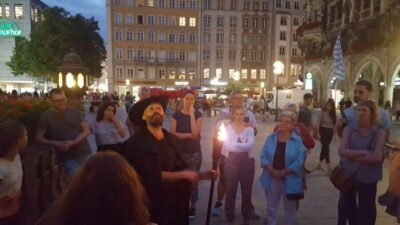
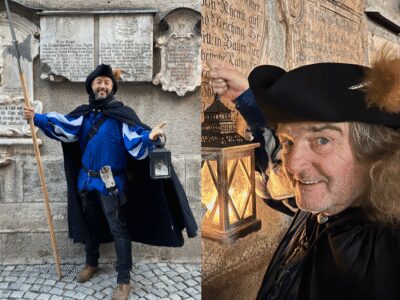
Der Nachtwächter für Kinder – Führung auf Deutsch
Read our review →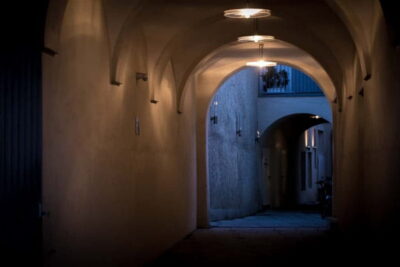
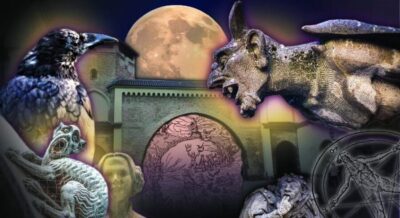
Raven Black Witches and Executioners Walking Tour
Read our review →
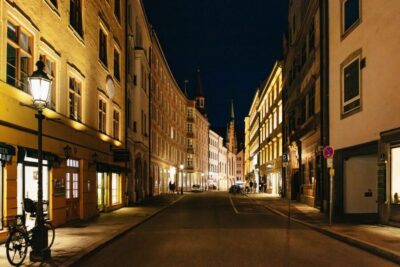
Mystic Munich – Sagas and Legends of the Old Town
Read our review →Browse the lists this tour appears in