Reviewed · VIKTUALIENMARKT & FOOD TOURS
Munich: 3-Hour Culinary Nightwatch Tour
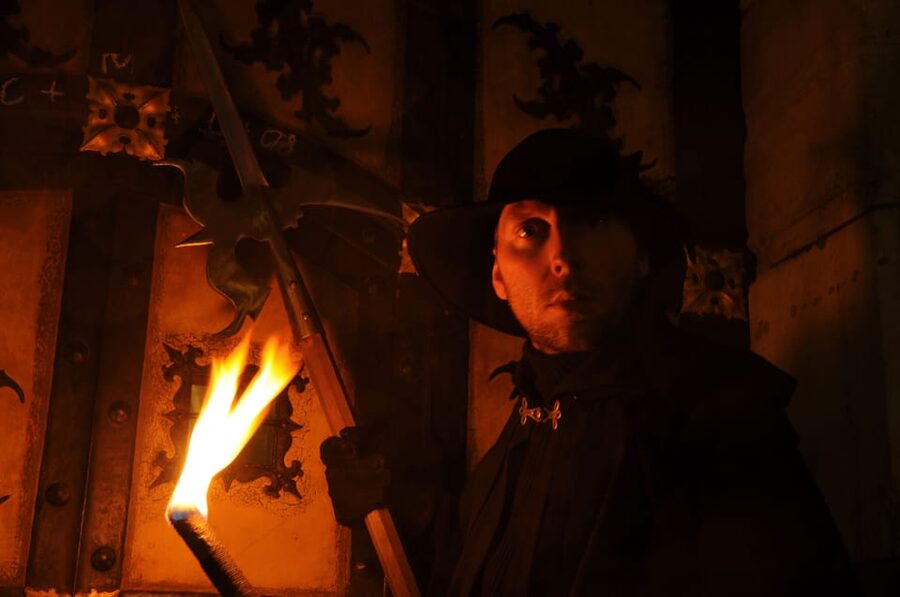
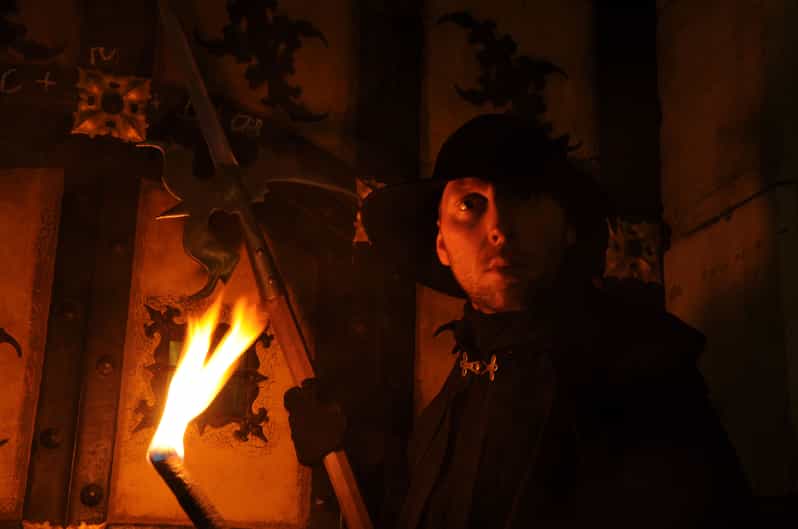
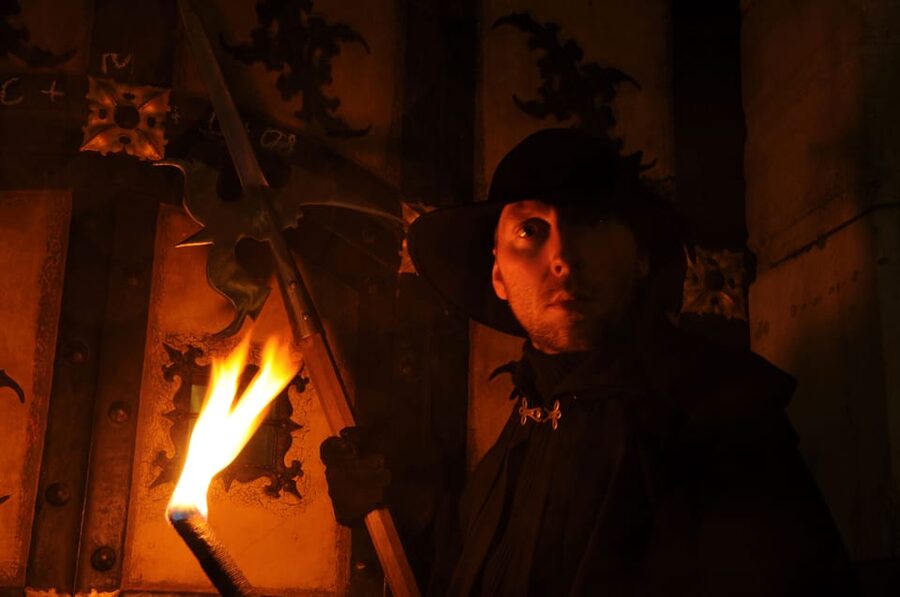
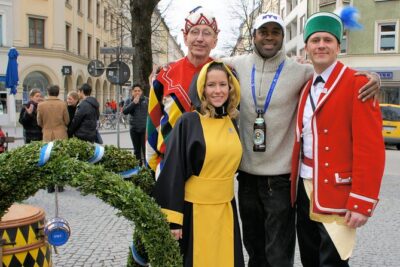
Munich by night can feel like a stage set, and this tour leans hard into that idea with a costumed night watchman and a proper medieval-style meal to get you in the mood. I love how the guide uses walking stops as cues for stories, so you are not just seeing sights, you are hearing what people feared, laughed about, and argued over centuries ago.
One thing to keep in mind: the tour stays social and can get a bit tight if the group is large, so if you hate squeezing, pick a departure time with fewer people when you can. Also, the live guide is German, so you will want to be comfortable with listening and simple questions.
Key things to know before you go
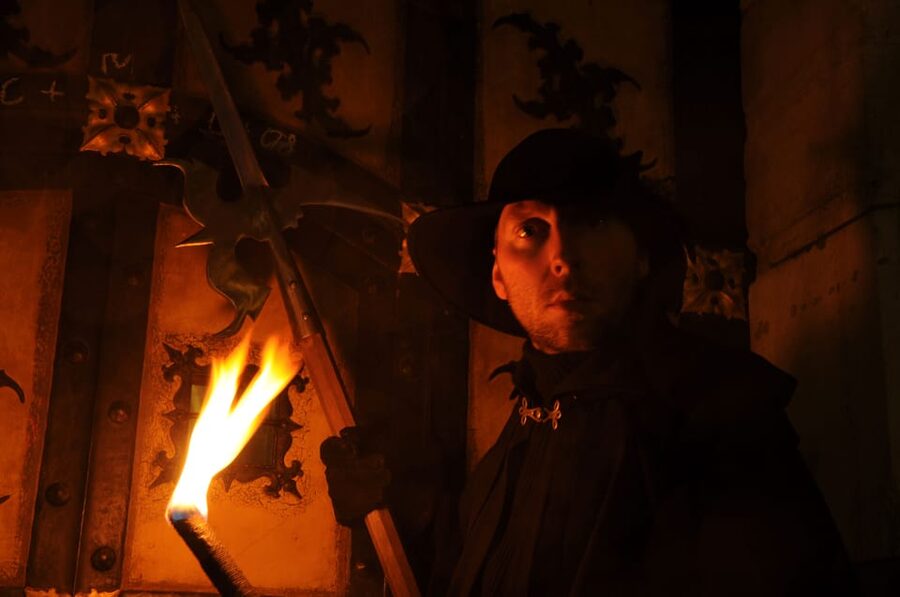
- A night watchman in costume guides you on foot through the old center with a story-first approach
- Hearty food and drinks bookend the walk, with a nightcap at the end
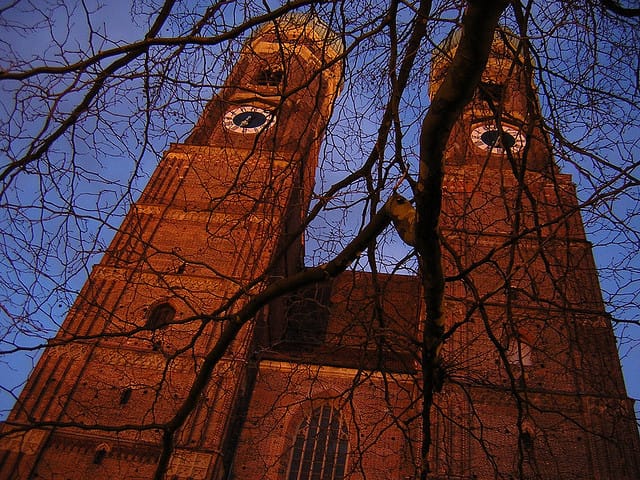
- Major landmarks plus side streets like Marienplatz, St. Peter’s Church, and the Frauenkirche towers
- Dark, specific storytelling including cemeteries, a torture chamber, and church legends
- German-language tour means you should be ready for more listening than back-and-forth
Entering Munich as a night watchman’s city
What makes this experience work is the structure. You start with food, then the guide shifts into character, and finally you walk a route where nearly every stop has a “why” attached. The story style can be gruesome, but it is also practical, because the guide ties fear, punishment, and everyday habits to the exact streets you are standing on.
I like that it is not just generic spooky talk. You will hear about cemetery customs and funerary details, plus the way city life handled shame, crime, and public order. That angle helps you understand why certain places in Munich feel serious even today.
And you get the best of both worlds: some famous architecture, plus alley-level details. Even if you have been to Munich before, the tour’s focus on side streets like Gruftgasse and Schäfflergasse gives you a different map of the city.
More food tours around the Viktualienmarkt:
- Munich: Old Town & Viktualienmarkt City Walk in German
★ 4.7 · 2,304 reviews - Bavarian Beer and Food Evening Tour in Munich
★ 4.5 · 1,575 reviews - Munich: Viktualienmarkt Food Tour
★ 4.5 · 1,127 reviews
Meeting at Marienplatz, then finding your guide fast
Your starting point is the Mariensäule at Marienplatz. Look for a guide carrying a big blue bag with white words that identify the operator, Weisser Stadtvogel. If you arrive a few minutes early, you will avoid the “where is everyone going?” moment and get your bearings fast.
This matters because you are walking for about three hours, mostly on city sidewalks, and you want time to settle in before the stories begin. Also, since the tour guide works in German, being ready early helps you catch the opening setup and the rules of the route.
One practical tip: dress for an evening stroll. Munich nights can feel cool, especially if your group pauses for photos at churchyards or corners where the guide points out details.
The meal, the drink, and the nightcap that make it feel like a real evening
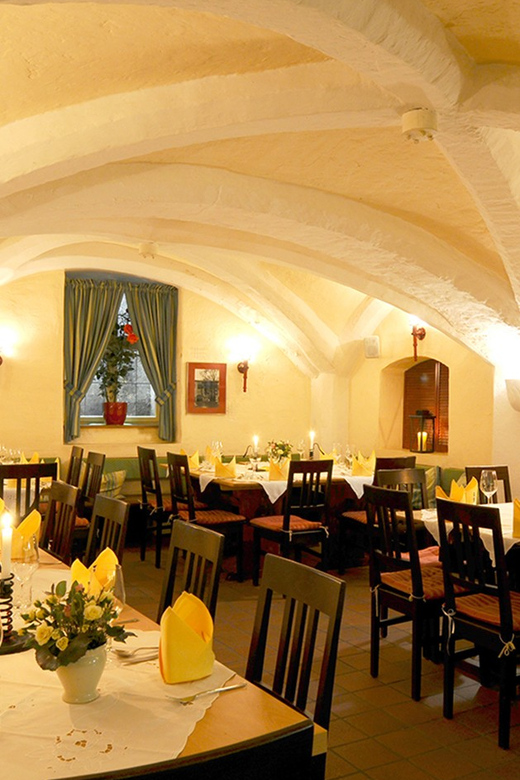
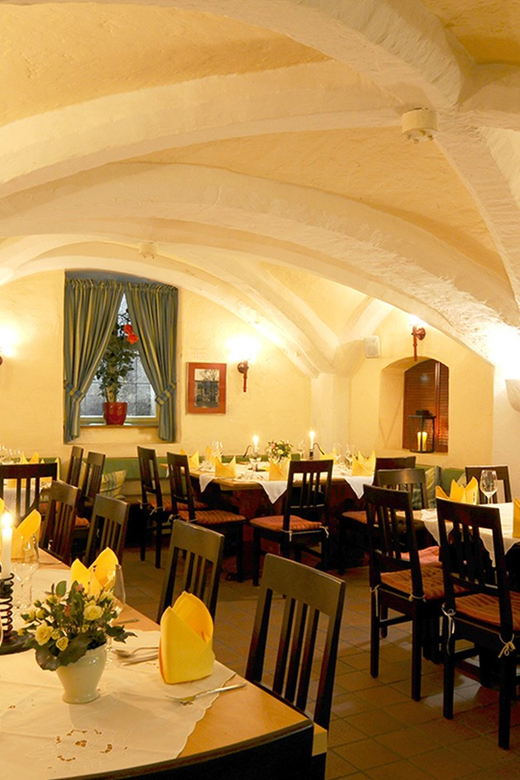
The tour starts with a nightwatch meal and a drink at a tavern stop right after you meet. The idea is simple: you eat something hearty before you wander through the old streets, and you do it as a group so the evening feels shared from the beginning.
You are looking at medieval-flavored comfort food, including meat and bread, meant to “gather strength” for the walk. I like this because it turns the tour into an actual plan, not just a history lecture with breaks.
At the end, you return to the tavern for dessert and a nightcap. Based on what I have seen reflected in actual experiences of this tour, the dessert portion can include sweets like Kaiserschmarren, served as a warm finish after the storytelling. Some people love this ending as a cozy close. Others prefer a different kind of last stop. Either way, this is the part that makes the experience feel complete.
If you have any dietary needs, you will want to check in advance, because the meal and dessert are part of the included experience. The tour data does not spell out customization details, so assume you get the standard menu.
St. Peter’s Church and the cemetery stories that get uncomfortably real
After your first tavern stop, you head into the older layers of Munich. One of the most memorable segments centers on St. Peter’s Church and stories connected to the cemetery and burial customs.
This is where the tour gets notably gritty. You will hear about funerary customs, epitaphs, and other details that do not sound pleasant on paper, including mentions of foul-smelling corpses and even missing church pews as part of the telling. The guide uses these images to show how people dealt with death, space, and dignity in earlier centuries.
Here is why this stop is valuable: it explains why churches and their grounds mattered beyond faith. They were also about community memory and social order. Even if the subject matter is dark, it tends to make the architecture feel more specific, less postcard-like.
If you do not like macabre stories, this is the place you might hesitate. But if you are curious about how real life worked, it is one of the tour’s strongest stretches.
More night watchman and ghost walks after dark:
- Munich: Night Watchman Walking Tour
★ 4.7 · 2,092 reviews - Munich Ghosts and Spirits Evening Walking Tour
★ 5.0 · 1,900 reviews - Munich: Night Watchman Torch Tour in German
★ 4.8 · 1,280 reviews - Munich: Spooky Tour of Old Town in German
★ 4.6 · 1,112 reviews
Old Town Hall, Salzstraße, and Munich’s rebuilding moments
Next up is a stop connected to the Old Town Hall on Salzstraße. You learn about the old city gate and the reconstruction of the spire in the 1970s. That mix of medieval origins and modern repair is a good reminder: old cities are not preserved in ice. They get damaged, rebuilt, and reshaped.
I like how this kind of detail prevents you from thinking in “then and now” extremes. Munich keeps changing, even when you are walking through parts that feel medieval. The spire reconstruction story gives you a concrete bridge between centuries.
As you move between stops, the guide also keeps the walking route interesting by pointing out spots where older city functions once sat. It is not just photo time. You are learning what the street used to do.
Torture chamber, prison, and the Old Court route
At some point the walk passes by a torture chamber and prison, leading you toward the Old Court. This part leans into the warning side of night watch life. The night watchman was not there only to look dramatic. The role existed to keep neighborhoods under control after dark.
The value here is perspective. You start to see how punishment and power were built into the city layout. When you look at an old complex, it is easier to understand why it was placed where it was, and why authorities needed eyes on the street.
This segment is also a tone check. Some people enjoy the grimness and the humor the guide adds. Others prefer lighter stories. If you are sensitive to references like torture and prisons, you might want to pace yourself, take a breath, and let the guide know you would rather steer toward less graphic topics when they offer them.
Following the 12th-century wall trace, then heading west
One of the route highlights is walking along where the original city wall from the 12th century once stood. You also leave a moated castle as you head west. Even if you cannot see every piece of what once existed, the guide’s direction helps you “read” the city like a map drawn by time.
This is where the tour beats the typical checklist. Instead of collecting buildings, you understand city defense lines and how movement worked. You begin to notice why certain streets feel like corridors and why openings matter.
If you like city planning and how medieval towns were shaped, this portion is a good fit. If you only want a fast look at famous landmarks, you might find yourself wishing for more free time. But the walk is structured, so expect to stay with the guide.
Gruftgasse and Schäfflergasse, where wine beat beer
The story shift gets fun around Gruftgasse. You hear gruesome tales that match the lane name energy. Then you move through Schäfflergasse, and the guide brings up an especially specific detail: in medieval Munich, wine was a drink of choice, not beer.
That is one of those facts that changes how you picture everyday life. It also gives you a reason to pay attention to street-level context rather than treating the area as just a “pretty alley.”
Then the route opens up again toward big landmarks. You get a steadier view of Munich’s skyline, including the two towers of the Frauenkirche. Seeing those towers during a story-driven walk feels different than seeing them from a random viewpoint. The guide frames what the church meant and why it would anchor the city’s identity.
Frauenkirche towers and the palaces you pass without stopping
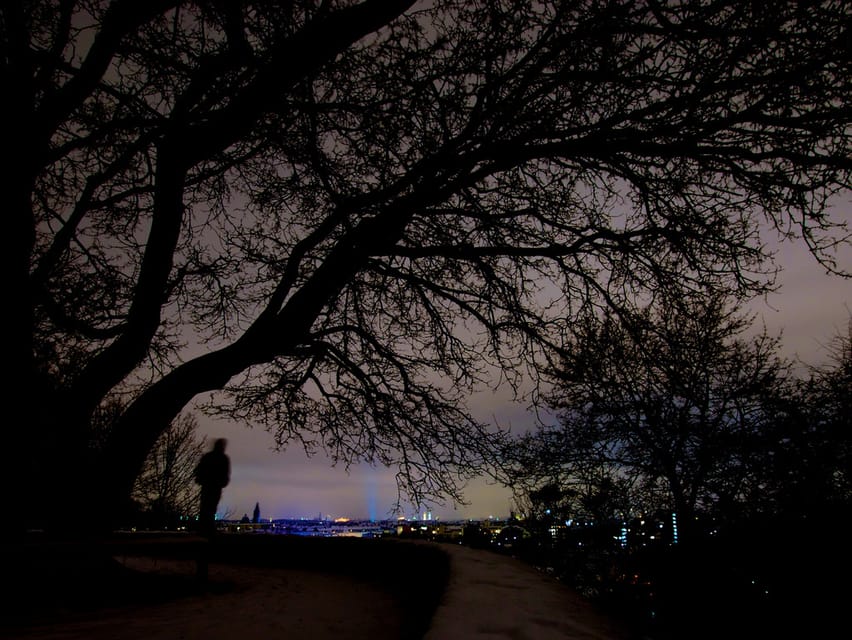
The women’s church towers are a highlight because they are iconic, but the tour also treats the in-between stops seriously. You pass by Promenadeplatz, Palais Portia, and Palais Holnstein.
Even if you do not get a long deep explanation at each one, you learn how to connect them to the path of the walk. It helps you understand that Munich’s old center is not one sight. It is a chain of places that influenced each other.
This is also a good moment to take short photos, but do not get stuck too long. The tour is built around movement and story pacing, so a delay can pull you away from the group’s rhythm.
Salvatorkirche and the Theatine Church with Henriette Adelaide
Toward the later portion, you hear about a shocking host desecration at Salvatorkirche. Then at the Theatine Church, you learn about Henriette Adelaide, and how her son made sure the Theatine cloister was built.
This pair of stops shows two sides of how stories live in religious spaces. One is scandal and fear. The other is patronage and building, the human decisions behind what you see.
I like that the guide includes both kinds of narratives because it keeps the evening from becoming only one-note. You still get the spooky vibe, but you also get a sense of why certain structures exist and how people shaped them.
How long it really takes, and what to expect from the group vibe
The stated duration is three hours, and some people report the walk can run slightly longer. Plan for extra time. If you have another reservation right after, give yourself a buffer.
Group size matters. Some experiences note that a larger group can make seating at the tavern stops feel cramped. If you prefer comfort, choose a smaller group departure when the schedule offers options, or bring patience for close-quarters dining.
On the entertainment side, the guide can add humor and theatrical energy. One guide named Matthias has been praised for both humor and knowledge, and even for getting people involved with singing. That kind of participation is not guaranteed, but it tells you the guide’s style can be lively, not dry.
Since the tour guide works in German, you might not catch every nuance if your German is basic. That said, the route is physical and the stories are tied to visible locations, which makes the experience easier to follow.
Price and value: what $88 gets you in Munich
At $88 per person for about three hours, you are paying for a costumed guide plus two food moments, the first stop meal and drink, and the end stop dessert and nightcap. You also pay for a guided walking route that stitches together several parts of old Munich, from Marienplatz to the Frauenkirche area.
If you tried to copy this on your own, you would still spend money on a meal and drinks, and you would likely miss the connective tissue that makes the route click. The tour is essentially packaged storytelling with built-in pauses, which is a real value if you want guided structure.
Is it cheap? No. But it can be good value if you enjoy spooky historical storytelling, want a guided night walk, and actually plan to eat rather than just snack.
Who this tour suits best, and who might skip it
This works best for you if you like old towns on foot, enjoy character-led storytelling, and want something more memorable than a standard sightseeing circuit. It is also a strong choice if you want a night out that includes food, not just walking.
You might skip it if you dislike grim topics like cemeteries and prisons, or if you find tight seating stressful. It is also not ideal if you need an English-speaking guide, since the tour language is German.
Should you book this 3-hour Munich nightwatch tour?
Book it if you want a structured evening with a costumed guide, real pauses for meal and nightcap, and a route that turns Munich streets into story cues. I would especially choose it if you like specifics, like learning why wine mattered more than beer in medieval Munich, or hearing how the Frauenkirche towers anchor the city.
I would think twice if you are sensitive to dark stories or if you know you get uncomfortable in larger groups. In that case, you can still have a great night in Munich, just consider a different style of tour or pick a smaller departure.
If you go, show up at Marienplatz early, wear comfortable shoes, and come ready to listen. This is the kind of tour where you get more from the walk when you let the guide lead.
FAQ
Where does the Munich nightwatch tour meet?
The meeting point is the Mariensäule at Marienplatz in Munich.
How long is the tour?
The tour lasts about 3 hours.
How much does it cost?
The price is $88 per person.
What language is the tour guide?
The tour is led by a live guide who speaks German.
What food and drinks are included?
You get a nightwatch meal and a drink at the first stop, then dessert and a nightcap at the end.
Is the tour wheelchair accessible?
Yes, the tour is listed as wheelchair accessible.
Can I book with flexible plans, and what about cancellations?
You can reserve now and pay later. Free cancellation is available up to 24 hours in advance for a full refund.
Recently added around Munich
- München: Vegetarische Viktualienmarkt-Probiertour Deutsch★ 4.8 · 6 reviews
- Walking Tour on Resistance to Nazism in Munich★ 5.0 · 8 reviews
- Private Transfer from Munich to Vienna with 2 hours for sightseeing★ 4.5 · 6 reviews
- Munich Walking Quiz: Explore and Discover the City’s Highlights★ 5.0 · 7 reviews
- 2 hour Sights Guided E-Scooter Tour in Munich★ 4.0 · 6 reviews
- Private Transfer from Munich to Salzburg with 2 hours for sightseeing★ 4.5 · 13 reviews
- From Munich: Neuschwanstein Castle and Linderhof Private Tour★ 5.0 · 13 reviews
- Paul’s Private Tour Munich Highlights★ 5.0 · 3 reviews
Viktualienmarkt & Food Tours, compared.
Old Town & Viktualienmarkt City Walk in German
Read our review →
Bavarian Beer and Food Evening Tour in Munich
Read our review →

Beer and Food Tour with Dinner & Oktoberfest Museum
Read our review →
Munich City Walking Tour, includes Third Reich & Viktualienmarkt
Read our review →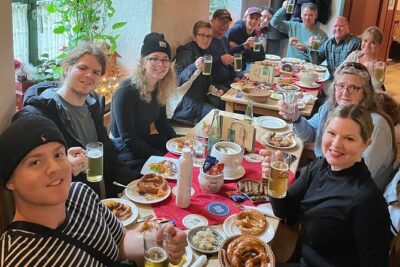
Lunch Like a Local: Munich’s ORIGINAL Viktualienmarkt Food Tour
Read our review →
Browse the lists this tour appears in