Reviewed · OLD TOWN WALKING TOURS
Munich: Highlights Walking Tour with a Guide
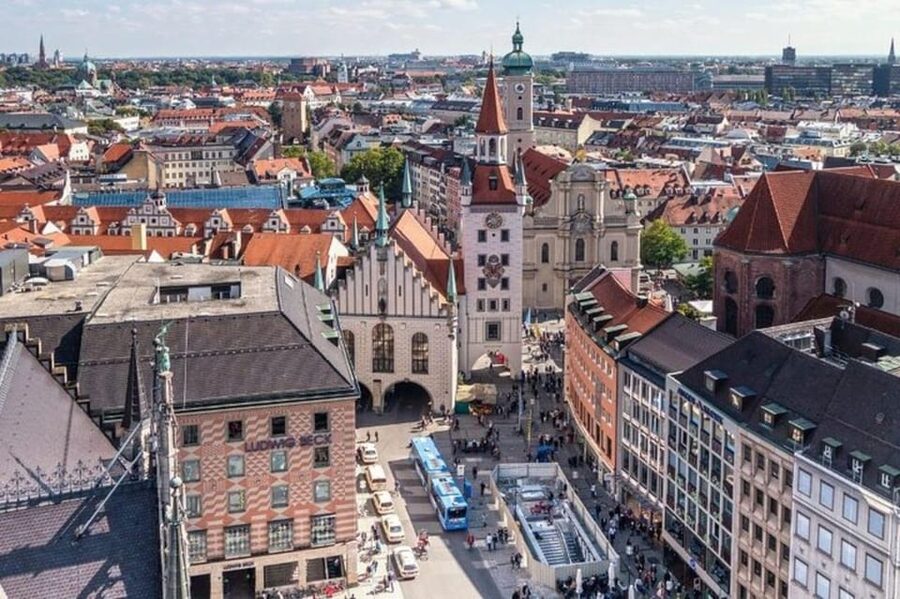
Munich’s Old Town has that rare mix of grand buildings and very human scale, and this 3-hour highlights walking tour is built to help you make sense of it without rushing. I like that it focuses on the sights most people actually came to see, while still leaving room for a guide to steer you toward the parts you care about. You start right at the Marienplatz area, so you hit the core fast.
I also love the practical value of a live guide. You get explanations at the exact moment you’re looking at something, plus extra local tips for what to do next. One possible drawback: if your interests are narrow, you should say so early, because some guides may spend extra time on church architecture and wartime damage, which can affect how much time you get for other stops.
Key highlights to look forward to
- A private, customizable route tailored to what you want from Munich
- Glockenspiel timing in Marienplatz, with shows at 11:00 am, 12:00 pm, and 5:00 pm (March to October)
- Big-ticket landmarks in one walk: Frauenkirche, Rathaus-Glockenspiel, Hofbräuhaus, Odeonsplatz, Residenz
- Real local-food energy at Viktualienmarkt, Munich’s top inner-city fresh food market
- A guide who brings context, including beer culture topics like the beer purity law and Oktoberfest
Why this Munich Old Town walk is a smart use of 3 hours
If you have limited time in Munich, the biggest risk is wasting it on confusion. Streets don’t come with captions. Buildings can look similar at a distance. And Munich’s center is full of layers, from royal courts to beer halls to painful 20th-century chapters.
This tour is designed to solve that. In three hours, you cover the main visual anchors of the Old Town and you get a narrative that helps the place click. You’re not just checking boxes. You’re learning why these spots matter, and what to pay attention to when you’re standing right there.
The other thing I like is the flexibility. It’s a private walking tour, and it’s described as customizable. That means you’re not locked into a one-size-fits-everyone pace. If you want more street-level perspective, or you care more about beer culture than palaces, a good guide should adapt.
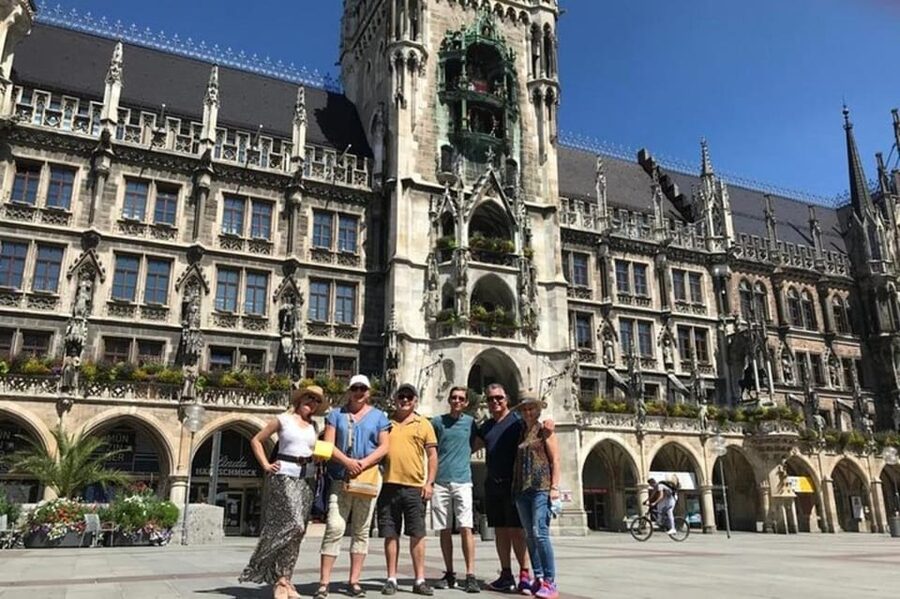
The starting point also helps. You meet at Marienplatz 15, in front of the Julia-Capulet-Statue, which places you at the center of gravity for a lot of Munich highlights. From there, you can keep the story tight.
More old town walks in Munich:
- Munich: Old Town & Viktualienmarkt City Walk in German
★ 4.7 · 2,304 reviews - Munich Old Town Walking Tour
★ 4.5 · 1,287 reviews - Munich: Spooky Tour of Old Town in German
★ 4.6 · 1,112 reviews
Meet at Marienplatz 15, then hit the Glockenspiel at the right moments
Your tour starts with a clean, easy rendezvous. You’ll meet your guide in front of the Julia-Capulet-Statue at Marienplatz 15, and then the walk begins in the exact zone most visitors want to be in.
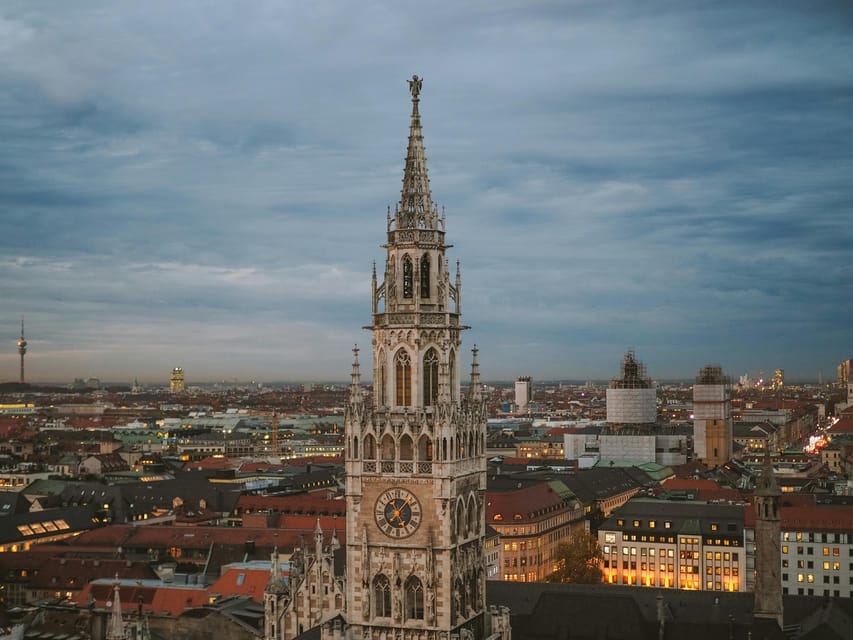
Marienplatz is the “you’re really in Munich” square. It’s where you feel the city’s rhythm, and it’s where the schedule matters. From March to October, the world-famous Glockenspiel performs at 11:00 am, 12:00 pm, and 5:00 pm. If you time your tour well, you can watch it as part of the guided flow, instead of playing hunt-the-crowd beforehand.
Here’s why that’s valuable. The Glockenspiel is easy to miss if you arrive at the square at the wrong time. It’s also easy to watch from a bad angle. Having a guide who knows where to stand and how to manage the crowd crush turns a quick show into a moment you’ll actually remember.
Practical tip: if you care most about seeing the performance, tell your guide at the start that this is your priority. That way, the pacing of church stops and palace time can be adjusted to keep you in sync with the show times.
Frauenkirche and the Rathaus-Glockenspiel: what to notice beyond the postcard view
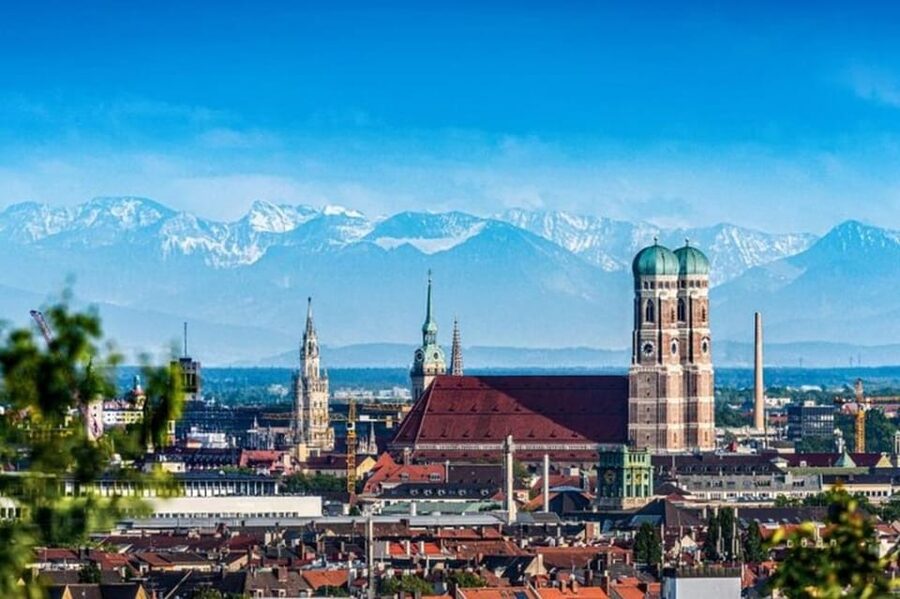
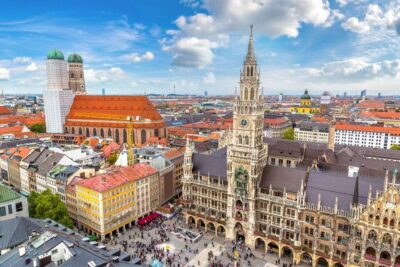
After Marienplatz, you move into the cathedral-scale centerpiece of Munich’s skyline: Frauenkirche, the city’s largest church. It’s one of those places where the outside gets attention first, but the inside and the details make the story land.
A guided stop here helps in two ways. First, you learn what you’re looking at, so you don’t leave thinking you’ve seen “just another big church.” Second, you get context for how Munich’s identity is tied to religion, architecture, and the city’s rebuilding story.
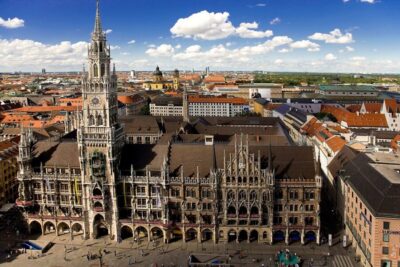
Then you get to the Rathaus-Glockenspiel, another major clockwork attraction that people love but often misunderstand. This is not only about the mechanism. It’s about what it represents and why it became one of Munich’s most visited sights.
My take: these clock and church stops work well together because they give you two forms of “city voice.” The Rathaus-Glockenspiel is civic theater. Frauenkirche is spiritual and architectural authority. Put them in the right order, and Munich starts to make sense fast.
One consideration. Not everyone wants heavy focus on wartime damage, even when it’s part of the buildings’ history. If you prefer a more general tour, or you’d rather spend time on interiors you can actually experience, speak up early. A good guide can steer toward the balance you want.
Hofbräuhaus, beer culture, and the facts behind the fun
Next comes Staatliches Hofbräuhaus in München, the world-famous beer hall. Even if you’re not a beer drinker, it’s still a key Munich experience, because it’s where the city’s social culture becomes visible.
A guided visit helps you connect three dots:
1) what Hofbräuhaus represents as a meeting place,
2) why beer culture is so tied to Munich identity, and
3) how special events fit into that culture.
You’ll also learn fun background topics, including the beer purity law and the annual build-up to Oktoberfest. That’s a big deal because it turns “beer, beer, beer” into something you can explain to yourself later. You’ll have a framework for understanding why the city treats beer like a civic tradition, not only a drink.
Practical angle for your day: Hofbräuhaus can be busy. This tour is built around walking and guided time, and food and drinks are not included. That means you have freedom to decide whether you want a quick stop, a long sit-down, or to keep moving. If you’re the type who hates waiting in lines, you’ll likely appreciate the guide keeping the flow moving.
More walking tours in Munich:
- Munich: Third Reich & WWII Walking Tour
★ 4.6 · 6,181 reviews - Third Reich Walking Tour Munich
★ 4.5 · 4,291 reviews - Munich: Night Watchman Walking Tour
★ 4.7 · 2,092 reviews - Munich Ghosts and Spirits Evening Walking Tour
★ 5.0 · 1,900 reviews
Odeonsplatz and Residenz: royal power, public memory, and careful pacing
The tour then heads to Odeonsplatz, described as one of Munich’s most beautiful squares. It’s also a place where beauty and politics collide. You’ll learn about its history, including its use for Nazi rallies in the 1930s and 1940s.
This is one of those moments where a guide’s tone matters. A good guide won’t turn it into a lecture, but they also won’t skip it. Instead, they help you understand why the site matters in the present, not just the past. If you’re sensitive to historical topics, tell the guide how you want the discussion handled. You can ask for shorter, high-level context or more time on interpretation.
After that, you visit Residenz, which is described as the largest inner-city palace in Germany and the ancestral home of the Wittelsbach Royal family of Bavaria. Even when you’re not spending hours inside, you get the key idea: this wasn’t only a residence. It was a seat of power, and that helps you read the surrounding streets with a more informed eye.
Here’s the reality check I’d give you. Residenz is big. If you want to go beyond what you can see during a walking stop, you may need ticket time, and time is the only resource you can’t buy back in a 3-hour tour. The good news is that the tour includes help from the team to book tickets for desired visits, so you can plan instead of guessing.
If you’re hoping to combine Glockenspiel timing with a fuller Residenz experience, make that priority clear at the start. The schedule can stretch based on where the guide spends time and how your group responds to each stop.
Viktualienmarkt: the perfect pause to think, snack, and plan
To finish strong, the tour passes by Viktualienmarkt, described as the largest inner-city fresh food market in Germany. This is the kind of stop that helps you shift from “tour mode” to “local life mode.”
Markets are great because they reward your senses. Even if you don’t buy anything, you can see how Munich eats, how it shops, and how locals spend free time. It also works as a launchpad for the rest of your day.
Because the tour does not include drinks or food, you can use Viktualienmarkt as your signal to stop. Grab a snack, pick up something for later, or just take a breather before you head off to your next plan.
Price and value: what $53 buys you (and what to watch for)
At about $53 per person for a 3-hour walking tour, this sits in the “solid value” range for a guided highlights experience in a major European city. You’re paying for three things you can’t easily replicate on your own:
- a live guide to interpret what you’re seeing,
- a route that covers major sights efficiently,
- and help booking tickets for visits you want to add.
The value gets better if you’re the type who learns fast from on-the-spot context. If you like your sightseeing with explanations, this is a good match. The guide’s ability matters a lot here.
I also picked up clues from past guide experiences that good guides can make the tour feel personal. Names that stand out include Elettra, who was described as very prepared and engaging, and Roberto, who was friendly and full of information. Those are the kinds of guides who help you get more than a list of stops.
Now the caution. Value also depends on fit. If your group is not religious and you prefer less focus on church war damage, you should say that early. If you’re counting on catching a Glockenspiel performance exactly, confirm with your guide that the timing will align with your show time and that you won’t get stuck too far away from the route.
A good guide should be able to handle both interests. The best move on your side is to set expectations clearly at the start.
Who should book this tour, and who should manage expectations
This is a great choice if you want to:
- see the core Old Town highlights efficiently,
- learn the story behind Marienplatz, Frauenkirche, and major squares,
- understand Munich’s beer culture through Hofbräuhaus and the beer purity law topic,
- and get practical advice for what to do next.
It’s also a good fit for first-timers who want to avoid getting lost and for people who like walking with a plan.
It might be less ideal if:
- you only want modern Munich and minimal historical discussion,
- you dislike church interiors or prefer fewer stops focused on wartime architectural damage,
- or you have very strict timing needs around specific show moments.
If any of those apply, don’t skip the tour. Just negotiate the priorities on day one. A private, customizable tour works best when you speak up early.
Should you book this Munich Highlights Walking Tour?
I’d book it if you want a guided, organized introduction to Munich that covers the big sights in a short window and gives you context you can use immediately. The $53 price feels reasonable when you consider the guided interpretation plus ticket help for optional entries.
I would not book it blindly if your plan depends on catching one specific Glockenspiel moment with no flexibility, or if your preferences are strongly against extra church-focused discussion. In those cases, message your priorities before you go, and tell the guide at the meeting point so the pacing matches what you actually came for.
If you get a strong guide match, this is the kind of tour that helps Munich feel understandable fast, not overwhelming.
FAQ
How long is the Munich highlights walking tour?
The tour lasts 3 hours.
Where do we meet the guide?
You meet your guide in front of the Julia-Capulet-Statue at Marienplatz 15.
Is the tour private?
A private and customizable walking tour is available, with a private group option.
What languages are offered?
The live tour guide is available in English, French, Spanish, Italian, and German.
Are there specific times for the Glockenspiel?
From March until October, the world-famous Glockenspiel performs at 11:00 am, 12:00 pm, and 5:00 pm.
Is food or drink included?
No. Drink or food is not included.
Is it wheelchair accessible?
Yes, the tour is wheelchair accessible.
Can I cancel for a full refund?
The tour offers free cancellation up to 24 hours in advance for a full refund.
Recently added around Munich
- München: Vegetarische Viktualienmarkt-Probiertour Deutsch★ 4.8 · 6 reviews
- Private Transfer from Munich to Vienna with 2 hours for sightseeing★ 4.5 · 6 reviews
- Munich Walking Quiz: Explore and Discover the City’s Highlights★ 5.0 · 7 reviews
- Walking Tour on Resistance to Nazism in Munich★ 5.0 · 8 reviews
- 2 hour Sights Guided E-Scooter Tour in Munich★ 4.0 · 6 reviews
- Private Transfer from Munich to Salzburg with 2 hours for sightseeing★ 4.5 · 13 reviews
- From Munich: Neuschwanstein Castle and Linderhof Private Tour★ 5.0 · 13 reviews
- Paul’s Private Tour Munich Highlights★ 5.0 · 3 reviews
Old Town Walking Tours, compared.
Old Town & Viktualienmarkt City Walk in German
Read our review →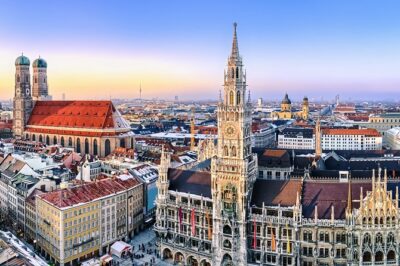

Munich Private Tour with a Local – Highlights & Hidden Gems
Read our review →
Munich City Walk and Oktoberfest Tour With Beer Tent Reservation
Read our review →Browse the lists this tour appears in