Reviewed · NIGHT WATCHMAN & GHOST TOURS
Munich Macabre Group Walking Tour
This Munich Macabre walking tour works because it treats the old streets like a classroom you can touch. I especially like the hands-on archaeology angle, and the way you get medieval beer as part of the story. One possible drawback is the subject matter can be intense, including plague and persecution themes, so it is not for everyone.
Led by archaeologist and historian Taff Simon, the route is built to feel like an evening stroll with an expert who can answer real questions, not a script read on autopilot. With a maximum of 15 people, you should feel more like you are part of the group than watching from the back.
Key things that make this Munich Macabre tour different
- Meet at Fischbrunnen (Marienplatz) and start with city origins, not random trivia
- Taff Simon blends archaeology and street history, plus period-style storytelling
- You handle real ancient items (coins and other artifacts) and also replicas of medieval arms
- The route spans major old-town anchors, including Marienplatz and Old Town Hall
- You try authentic medieval beer samples, tied directly to Munich brewing history
- Small group pace keeps the tour interactive, with time for questions
How Taff Simon turns Munich into a hands-on archaeology lesson
The big reason to pick this tour is the format. This is not a sit-and-listen history walk. You are actually invited to handle objects, and that changes how the past feels. When you hold ancient coins or examine pottery, the story goes from abstract to personal in a fast way.
I also like that the guide is an archaeologist and historian, with real digging experience to draw on. Several stops lean on what excavations have revealed, and you get the chance to connect that evidence to what you see in Munich today. It is the kind of tour where questions get answered, not brushed aside.
Do note that some of the material is dark and may include sensitive visuals from archaeological work. The tour frames this as education about how people lived and died, plus what social structures and beliefs can be read from burial practices.
More night watchman and ghost walks after dark:
- Munich: Night Watchman Walking Tour
★ 4.7 · 2,092 reviews - Munich Ghosts and Spirits Evening Walking Tour
★ 5.0 · 1,900 reviews - Munich: Night Watchman Torch Tour in German
★ 4.8 · 1,280 reviews
Pricing and timing: what $42.24 buys you in Munich
At about $42.24 per person, you are paying for three things that are hard to get together elsewhere. First, you get a guided walk across multiple historic locations in central Munich, around 2 hours 30 minutes to 2 hours 45 minutes. Second, you get included alcoholic beverage samples, specifically medieval beer. Third, you get the hands-on component, including handling original ancient artifacts and replica medieval arms and armor.
You can also think of the price as paying for access and interaction. Replica-only tours exist, and standard guided walks exist. This one blends both, plus a small group cap of 15, which helps keep the experience conversational.
The meeting time is 6:00 pm, which also matters. In Munich’s center, evening is a great time to walk because you get cooler temperatures and you are already in the part of the city most people want to explore.
Marienplatz kickoff: where the tour starts and how Munich was shaped
You begin at Fischbrunnen, Marienplatz 8. The guide starts by laying out the origins of the city and explaining why Munich looks the way it does. This is a smart opening because it gives you a mental map before you start collecting stories about specific neighborhoods and institutions.
Marienplatz is a natural meeting spot because you are right where the city’s public life gathers. You get to start with the big picture, then the tour becomes more specific as you move quarter to quarter through old-town Munich.
This first stop is short, about 15 minutes, so treat it as your orientation moment rather than the main act.
Landschaftstraße and Munich’s Medieval Jewish quarter, plus the reality of blood libel
Next comes Landschaftstraße, where the street today looks fairly ordinary but sits alongside what used to be the Medieval Jewish quarter. This stop focuses on how the community contributed to Munich’s economic and cultural life, and also how people were targeted through baseless accusations.
The tour addresses blood libel accusations tied to the Black Death, plus claims of criminal and witch-like behavior. The goal here is not shock for its own sake. It is to show how fear can rewrite facts, and how persecution gets justified through rumor rather than evidence.
What I think is especially useful is the mention of archaeological progress. The guide connects recent excavations tied to a new U-Bahn project to what we understand about this part of the city. When a tour uses living construction work to inform the past, it feels current, not museum-only.
More walking tours in Munich:
- Munich: Third Reich & WWII Walking Tour
★ 4.6 · 6,181 reviews - Third Reich Walking Tour Munich
★ 4.5 · 4,291 reviews - Munich: Old Town & Viktualienmarkt City Walk in German
★ 4.7 · 2,304 reviews - Munich Old Town Walking Tour
★ 4.5 · 1,287 reviews
St. Peter’s Church and what graves can teach you
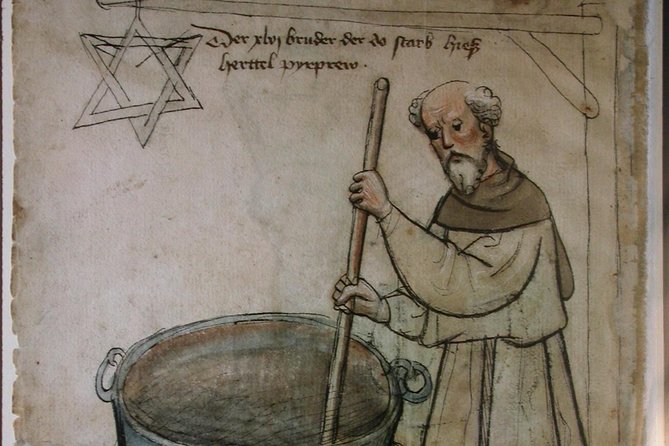
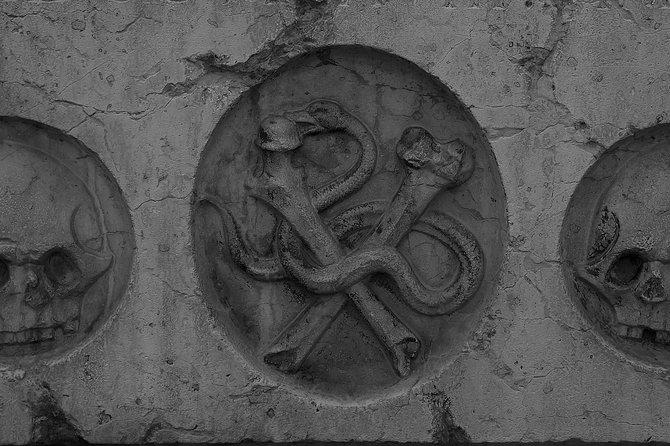
At St. Peter’s Church, the tour shifts to burial history. Since it is the oldest church in Munich, the conversation turns to graves and graveyards, and how you can read the symbols on headstones. You also learn about ancient Bavarian burial rites and how meanings shifted over time.
This stop includes a key moment that you will feel, not just hear about. You get to handle original ancient coins that would have been given as alms. That detail matters because it connects belief, social behavior, and material culture in one simple object.
The tour also discusses “rest in pieces” realities, meaning that the way people interpreted the idea of peace could be physically complicated by what graves actually reveal. You will hear about classes, trade, and guilds, reflected through gravestones and architectural features.
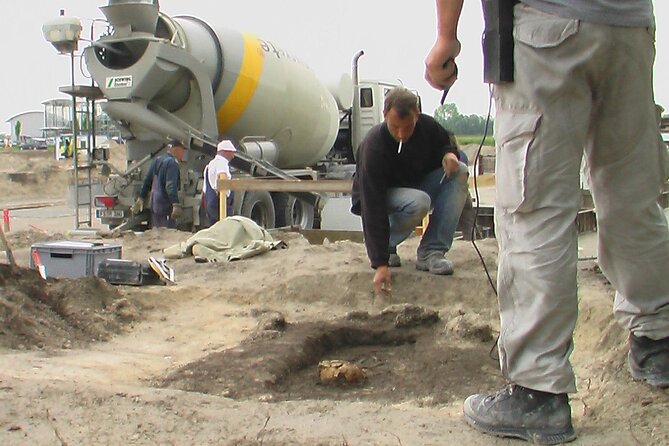
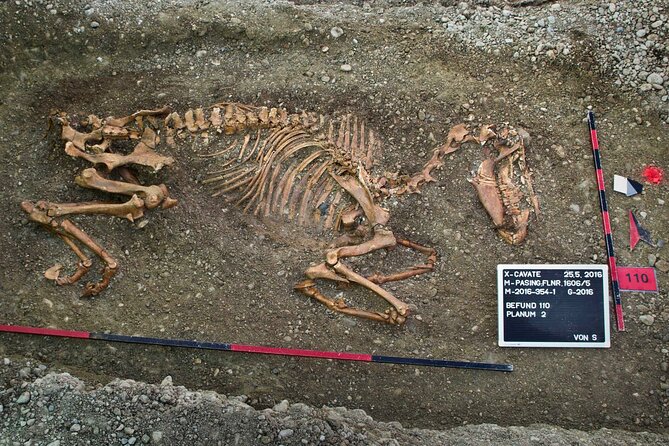
One sensitive note: the guide uses examples of dark age and early medieval burial rites using photos from archaeology sites, often on construction projects. The framing is educational, and it is worth considering your own comfort level if this type of material is hard to process.
If you like history that is grounded in objects and evidence, this is one of the most memorable stops.
Viktualienmarkt: from a medieval danger zone to pretzels, cheese, and beer samples
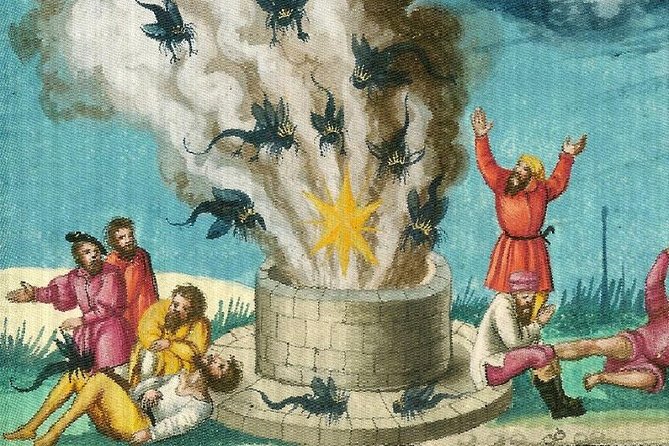
Viktualienmarkt is famous today for food stalls and market energy, but the tour uses it as a time machine. The story includes the idea that in medieval times you could be in serious trouble if you ended up there under the wrong circumstances.
This is where the tour’s humor and bite come through. You learn why an outcast could find themselves in this place, and you get the darker logic behind punishments and social boundaries.
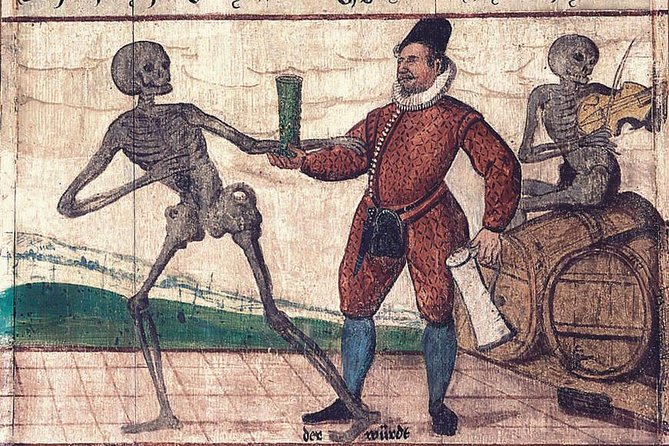
Then you get one of the most practical perks: medieval beer samples. They are samples, not full pours, but the tour ties the taste to why beer mattered in the past. Beer was not just a treat. It was a major part of daily life and a sign of local brewing culture.
You also learn about penalties for making bad beer and pretzels. It may sound odd until you remember that food quality and public trust were survival issues. In Munich, brewing is identity, and this stop helps you see that through the history of regulation and reputation.
Alter Hof: Wittelsbacher intrigue, Hans Talhoffer, and handling replica arms
The Alter Hof stop takes you to the area originally tied to the Wittelsbacher, Bavaria’s royal family. This is a strong pivot from church-and-graves history into court politics and public shock.
The tour discusses a murder that shocked medieval Europe and how the repercussions echoed through later generations of Münchner life. It also moves into medieval combat theory, including references to Hans Talhoffer, the late medieval sword master. You get to handle replica swords and possibly some armor too.
That hands-on combat element can be a surprisingly good learning tool. Even if you are not into weapons, it helps you understand how medieval training and violence worked at a physical level, rather than as a vague headline.
If time allows, there is a bonus archaeology layer. The guide describes a fascinating discovery in 1944 when an Allied bomb inadvertently unearthed ancient artifacts at the site. You may get to handle and compare different types of pottery and other artifacts, which is one of those rare experiences that makes you feel like you are standing in the gap between eras.
This stop is about 30 minutes, so expect it to feel like a mini show, with story, props, and a clear thread back to evidence.
Old Town Hall and the Pappenheimers witch trial
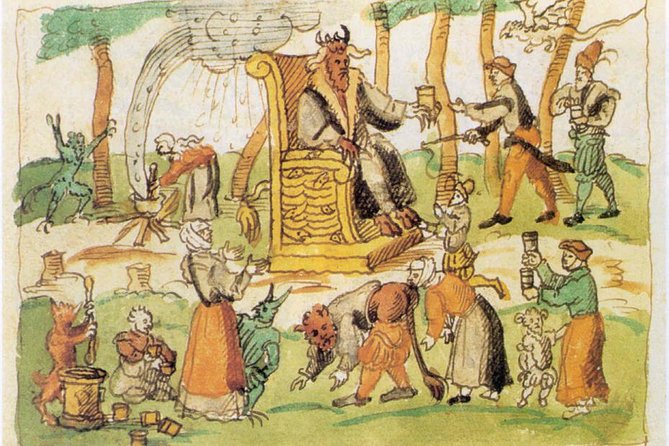
At Old Town Hall, the tour tackles one of the harshest episodes in German history: a witch trial in central Munich. You learn about the background, the charges, and the methods used to gather evidence, then the fate of the family named the Pappenheimers.
The tour makes an important point about consequences. The events described had far-reaching effects, extending even as far as a town in colonial Massachusetts. That kind of connection is what keeps the story from feeling local-only. It shows how ideas about guilt and proof could travel.
This is not a stop for anyone who wants light entertainment. The guide balances this with pacing and humor, but you should still expect uncomfortable history.
If you can handle dark themes, this is a top stop for understanding how fear can become law, and how social pressure can manufacture certainty.
The final loop back to Marienplatz: what you get at the end
You finish back at Marienplatz, near where you started. The last minutes focus on wrapping up, recommending further reading, and suggesting where to eat or drink nearby.
I like that the ending is practical. Instead of dropping you off and disappearing, the tour closes with direction. It is especially helpful if you want to keep exploring Munich that same night while the stories are still fresh in your mind.
The final stop is brief, about 5 minutes, so plan to stick around at the center afterward for snacks and a drink.
What to expect during the walk, including footwear and pacing
This is a walking tour, so you should expect uneven surfaces. The route is also designed to keep moving through different points of interest, which means comfortable shoes matter. If you have mobility or speed concerns, you can tell the organizer at booking so the route can be slightly adapted.
Seating is not consistent at every stop. If you need accommodations, mention it when you book, and the tour will try to adjust the route without changing the tour content.
The group size is capped at 15. In real terms, that means you should have time to interact, not just follow along.
Also: it is offered only in English, and that language detail matters. If you want German-led tours, the organizer points people to another company for that option, but this specific tour stays English-only.
The beer element: why it works with this kind of historical storytelling
This tour is not the usual “here is a beer, good luck.” The medieval beer sampling is woven into the explanation of brewing and the penalties tied to quality. You are tasting a concept, not just consuming alcohol.
That also means you should show up mentally ready for a sensory connection to history. The samples are small, but they are memorable because they are paired with reasons beer was so important in the past.
In a city full of beer halls, this feels like a different kind of experience. It is Munich beer culture viewed through medieval rules, trade, and daily necessity.
Who should book Munich Macabre, and who should think twice
This tour is best for you if you want Munich in a form that is interactive and slightly theatrical. It suits people who like archaeology, objects, and real discussion, plus anyone who enjoys stories that go beyond the sanitized postcard version of the city.
It also works well for teens and older kids when the family is comfortable with darker history. The tour notes that some content is not suitable for particularly young children, but it aims to temper descriptive elements.
Think twice if you do not handle grim themes well, or if you have an especially vivid imagination. The tour itself warns it is not for everyone with that kind of sensitivity.
Should you book this Munich Macabre group walking tour?
If you want a Munich tour that feels hands-on, not just scenic, I would book it. You get a tight route through major old-town landmarks, a guide who can connect archaeology to what you see, and included medieval beer samples that fit the theme instead of feeling like an add-on.
Choose it if you are curious about how cities remember their past, including the ugly parts. Skip it only if you know you are uncomfortable with plague-era context, persecution stories, or witch trial history.
If you want Munich to feel real in your hands, this is one of the better bets in town.
FAQ
What language is the Munich Macabre tour offered in?
This tour is only offered in English.
How long is the walking tour?
The tour runs about 2 hours 30 minutes to 2 hours 45 minutes.
Where do we meet, and where does the tour end?
You meet at Fischbrunnen, Marienplatz 8, 80331 München, Germany. The tour ends back at the meeting point.
Is the medieval beer included, and what do I get?
Alcoholic beverages are included as samples of authentic medieval beer. They are samples, not full pours, and supply issues can cause substitutions with more modern styles.
Does the tour include hands-on items?
Yes. You get to handle original ancient artifacts as well as replica medieval arms and armor.
How big is the group?
The tour has a maximum of 15 travelers.
Is the tour suitable for children?
Some content is not suitable for particularly young children. The guide will try to temper the more descriptive elements, but it is still a darker-history tour.
What should I wear or bring?
Wear clothing appropriate to local conditions and comfortable footwear for uneven surfaces. The route involves walking, and some stops may have limited seating.
What happens if weather is bad?
The experience requires good weather. If it is canceled due to poor weather, you will be offered a different date or a full refund. Free cancellation is available up to 24 hours in advance for a full refund.
Recently added around Munich
- München: Vegetarische Viktualienmarkt-Probiertour Deutsch★ 4.8 · 6 reviews
- Walking Tour on Resistance to Nazism in Munich★ 5.0 · 8 reviews
- Private Transfer from Munich to Vienna with 2 hours for sightseeing★ 4.5 · 6 reviews
- Munich Walking Quiz: Explore and Discover the City’s Highlights★ 5.0 · 7 reviews
- 2 hour Sights Guided E-Scooter Tour in Munich★ 4.0 · 6 reviews
- Private Transfer from Munich to Salzburg with 2 hours for sightseeing★ 4.5 · 13 reviews
- From Munich: Neuschwanstein Castle and Linderhof Private Tour★ 5.0 · 13 reviews
- Paul’s Private Tour Munich Highlights★ 5.0 · 3 reviews
Night Watchman & Ghost Tours, compared.
Munich Ghosts and Spirits Evening Walking Tour
Read our review →
Der Nachtwächter für Kinder – Führung auf Deutsch
Read our review →
Raven Black Witches and Executioners Walking Tour
Read our review →
Mystic Munich – Sagas and Legends of the Old Town
Read our review →Browse the lists this tour appears in