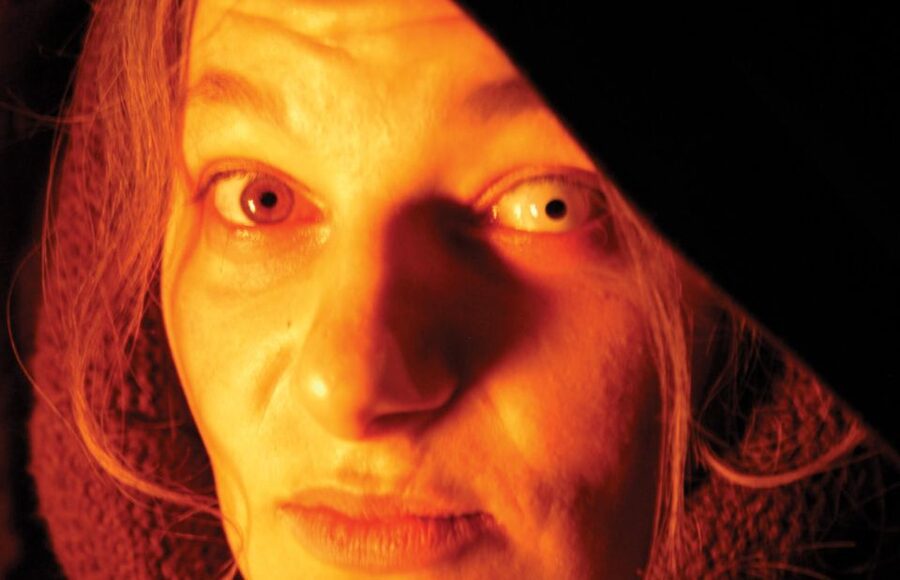
Reviewed · NIGHT WATCHMAN & GHOST TOURS
Munich: Scary Tour with actors in GERMAN
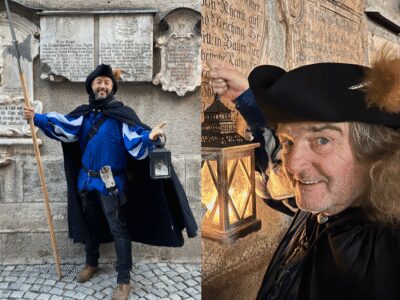
Munich has a way of making the past feel close, especially at dusk when the streets cool down and the details sharpen. This 90-minute walking tour turns that atmosphere into theatrical street storytelling with actors in historic costume, guiding you through sites tied to fear, punishment, and belief.
I especially like two things: the professional acting scenes that keep the pace lively, and the way you move between major old-town landmarks rather than just listening on a curb. One thing to consider, though, is that the tour is in German only, and the subject matter gets dark, including witch hunts, executions, and the former red light district.
Key highlights you will feel on the walk
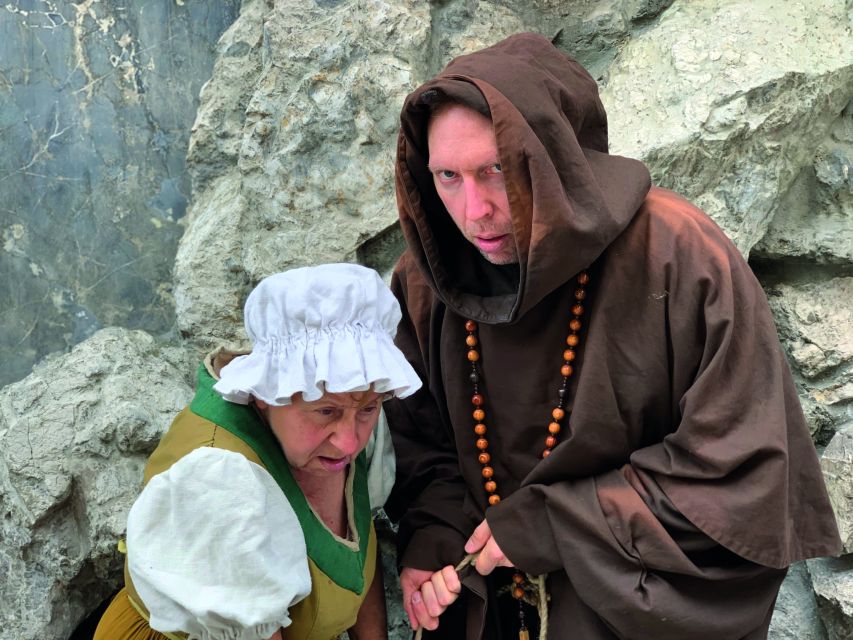
- Actors in historic costume reenact scenes tied to Munich’s fear-and-faith era
- Neuhauser Tor and execution route context, with explanations for why punishment happened outside town
- St. Michaelis, Frauenkirche, and Town Hall courtyard stops tied to specific stories, including weather and the devil
- Witch hunt and prostitution themes connected into one narrative so the links make sense
- St. Peter’s Church and Old Town Hall focus on hangmen, gallows ropes, and a former torture chamber area
Where the dark stories become real: a 90-minute night walk with actors in Munich
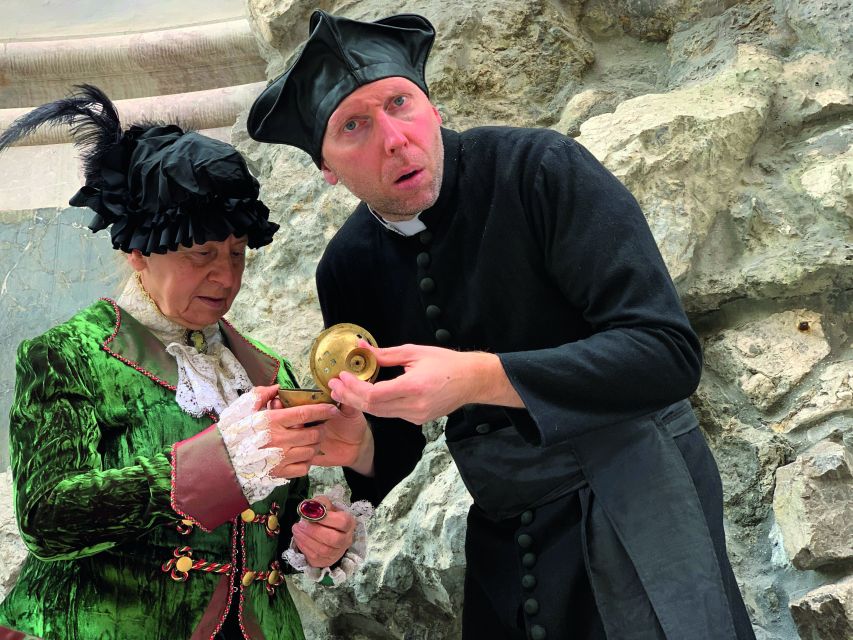
If you want history that does not sound like a lecture, this tour is built for you. It is a night walk in Bavaria’s capital where costumed actors step into key moments and bring the why behind the grim legends. The goal is simple: you walk, you watch, you listen, and the city’s old rules start to feel concrete.
The experience stays moving for 90 minutes, which is a smart length for a topic like this. Long tours can make heavy stories blur, but this one keeps scenes short and connected to the next stop. At $46 per person, it is priced like a premium guided experience, and you are paying for live narration plus a full cast performance in the street.
More night watchman and ghost walks after dark:
- Munich: Night Watchman Walking Tour
★ 4.7 · 2,092 reviews - Munich Ghosts and Spirits Evening Walking Tour
★ 5.0 · 1,900 reviews - Munich: Night Watchman Torch Tour in German
★ 4.8 · 1,280 reviews
Price and what you actually get for $46
Let’s be practical. A walking tour at this price usually means one of two things: either you get a highly scripted show, or you get an unusually strong guide. Here, you get both. You should expect professional actors to take over at key points, rather than just delivering dialogue while you stroll.
The value comes from structure. You do not just hear “witches and torture.” You learn how themes connect: why certain punishments were carried out outside the city center, why “witches” were blamed in specific ways, and how prostitution was handled over time, including that it disappeared from the historic center by the 1970s.
Also, the tour is rain or shine. If the weather turns, you will still be moving and still be listening. Bring layers and be ready for a damp city evening, since this is Munich and evening streets can be chilly even when the sky stays calm.
Meeting point at Karlsplatz/Stachus, Karlstor archway, with the big blue bag
You start at Karlsplatz/Stachus, under the archway of the Karlstor. Your guide will be wearing a big blue bag with the white words Weis(s)er Stadtvogel written on it. That makes it easy to spot, even when you arrive a few minutes early and the area feels busy.
Plan to arrive on time. This is not a “join whenever” situation. The tour starts from a defined point and then builds from there, using the streets and churches as stage markers.
If you are arriving by transit, this meeting spot is convenient because it sits right in the central hub. You do not need to solve transportation puzzles. You just need to find the guide with the blue bag and settle in for a dark, story-driven walk.
Neuhauser Tor: where the tour frames fear, punishment, and the city boundary
The first big moment is at Neuhauser Tor, a gateway tied to how delinquents were led to execution out of town. This is where the tour earns its “scary” tone in a way that still feels grounded. Instead of random spooky claims, you get a clear sense of process, geography, and power.
A big theme is the logic of distance. Why would executions happen outside the city? You will hear explanations that tie this to control and public messaging, and you will also learn why these stories were useful to authorities trying to shape behavior.
The tour then moves you through historic streets like Salzstraße, so the city itself becomes part of the story map. You are not just hearing about old Munich, you are walking its connective tissue.
Also reviewed in and around Munich:
- From Munich: Neuschwanstein & Linderhof Castle Full-Day Trip
★ 4.5 · 12,494 reviews - Neuschwanstein & Linderhof Castle-Fairytale Day Tour from Munich
★ 4.5 · 7,275 reviews - Munich: Third Reich & WWII Walking Tour
★ 4.6 · 6,181 reviews - Dachau Concentration Camp Memorial Site Tour from Munich by Train
★ 4.5 · 5,637 reviews
Salzstraße and the former Jesuit school: Renata versus Ignatius in the 1500s
As you head along the route, you reach the former Jesuit school from the era when witch hunts were active. This stop matters because it frames how belief systems and institutions could clash, and you get a staged argument between duchess Renata and Jesuit Father Ignatius.
You also hear about a dramatic event during construction of St Michaelis Church, when the tower collapsed. The story connects that unusual storm to a claim about blame, including the idea that such an event was interpreted as the result of accursed bad women. It is a creepy explanation, but it is also one of the most revealing parts of the tour because it shows how fear turns into certainty.
What I like here is that the tour does not treat these topics like isolated folklore. It uses scenes to show how rumors could gain authority, especially when they were attached to real places you can still see.
St. Michaelis Church and the tower-collapse scene: why superstition took the wheel
At St Michaelis Church, the actor scene is tied to the legend of the tower collapse. The performance turns the church into a kind of evidence board, where you hear how people in that time interpreted weather, accidents, and social stress.
Even if you know a bit about witch-hunt history, this stop gives you a more direct look at how blame could land on women and on so-called outsiders. You get the feeling that the city was not only built with stone, it was also built with stories people repeated until they felt true.
This is also where the tour’s acting approach really matters. The staging helps the details stick. You will remember the connection between a collapsed structure and accusations because the explanation is performed, not just spoken.
Schöner Turm and the goldsmith tragedy: when the story turns from myth to people
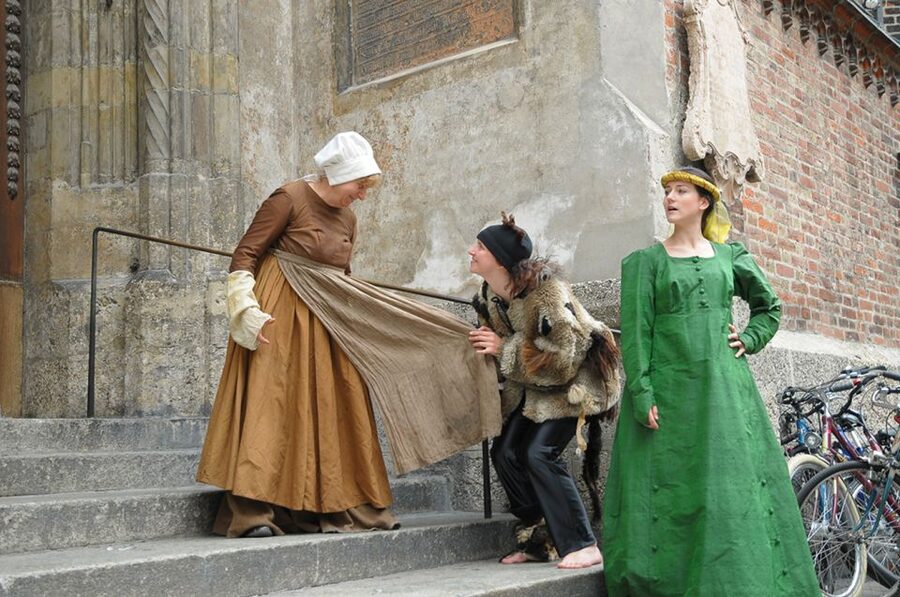
Next comes Schöner Turm, where you hear the sad story of an unfortunate goldsmith. This stop shifts the tone slightly. You still get witch-hunt atmosphere, but the narrative brings in a more human, case-like angle.
If you are wondering how these systems worked day to day, this kind of story helps. It suggests that the same fear that made people talk about witches could also be applied to regular trades and ordinary lives.
The best part is that the tour uses landmarks as anchors. You are not mentally holding five separate narratives. You are standing in front of a named structure, and the story belongs there.
Frauenkirche and the devil scene: windy air, big questions, and shoe-size humor
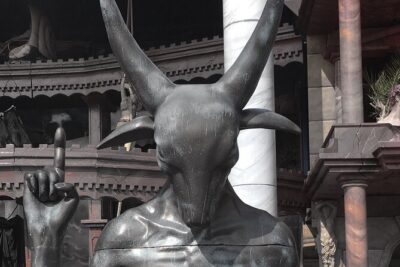
Then you hit a landmark that everyone recognizes: the Frauenkirche. The tour adds a twist right away. You will meet the Prince of Darkness himself, and you will hear why the devil supposedly helped the master builder construct the church and why it is so windy around this area in the story.
There is also a playful moment involving the devil’s shoe size, which sounds silly until you remember what the tour is doing. It uses dark comedy to keep you engaged while talking about frightening topics. It also makes the scene feel like folklore, not just grim facts.
I like that the devil character functions like a storytelling device. You learn how myths can travel, repeat, and gain texture over time. You also get a fun reminder that people in every era mixed fear with entertainment, even when the subject matter was brutal.
Town Hall courtyard and the alchemist Marco Bragadino: science, fraud, and persuasion
Approaching the town hall, you move into another central stage. Here, you meet alchemist Marco Bragadino, linked to a supposed goldsmith. The performance centers on warming the crowd to his arts, so you get a sense of persuasion, spectacle, and the thin line between craft, fraud, and belief.
This stop is valuable because it broadens the story beyond witches and executions. It shows that fear and hope often traveled together. People wanted explanations, cures, and shortcuts. If someone could sell an answer, they might survive longer than someone who could not.
You will feel the tour’s theme coming into focus here: the city is not only about punishment. It is also about who convinced people and why.
St. Peter’s Church and the hangman’s everyday reality
At St Peter’s Church, the tour turns toward the everyday life of a hangman. That might sound like pure shock value, but it is actually one of the most grounding parts. You hear how he looked, why he was avoided, and even details about how one might obtain a gallows rope.
For me, this stop is where the tour becomes most useful. It adds social context. The hangman was not just a function, he was a person with a reputation, and the community shaped around that reputation. You get a sense of how punishment was carried out by someone, and how that someone was treated afterward.
This is also where the tour’s “learn historic facts” promise shows up in a tangible way. Instead of only focusing on victims, you hear about roles and routines.
The “beautiful woman” escape: a rare moment of survival
Midway through the old-town stretches, you will witness a story of a beautiful woman escaping sure death. This moment acts like a pressure release. After heavy scenes, the tour lets you breathe for a second, and it also keeps the narrative from turning into one endless grim list.
Even without getting into graphic details, this type of story matters for understanding the era. It reminds you that people were not passive in the face of fear. Sometimes they found ways out, even if the system around them was brutal.
If you are sensitive to scary themes, you might still feel affected, but this “escape” beat gives the tour emotional variation.
Old Town Hall and the former torture chamber area: where fear was procedural
Near the old town hall, the tour takes you across the area associated with a former torture chamber. Here you hear gruesome stories tied to how torture worked as a process, not just as a rumor.
This is the stop that can feel the most intense for some people. The tour clearly leans into the “scary” theme, so if you do not handle stories about suffering well, you should prepare yourself. On the other hand, if you want to understand how authority used fear to control truth, this stop is the clearest statement of that idea.
What you can do for yourself: keep your attention on the explanations and the why behind the practices, not only the shock factor. The tour is trying to make the logic of the era understandable.
The Platzl and Munich’s red light history until 1972
Finally, you reach the Platzl, which the tour connects to Munich’s red light district until the Olympic Games of 1972. You will hear it through story language tied to the cultural memory of the city, including references to the song Skandal im Sperrbezirk by the Spider Murphy Gang.
This part helps the earlier themes snap together. The tour is centered around the connection between hangmen, whores, and witches, and it explains how these “professions” were linked in how society managed behavior. Then it brings you into a more modern timeline, including that prostitution was no longer part of the historic center by the 1970s.
If you like urban history that spans centuries, this ending gives you a strong sense of change over time. It also shows that the stories are not only about the medieval or early modern period. Munich’s social rules evolved, and the city re-zoned its nightlife.
Acting that keeps you awake, and moments that include you
One of the most praised aspects of this tour is how well it blends education with performance. The acting scenes are not treated like background entertainment. They are the delivery system for the facts.
Another standout is how the tour keeps the audience involved. I like tours where the guide and cast treat you like part of the experience rather than a passive line of listeners. When that interaction works, it makes the 90 minutes feel shorter and more alive.
The guide also matters. You will get thoroughly researched facts presented through entertaining reenactments. That balance is why you leave feeling like you learned something new, not just watched a set of spooky scenes.
Language and comfort: who should book, and who should think twice
Because the tour is live and in German, it works best if you comfortably follow German spoken narration. If you are looking for English or Chinese, this specific tour is not listed as offering that. That matters more than most people think, because so much of the story is tied to specific names and explanations.
Also consider the theme intensity. Witch hunts, prostitution, torture, and executions are not mild topics. The tour uses theatrical storytelling and some dark humor, but it does not soften the subject into a PG version.
This tour is a great fit if:
- You like street theatre style tours with a clear narrative
- You enjoy old-town walking routes and big landmarks like Frauenkirche and the town hall
- You want one evening activity that teaches and entertains at the same time
It might be a tough fit if:
- You prefer family-friendly sightseeing with lighter topics
- You need an English-language guide
- You get unsettled by torture or execution themes
Practical tips so you enjoy it in real life
This is a night walking tour, and it runs rain or shine. Wear shoes you trust on uneven pavement. If it has rained recently, paths around old Munich can get slick.
Bring a light layer even if the forecast looks mild. Church areas can feel cooler with wind, and the tour includes stops where the story even comments on wind around the Frauenkirche area.
Finally, arrive a bit early. That extra time helps you find the meeting point under the Karlstor arch and settle before the first scene starts.
Should you book Munich: Scary Tour with actors in GERMAN?
Book it if you want a German-language evening walking show that makes Munich’s dark legends understandable through real landmarks and strong acting. The price makes sense when you factor in professional actors plus a 90-minute route packed with named stops like Neuhauser Tor, St Michaelis, Frauenkirche, the town hall, St Peter’s, and the old town hall area.
Skip or rethink it if you need English narration, or if you dislike tours that include torture, executions, and witch-hunt themes. The staging can make it feel engaging, but the topic stays heavy.
If you are the type who likes your history with characters, streets with atmosphere, and explanations that connect one grim story to the next, this is a fun way to spend an evening in Munich.
Recently added around Munich
- München: Vegetarische Viktualienmarkt-Probiertour Deutsch★ 4.8 · 6 reviews
- Walking Tour on Resistance to Nazism in Munich★ 5.0 · 8 reviews
- Private Transfer from Munich to Vienna with 2 hours for sightseeing★ 4.5 · 6 reviews
- Munich Walking Quiz: Explore and Discover the City’s Highlights★ 5.0 · 7 reviews
- 2 hour Sights Guided E-Scooter Tour in Munich★ 4.0 · 6 reviews
- Private Transfer from Munich to Salzburg with 2 hours for sightseeing★ 4.5 · 13 reviews
- From Munich: Neuschwanstein Castle and Linderhof Private Tour★ 5.0 · 13 reviews
- Paul’s Private Tour Munich Highlights★ 5.0 · 3 reviews
Night Watchman & Ghost Tours, compared.
Munich Ghosts and Spirits Evening Walking Tour
Read our review →
Der Nachtwächter für Kinder – Führung auf Deutsch
Read our review →
Raven Black Witches and Executioners Walking Tour
Read our review →
Mystic Munich – Sagas and Legends of the Old Town
Read our review →Browse the lists this tour appears in