Reviewed · WALKING TOURS
Munich: Must-See Attractions Walking Tour
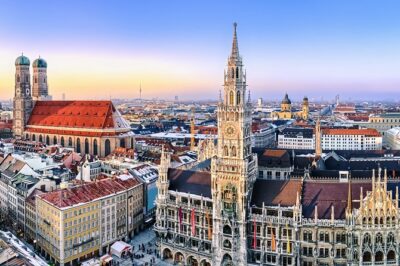
Munich works best when you can connect the dots fast, and this 2-hour Old Town walk does exactly that. You move through Marienplatz and the big landmarks that shape day-to-day life in central Munich, with a guide who turns stone and clocks into stories you can actually use.
I especially like the built-in mix of “look up” moments, like the Rathaus-Glockenspiel, and “look closer” stops, like the guided visits around the Frauenkirche and St. Peter’s Church. You’ll also get a very Munich-style cultural stop at the Staatliches Hofbräuhaus, where the city’s beer hall identity is more than a photo-op.
One drawback to keep in mind: this is a short walk. If you want lots of time inside churches, or you want to cover every side street in the center, you may end up wishing you had booked more than two hours.
Key highlights you’ll feel right away
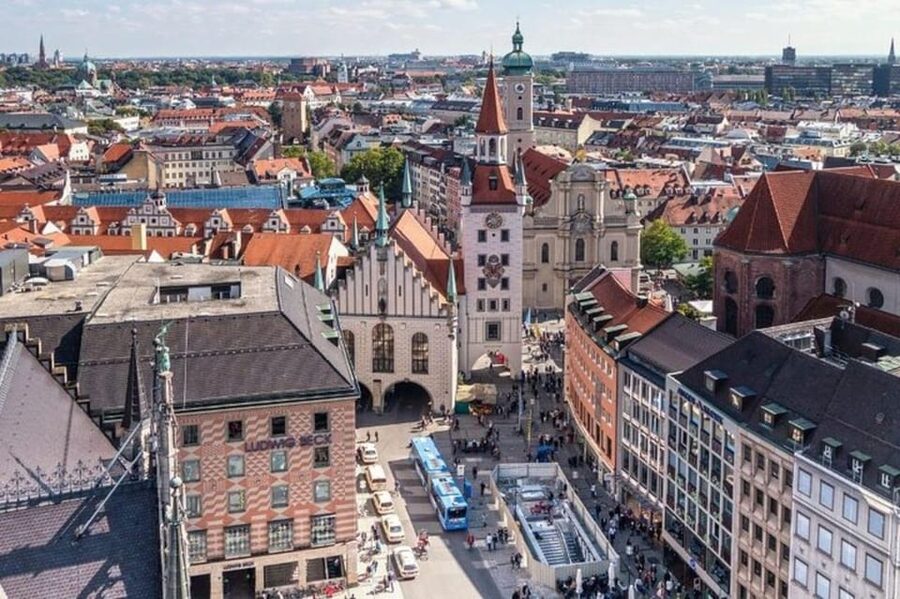
- Marienplatz Square as the center of gravity, with context that makes the space click
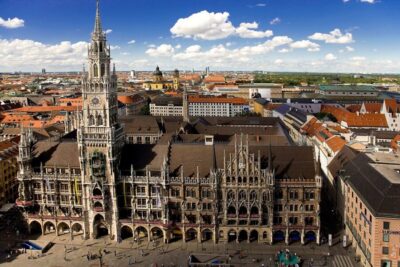
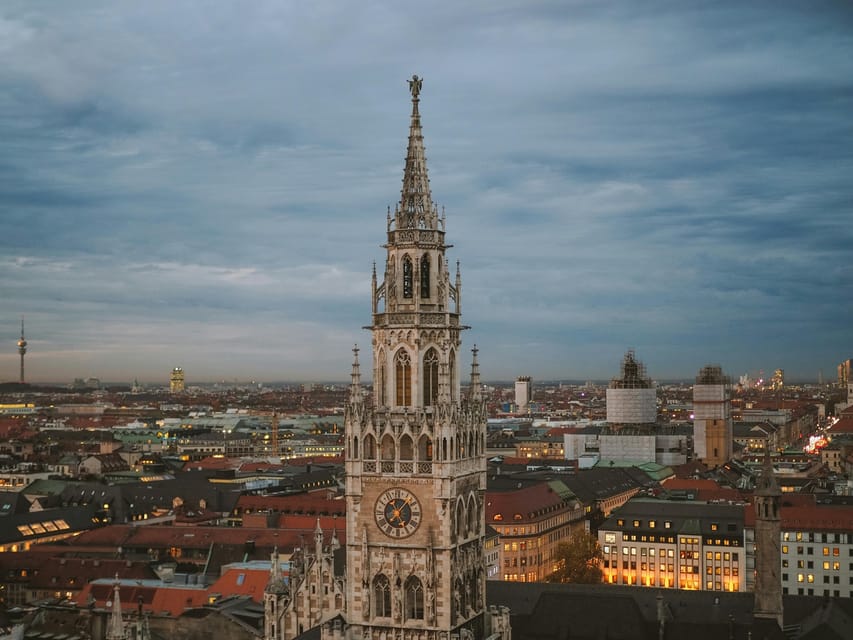
- New Town Hall and the Rathaus-Glockenspiel, a 250-year-old clock you stop for and actually notice
- Frauenkirche, the biggest church in Munich, explained in a way that helps you read the landmark
- St. Peter’s Church, including why it matters as the oldest Catholic church in the city
- Staatliches Hofbräuhaus, a world-famous beer hall stop tied to Munich culture and royal history
Why This 2-Hour Munich Old Town Walk Works
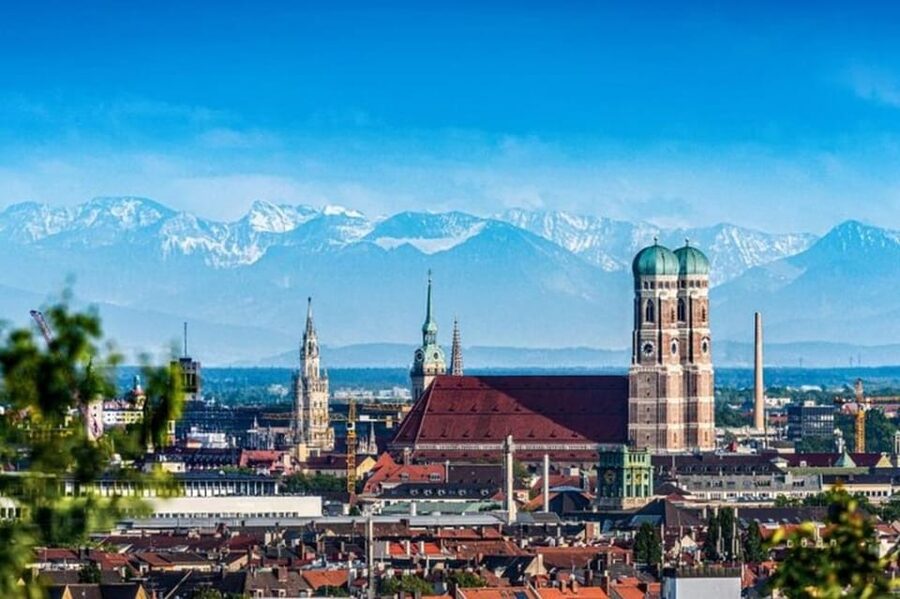
This tour is built for people who want the big center of Munich without spending half a day and still missing the essentials. In two hours, you hit the places that define Munich visually, then you get just enough background to understand what you’re looking at.
The best part is that it is not just “here is a building.” Your guide helps you connect the landmark to the city around it, from the civic pulse of Marienplatz to the religious weight of the two churches. That matters because Munich can feel orderly and planned, and you might miss why it feels that way if you are sightseeing alone.
You also get a strong cultural contrast in a very short time. The walk begins in the civic heart with the clock and town hall, then shifts to church history, and ends at Hofbräuhaus, where beer hall culture has its own kind of civic importance. It is a compact slice of Munich life, not just a checklist.
More walking tours in Munich:
- Munich: Third Reich & WWII Walking Tour
★ 4.6 · 6,181 reviews - Third Reich Walking Tour Munich
★ 4.5 · 4,291 reviews - Munich: Old Town & Viktualienmarkt City Walk in German
★ 4.7 · 2,304 reviews
Starting at The Charles Hotel, Sophienstraße 28 (What to Do First)
You meet your guide in front of The Charles Hotel, a Rocco Forte Hotel, on Sophienstraße 28. Arrive a bit early, because in the center, meeting points can look similar on first glance, and you want zero stress before the tour starts.
What I like about this start is that it puts you right where Munich sightseeing is easiest. You are already positioned to walk into the Old Town core, so you are not spending your first minutes figuring out which direction is correct.
Bring comfortable shoes. This is a walking tour, and even at a relaxed pace you will cover enough ground to appreciate supportive footwear. Also, plan for weather. Munich can change quickly, so if you normally carry a light layer or rain shell, bring it.
Marienplatz and the Rathaus-Glockenspiel: Look Up, Then Listen
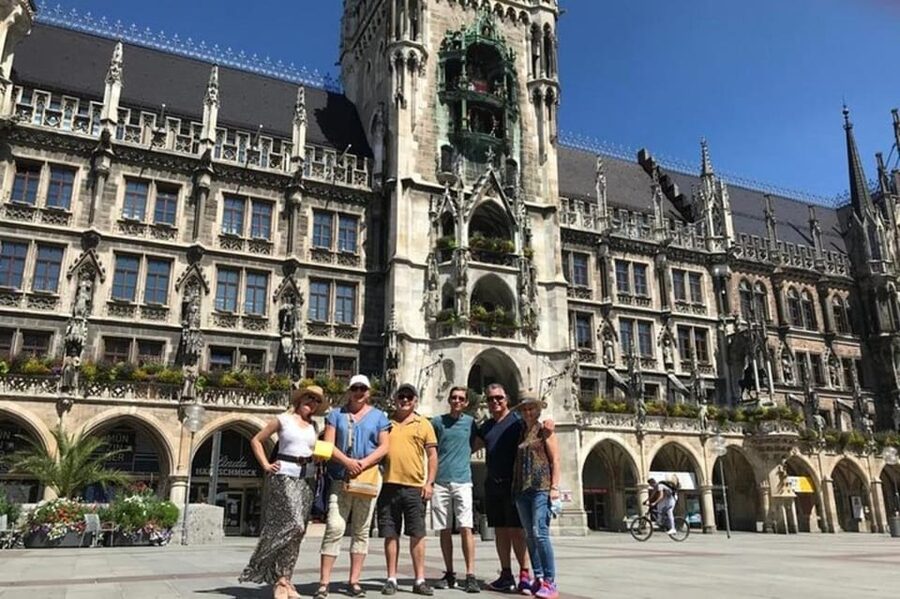
Marienplatz is where the Old Town feels like the Old Town. Even if you have seen photos, being there in person is different. The square has the physical “center of things” feeling, and your guide helps you understand why this location mattered in the city’s everyday life.
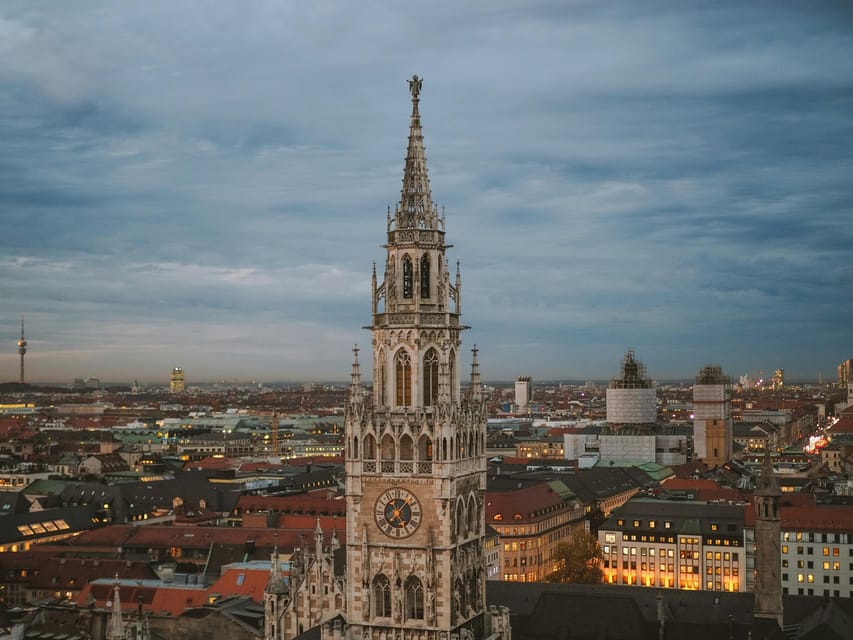
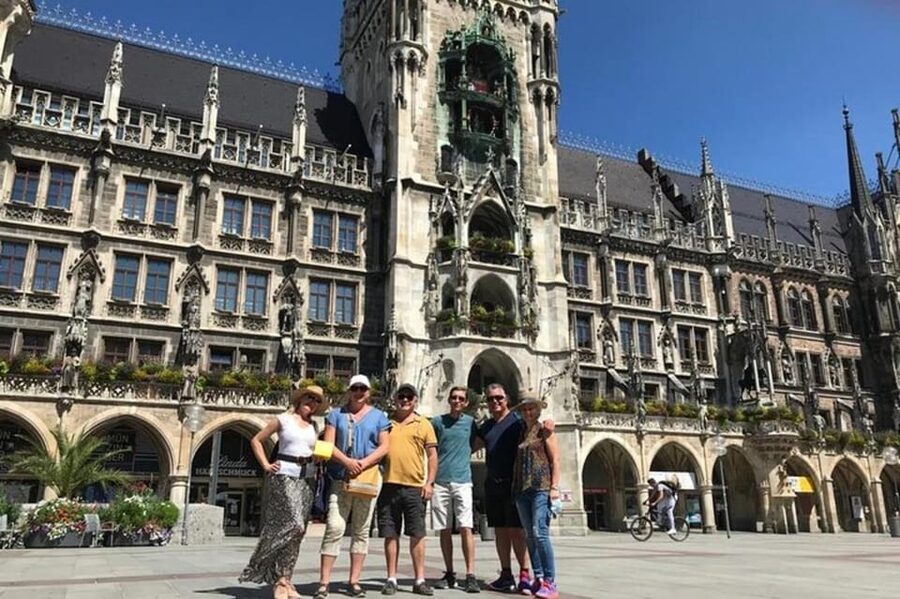
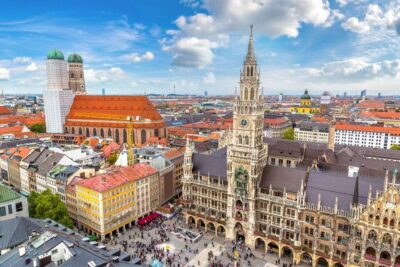
From there you go to the New Town Hall (Neues Rathaus) area. The big feature people notice is the tower and, most importantly, the Rathaus-Glockenspiel clock in Marienplatz Square. It is described as a 250-year-old mechanical clock, and the payoff is that you actually pause and pay attention instead of rushing past it.
Here is the practical value: a guide helps you see patterns you would miss on your own. The timepiece is not just decoration. It is part of how Munich communicates civic identity, and the clock’s presence turns a public square into something more than a place to pass through.
Tip: keep your head up during the stop. If you are tempted to take a photo while looking down at your phone, you will miss the details you came for.
Frauenkirche: Learning the Landmark Without Getting Lost in the Details
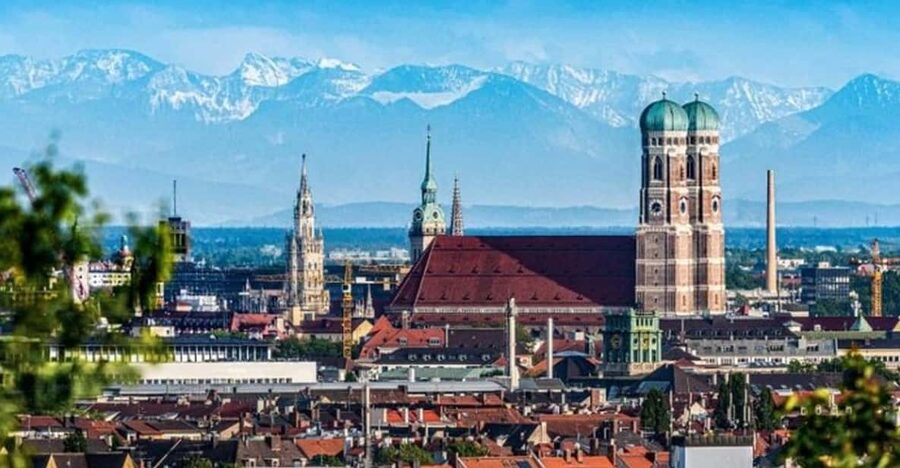
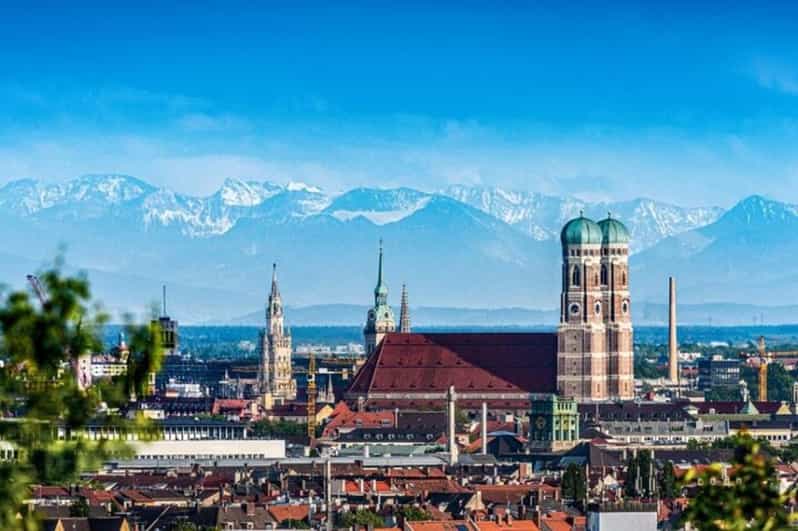
The stop at Frauenkirche is your “big landmark” moment. You will be seeing the biggest church in Munich, and that size changes how the building feels in the middle of the city. It is one thing to recognize it from postcards, and another thing to stand near it and understand why it became such a central reference point.
A strong walking tour does two things here. First, it gives you the basic context so the stop makes sense fast. Second, it points out what to focus on when your brain is still scanning for where to look.
That is what you get. You do not leave with a wall of facts. You leave with a clearer mental map of the church as a defining landmark, and you can later re-find it in your head even after you move on. That is exactly what makes a short guided walk worth doing.
Also reviewed in and around Munich:
- From Munich: Neuschwanstein & Linderhof Castle Full-Day Trip
★ 4.5 · 12,494 reviews - Neuschwanstein & Linderhof Castle-Fairytale Day Tour from Munich
★ 4.5 · 7,275 reviews - Dachau Concentration Camp Memorial Site Tour from Munich by Train
★ 4.5 · 5,637 reviews - Neuschwanstein Castle Tour from Munich
★ 4.5 · 5,117 reviews
St. Peter’s Church: The Oldest Catholic Footsteps in the City Center
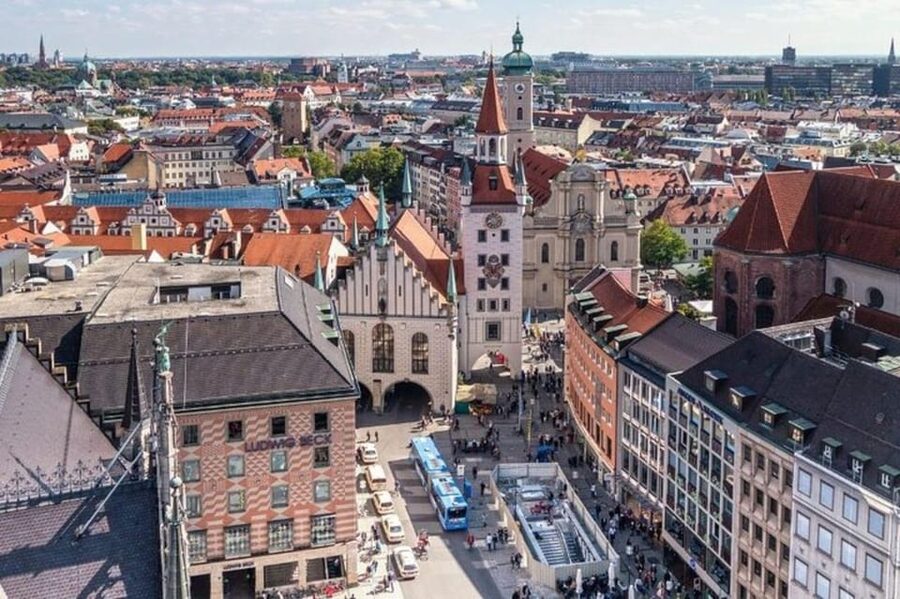
Next is St. Peter’s Church, highlighted as the oldest Catholic church in Munich. This stop adds depth because it shifts the lens from a major civic landmark to an older religious foundation that shaped the city long before modern Munich got its current rhythm.
What I like about pairing these two church stops back-to-back is that it gives you contrast. The Frauenkirche moment is scale and central presence, while St. Peter’s gives you age and continuity. Even if you do not memorize every detail, the experience makes you feel how Munich layers time.
A guided visit also helps you avoid the common trap of “standing there and guessing.” With a guide, you are not just looking at architecture, you are getting a sense of why this church became important enough to last as a key landmark.
New Town Hall Architecture Meets Mechanical History
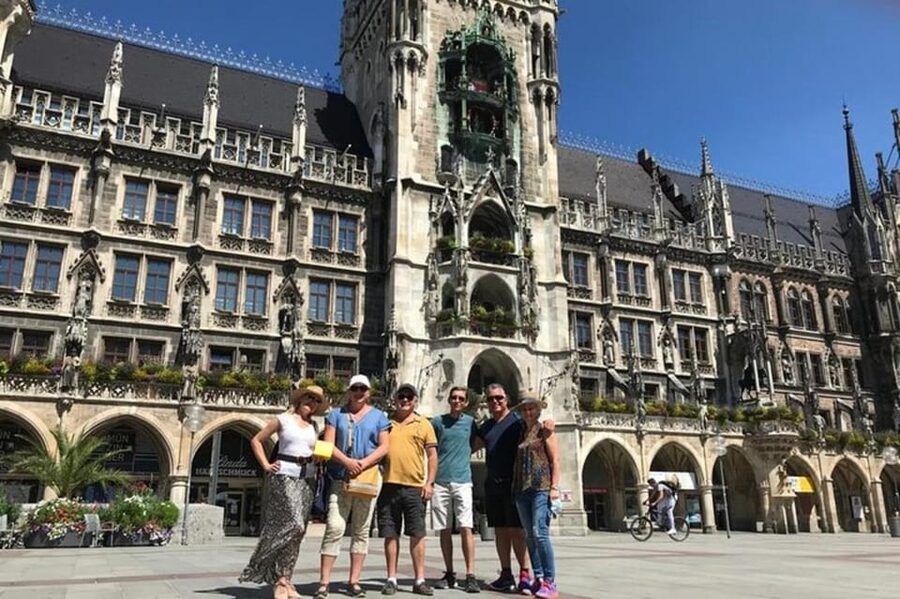
You spend time around the Neues Rathaus area while also focusing on the clock itself. It is a useful combo because the Rathaus-Glockenspiel is attached to the town hall as a civic statement, so the setting matters.
The tour description frames the New Town Hall as the seat of the Munich town council, and that is a key idea. When you connect the clock to the building’s role, the stop feels less like you visited a separate attraction and more like you experienced a civic space doing civic work.
This also helps your photos land better. Instead of taking random shots of a tower and then walking away, you can compose your pictures with the town hall and square relationship in mind.
Staatliches Hofbräuhaus: The Beer Hall Stop That Feels Like Munich
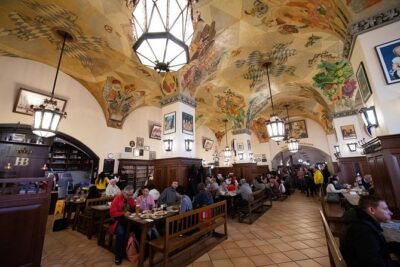
This is the one stop that turns sightseeing into culture. Staatliches Hofbräuhaus is framed as a world-famous beer hall and brewery, and the tour connects it to Munich’s culture and royal history.
Even if you are not planning to drink much, the value is still there. Beer halls in Munich are not simply places to grab a beverage. They are part of the city’s social structure, and they have a long story behind that role. A guide helps you understand why the place became a destination, not just a convenient stop.
One practical note: the tour does not include food or drinks. If you want a beer or snack, plan to do that on your own before or after. That way you can match the timing to your appetite and preferences.
If you are the type who likes to end tours with a place that feels unmistakably local, this stop is a strong finish. You leave with a Munich flavor you can recognize later, even after the walking is done.
Price and Value: Is $44 Worth It?
At $44 per person for a 2-hour guided walk, the value depends on what you want from your trip.
If you want a simple route through famous spots, you could probably build something similar yourself. But if you care about understanding what you are seeing, this is where the money starts to make sense. You are paying for a guide who connects Marienplatz, Frauenkirche, St. Peter’s Church, the Rathaus-Glockenspiel, and Hofbräuhaus into one coherent story.
Also, your money buys more than facts. It buys speed. You get guidance in real time, so you are not wandering, guessing, or trying to interpret landmarks with half a dozen tabs open on your phone. In a city center where distances are short but decisions multiply, that time saved matters.
It is also good that you can choose between private and small-group options. A smaller group usually means more chances to ask questions and fewer moments spent in “freeze, everyone stop” logistics.
Bottom line: if you like guided walking tours for context, $44 is a reasonable price for a focused Old Town sampler. If you hate walking, or you only want interiors and long stays, you may feel rushed.
Group Size, Languages, and the Guide Factor
The tour runs with a live guide, with language options listed as English, French, and Spanish. This is helpful if your group spans multiple languages, or if you want your explanation to be truly understandable rather than “just enough.”
You may also have a choice of group format, since private group availability is listed. For couples, families, or anyone who wants fewer distractions, private can make the two-hour experience feel more personal.
The guide quality seems to be a real differentiator. One named guide, Roberto, stood out for being especially informative, and he shared extra context on World War II during the tour. That kind of added layer is exactly what turns a normal sighting tour into something that lingers in your memory.
At the same time, one low rating in the mix points to an important reality: tours are only good when the meeting and communication go smoothly. I cannot guarantee how any specific day will go, but you should plan to arrive at the meeting point on time and be ready to show up prepared. If something feels off right at the start, handle it quickly through your booking channel.
Who This Tour Suits Best
This walking tour is a strong fit if you:
- Want a tight Old Town overview that hits major landmarks fast
- Like learning context, not just taking pictures
- Enjoy a finish at a real Munich institution like Hofbräuhaus, not just another square
It might be less ideal if you:
- Want a long, slow pace with lots of free time to explore every side street
- Are hoping for extra stops beyond the core landmarks
- Need food included as part of the experience
If you are planning a day in Munich and want the center covered early, booking this early can give you a mental foundation. Later, when you wander on your own, you will understand what you are seeing.
Should You Book This Munich Old Town Walking Tour?
I think you should book it if your goal is clarity and efficiency. You get the core Munich postcard landmarks, plus explanations that make them more than background. The Rathaus-Glockenspiel and the two churches give you strong “sight” value, and the Hofbräuhaus stop adds cultural grounding at the end.
I would hesitate only if you hate walking, if you want more time at fewer places, or if you need food included. Since it is 2 hours and does not include drinks or meals, you should treat it as a guided orientation and then plan your own food plan.
If you do book, show up with comfortable shoes, look up during the clock stop, and give the churches a few minutes to sink in. This tour works best when you stay present, not when you multitask.
FAQ
Where is the meeting point?
You meet your guide in front of The Charles Hotel, a Rocco Forte Hotel.
How long is the walking tour?
The tour duration is 2 hours.
How much does the tour cost?
The price is $44 per person.
What languages are available for the live guide?
The live tour guide is available in English, French, and Spanish.
Is it private or small-group?
Private group availability is listed, and the tour is described as either private or small-group depending on the option you choose.
Is food or drinks included?
No. Food or drinks are not included.
What can I expect to see during the tour?
You will visit Marienplatz, Frauenkirche, St. Peter’s Church, the Rathaus-Glockenspiel, and Staatliches Hofbräuhaus, plus other Old Town sights along the walk.
Recently added around Munich
- München: Vegetarische Viktualienmarkt-Probiertour Deutsch★ 4.8 · 6 reviews
- Private Transfer from Munich to Vienna with 2 hours for sightseeing★ 4.5 · 6 reviews
- Munich Walking Quiz: Explore and Discover the City’s Highlights★ 5.0 · 7 reviews
- Walking Tour on Resistance to Nazism in Munich★ 5.0 · 8 reviews
- 2 hour Sights Guided E-Scooter Tour in Munich★ 4.0 · 6 reviews
- Private Transfer from Munich to Salzburg with 2 hours for sightseeing★ 4.5 · 13 reviews
- From Munich: Neuschwanstein Castle and Linderhof Private Tour★ 5.0 · 13 reviews
- Paul’s Private Tour Munich Highlights★ 5.0 · 3 reviews
Walking Tours, compared.
Old Town & Viktualienmarkt City Walk in German
Read our review →
Munich Ghosts and Spirits Evening Walking Tour
Read our review →