Reviewed · GUIDED
Munich’s 500 Years of Architecture Guided Tour
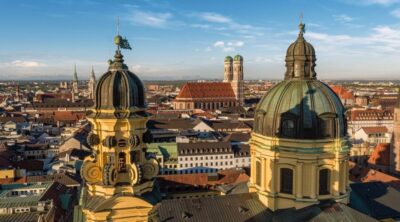
This is the kind of tour that feels like a storyline, not a facts dump, because it moves through 500 years of styles in order, street by street. I especially like the mix of architecture you can see outside plus chances to go into up to three landmark buildings, and I like the built-in break when you get out of the Old Town and head toward the Isar River. One consideration: it’s a winter walk with real sidewalk time, so bring warm layers and comfortable shoes, because you will cover ground.
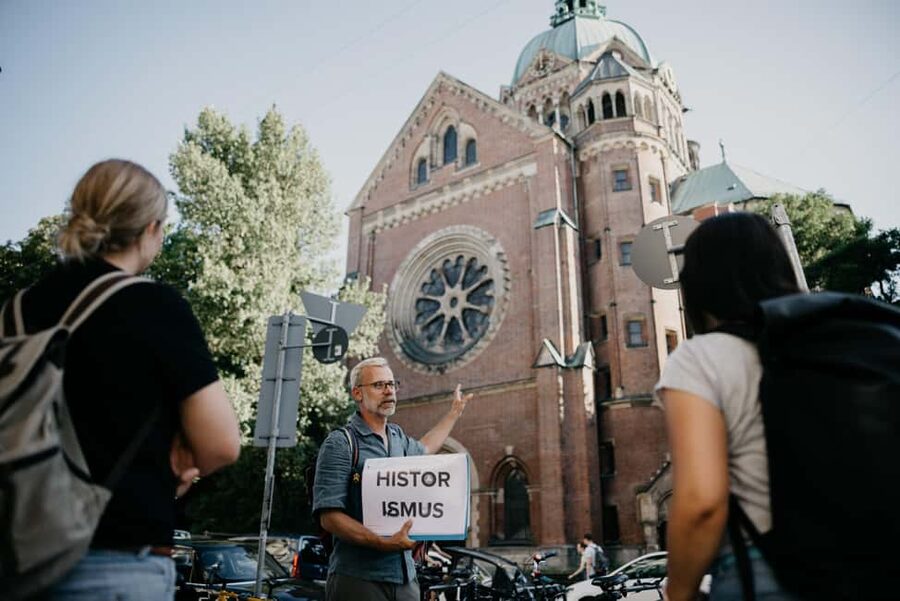
The guide, Philipp, is easy to spot at Frauenplatz (yellow winter hat, yellow backpack, large blue folder), and he keeps the history moving with royal tales, legends, and the occasional darker chapter. The tour ends at the Sudetendeutsches Museum, so you get a satisfying modern stop after the churches, opera, and classic styles. If you use a wheelchair or have mobility limits, you should know the tour is not suitable for wheelchair users.
Key highlights you should know before you go
- Chronological route through eras, from late 15th-century Gothic through Renaissance, Baroque, Neo-Classicism, Historicism, and Jugendstil (Art Nouveau).
- Old Town, then tram to the Isar River, giving you a contrast between busy squares and calmer riverside scenery.
- Christmas markets with a medieval twist, plus multiple market stops to build in chances to warm up and snack (food is on you).
- Stories beyond the postcard view, including legends and royal family tales tied to specific landmarks.
- Art Nouveau and street art at the end, with a modern museum finish that changes the mood.
- Philipp’s guiding style, highlighted by how personable, present, and story-focused he is in English or German.
A 500-year Munich timeline that actually stays readable
If you only have a small window in Munich, this tour is a smart way to get your bearings. Instead of hopping randomly between famous buildings, you walk a clear time line, starting in the late 1400s with the Frauenkirche area and then moving forward through the big architectural eras you can recognize by style. It’s a quick crash course, but it doesn’t feel like a lecture.
What makes it work is the way the guide uses human stories to connect the structures. You hear about royal family themes and legends, and you also get room for the city’s harder chapters, not just the glossy parts. That balance matters. Architecture is the visible layer, but the stories are what keep it from becoming background noise.
You also get a present-day contrast built into the route. After centuries of Gothic, Renaissance, Baroque, Neo-Classicism, and Historicism, the end shifts to Jugendstil (Art Nouveau), street art, and a modern museum stop. It’s a reminder that cities do not freeze in time, they keep rewriting their look.
Other reviewed options in Munich
- Munich 3-Hour Guided Bike Tour
★ 4.5 · 1,731 reviews - Munich’s Beer Halls and Breweries: 3-Hour Guided Tour
★ 4.6 · 928 reviews - Guided Dachau Concentration Camp Memorial Site Tour with Train from Munich
★ 5.0 · 920 reviews
Meeting at Frauenplatz 1: easy to find, easy to start on time
You meet outside the main entrance at Frauenplatz 1, in front of the famous Frauenkirche. Philipp waits for you there, recognizable by his yellow winter hat, yellow backpack, and a large blue presentation folder. That matters on a practical level, because showing up to a tour in a busy square is half the battle.
Getting there is simple. The easiest way from transit is to get off at S-Bahn or subway station U3/6 Marienplatz and walk about 5 minutes. If you’re coming from Hauptbahnhof München, plan on a 15-minute walk.
The tour runs about 2 hours, and it ends back at the meeting point area. That loop is helpful if you want to continue your day nearby, grab dinner, or duck into Christmas market areas again after the tour.
Frauenkirche to St. Michael’s: the Gothic start and a record-holder stop
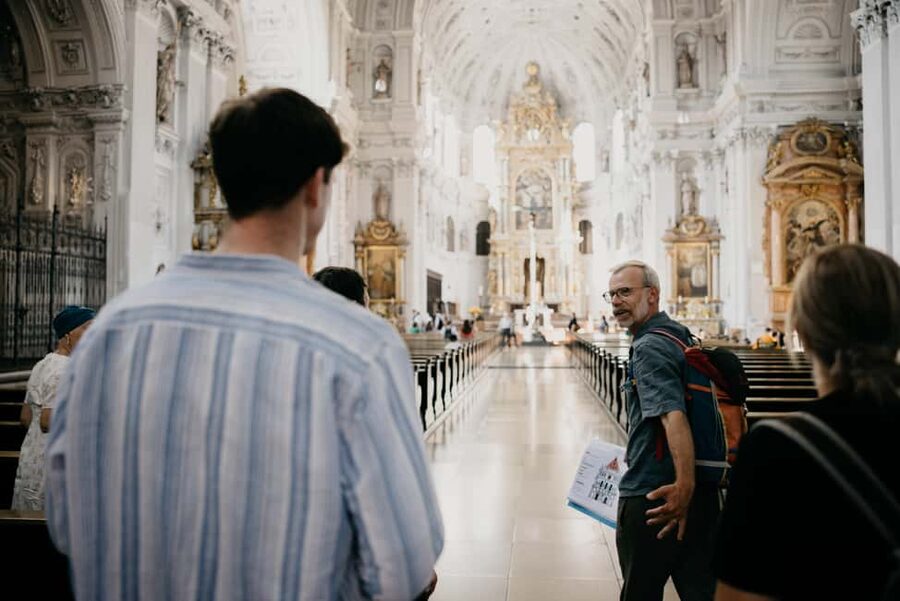
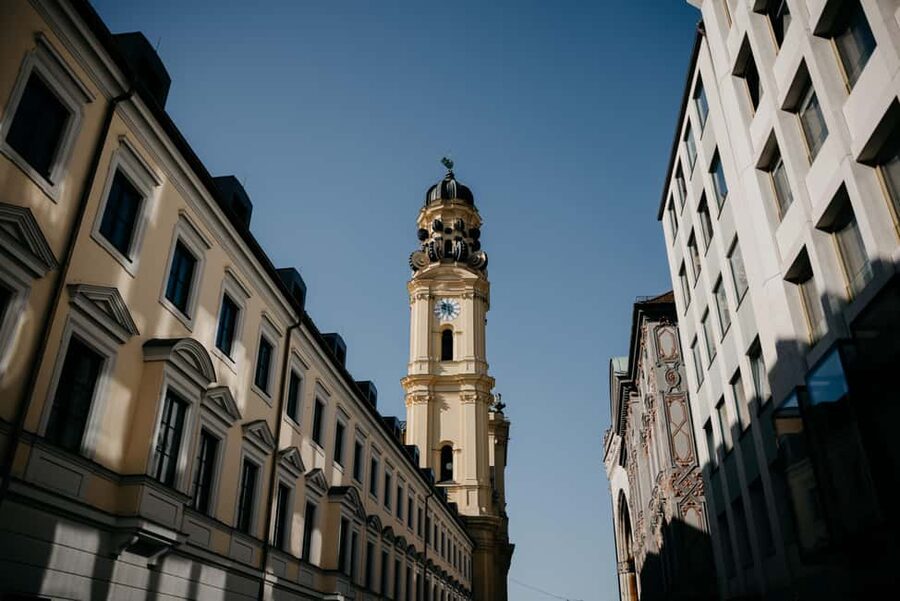
The tour begins with the Frauenkirche, and from there it leans hard into the Gothic chapter. This is a great start point because Frauenplatz is a classic Munich anchor, so you immediately understand where you are in the city. You’ll get the sense of how the late medieval look shapes the area around it.
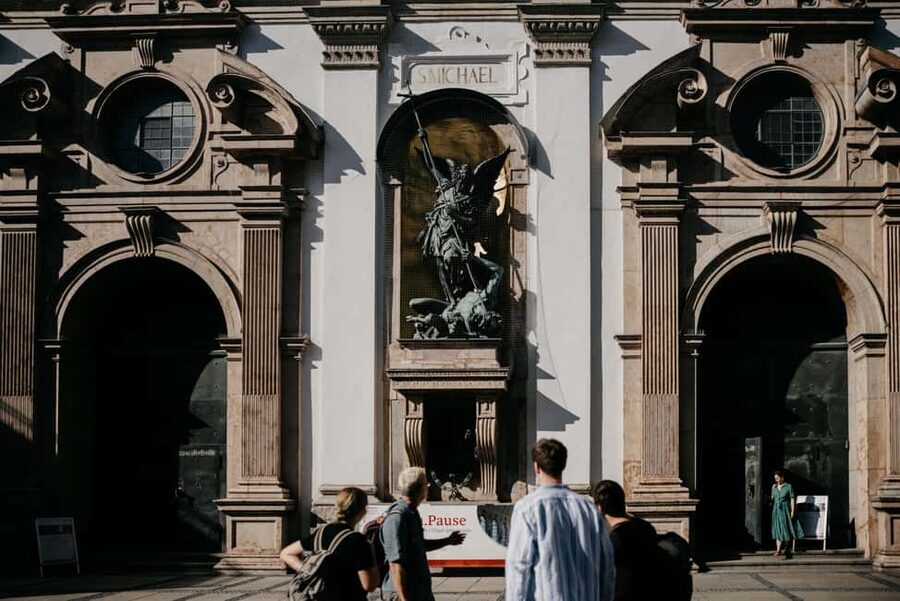
Next you head to St. Michael’s Church. The tour frames it as a world-record-holding masterpiece, which gives you a reason to pay attention beyond the obvious exterior details. Even if you’re not chasing technical “record” trivia, this kind of stop works because it puts your focus on design choices that you can see right away.
A small practical tip for this portion: spend the first few minutes taking in the big shapes before you let the guide’s stories pull you in. When you understand what you’re looking at, the explanations land better.
Trinity Church, Theatine Church, and the Bavarian opera rhythm
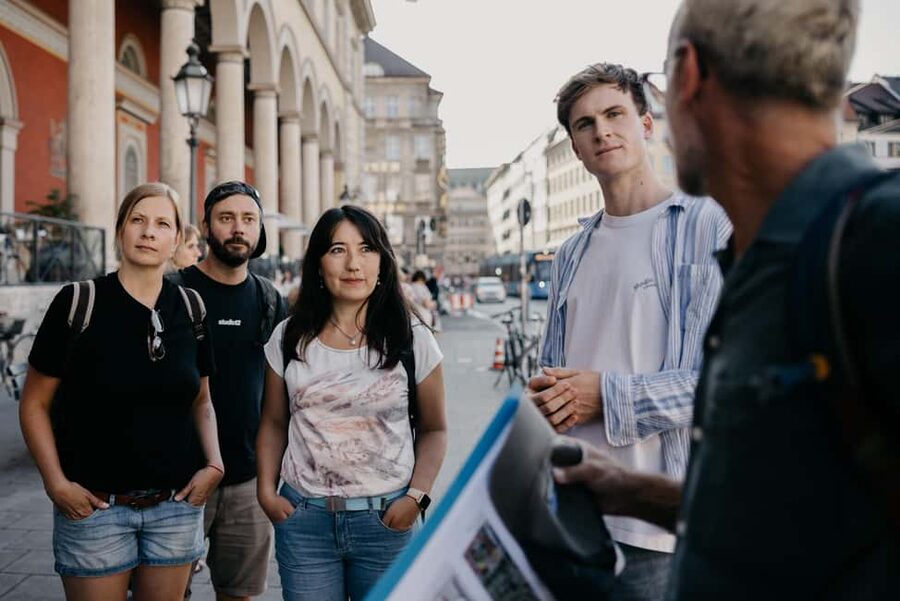
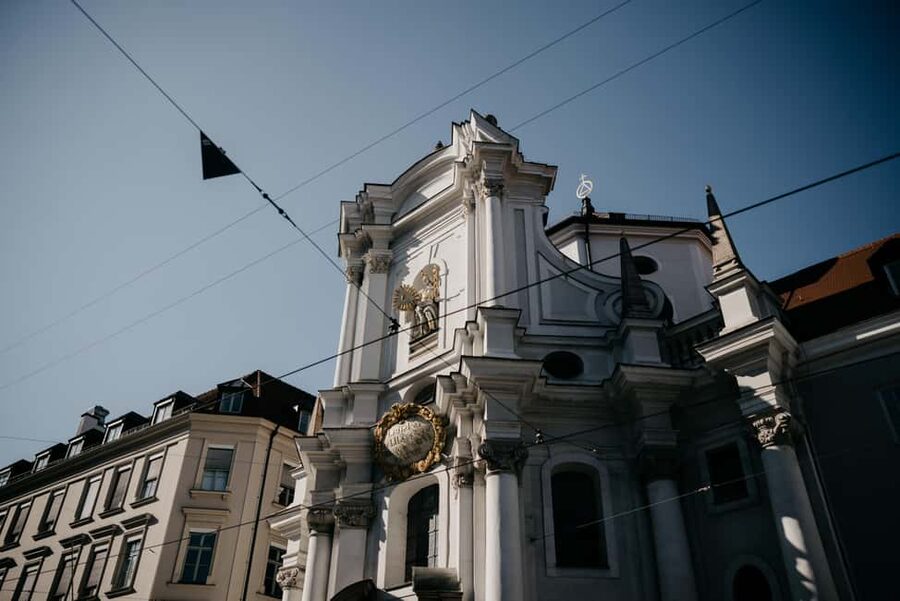
As you move along, the route keeps walking through major religious landmarks and then transitions into a cultural core. Trinity Church and Theatine Church appear on the itinerary as key stops, which is useful because both help show how style and grandeur shift as Munich’s building tastes evolve.
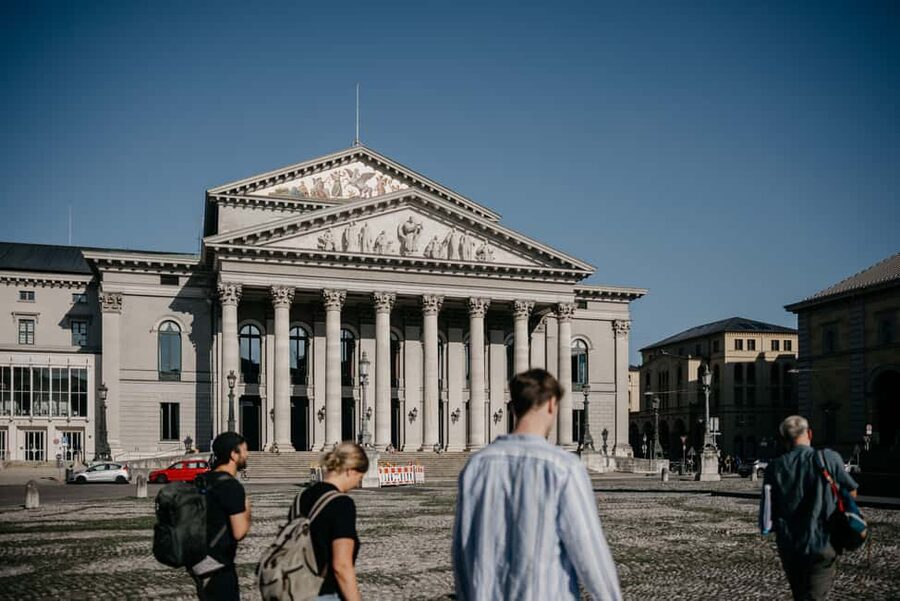
Then you reach the Bavarian State Opera area, followed by a guided stretch along Maximilianstraße. Even if you’ve walked these streets in other contexts, the tour gives you a story lens, so the architecture stops being “cool buildings” and starts becoming “why this city built this way at this moment.”
This section is also where the tour’s pacing feels well planned. You’re not stuck staring at one thing for too long. You keep moving, and the guide ties each stop to the larger time line.
Also reviewed in and around Munich:
- From Munich: Neuschwanstein & Linderhof Castle Full-Day Trip
★ 4.5 · 12,494 reviews - Neuschwanstein & Linderhof Castle-Fairytale Day Tour from Munich
★ 4.5 · 7,275 reviews - Munich: Third Reich & WWII Walking Tour
★ 4.6 · 6,181 reviews - Dachau Concentration Camp Memorial Site Tour from Munich by Train
★ 4.5 · 5,637 reviews
Inside visits: how you get up close without losing time
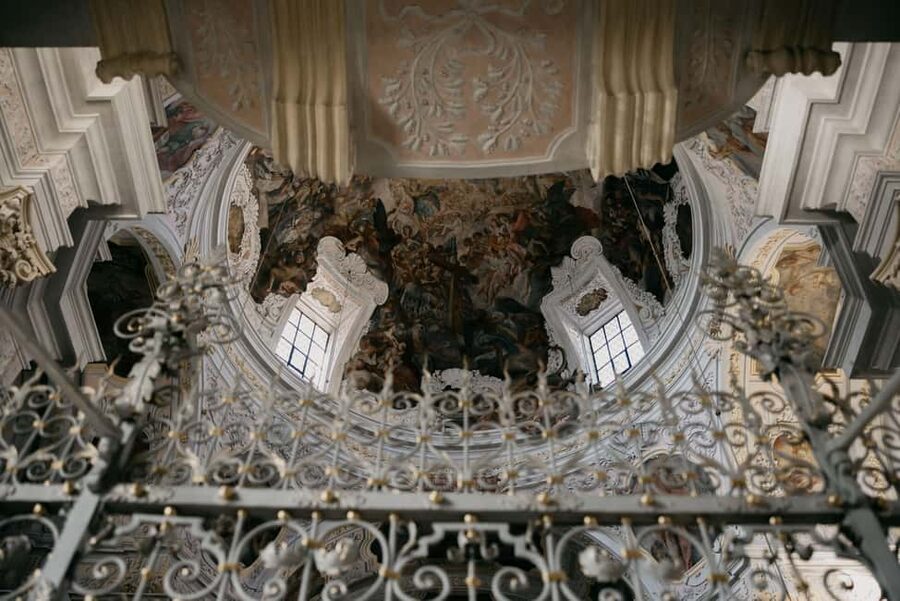
The tour includes a chance to visit up to three impressive buildings from the inside. That’s the big value add for a 2-hour walking tour, because exterior photos are nice, but interiors are where you understand scale, materials, and how a space is meant to feel.
The exact interiors are not the focus in the provided details, but the itinerary includes multiple churches and other landmark stops, so it’s reasonable to expect that some portion of the “inside access” comes from those major sites. Either way, the tour keeps the inside time efficient, so you’re not waiting around with cold hands and a thousand euros worth of winter discomfort.
If you hate being cold standing still, bundle up, keep your camera ready, and treat the inside visits like a bonus window you’re lucky to get, rather than the main reason you came. The outside architecture and stories still carry the experience.
The tram to the Isar: a calm reset between centuries
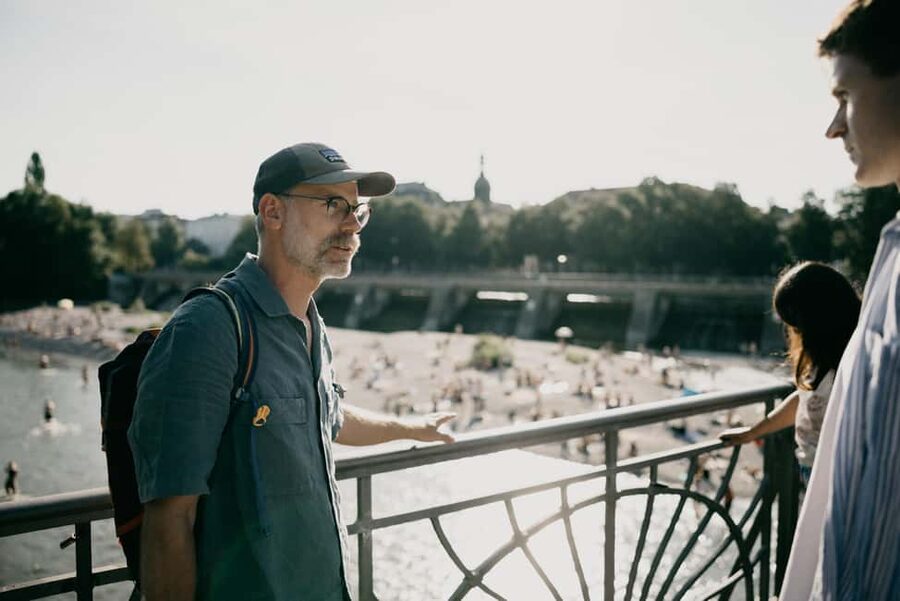
One of the most appreciated parts of the tour is the shift away from the Old Town energy. You hop on a tram to the Isar River area for a greener, calmer feeling on the route. The contrast is noticeable. Old squares can feel like a single dense layer, but riverside sections let your eyes rest and your thoughts slow down.
The tour describes this stretch as having surprising stories and even references to world records connected to the area. It also highlights a unique experience around the “Alte Utting,” a spot praised by The New York Times. Even if you don’t track the details of every record claim, the point is that the guide uses the river section to show a different side of Munich, one that doesn’t rely only on buildings and façades.
For you, this means the tour doesn’t just run you from one landmark to the next. It gives you a physical break and a mood reset, which helps the rest of the time line stick.
Christmas markets in winter, including a medieval-style stop
The tour includes visits to multiple Christmas markets. That’s valuable because it builds in frequent chances to pause and warm up. The included markets also include a unique medieval Christmas market in a magical setting, which is exactly the kind of “Munich at Christmas” experience you want when the city is at its most playful.
Do not expect a full meal to be provided. Food and drinks are not included, so plan to budget for snacks, mulled drinks, or a proper warm bite when you find something you like.
If you’re the type who wants photos at every stop, this is your danger zone. Markets look great, but you’ll want to keep an eye on the group so you don’t lose the timeline. Wear gloves and keep your phone or camera in a pocket that stays accessible, because cold air makes slow photo fiddling annoying.
Jugendstil, street art, and the modern museum finish
After the river segment, the tour moves into Jugendstil, also called Art Nouveau. That’s a fun pivot because it feels stylistically “modern” compared with the earlier centuries, even though it’s still part of the historical arc.
The ending phase also includes street art and graffiti. The tone changes here in a good way. Instead of only towering churches and ceremonial architecture, you get a sense of how Munich expresses itself in everyday visual culture.
The tour concludes at the Sudetendeutsches Museum. Even if you are not a museum person, this ending works because it connects the tour’s theme of time and change to something that continues in the present. After a day of tracing styles from Gothic to Art Nouveau, finishing with a modern museum stop gives the last chapter a clean landing.
Price and time: why $36 for 2 hours can be good value
At about $36 per person for a 2-hour guided walk, the price is reasonable for a tour that includes several major stops, multiple Christmas market visits, tram travel as part of the route, and access to up to three building interiors. The biggest “value” isn’t only the list of places, it’s the way the guide turns that list into a story you can remember.
You’re also paying for efficiency. Two hours is short enough that you don’t waste half a day, but long enough that you get a real arc from Gothic through later styles and into Art Nouveau and modern elements. If you tried to DIY this route, you would either spend time researching, or you would miss the connections that make it feel like 500 years unfolding in front of you.
For the best overall value, go with the mindset that you’re buying a plan and a storyteller, not just sightseeing.
Who should book, and who should skip this style of tour
You’ll enjoy this tour if you like architecture styles, want a time-ordered route, and appreciate history told through legends and personal stories. It’s also a good match if you want a winter Christmas market element without turning your whole schedule into a snack crawl.
I’d think twice if you have mobility impairments. The tour is not suitable for wheelchair users, and it’s also not for people over 95. It’s built as a walk with winter layers and likely some uneven streets.
If you want to spend all day lingering in one museum room or one market stall, this is not that kind of tour either. It’s designed to move, connect eras, and keep you moving toward the next stop.
Should you book Munich’s 500 Years of Architecture Guided Tour?
Yes, if you want a smart, story-led way to see Munich’s architecture through multiple periods in just 2 hours. The standout strength is Philipp’s presence and how he keeps the history meaningful and memorable, plus the way the tour balances big-known landmarks with moments that feel more personal, ending with Art Nouveau, street art, and a modern museum finish. The Isar River tram break is also a real plus.
Book it if you’re traveling in winter and want Christmas markets that feel part of the city story, not tacked on at the end. Skip it only if you need wheelchair access or have limited ability to walk in cold weather.
FAQ
How long is the Munich’s 500 Years of Architecture Guided Tour?
The tour lasts about 2 hours.
What does the tour cost?
It costs $36 per person.
Where do I meet the guide?
You meet outside the main entrance to Frauenkirche at Frauenplatz 1.
How do I find the guide at the meeting point?
Philipp waits outside with a yellow winter hat, a yellow backpack, and a large blue presentation folder.
What is the best way to get to the meeting point?
Get off at S-Bahn and subway station U3/6 Marienplatz and walk about 5 minutes, or walk about 15 minutes from Hauptbahnhof München.
What’s included in the tour price?
You get a guided tour of Munich’s historic old town and Isar river, visits to multiple Christmas markets, and a chance to visit up to three impressive buildings from the inside.
Are food and drinks included?
No, food and drinks are not included.
What languages is the tour offered in?
The live tour guide offers English and German.
Is the tour suitable for wheelchair users or mobility impairments?
No. It is not suitable for people with mobility impairments and it is not suitable for wheelchair users.
What should I bring for the winter weather?
Bring comfortable shoes and warm clothing, and it’s a good idea to bring a camera. Smoking is not allowed during the tour.
Recently added around Munich
- München: Vegetarische Viktualienmarkt-Probiertour Deutsch★ 4.8 · 6 reviews
- Walking Tour on Resistance to Nazism in Munich★ 5.0 · 8 reviews
- Private Transfer from Munich to Vienna with 2 hours for sightseeing★ 4.5 · 6 reviews
- Munich Walking Quiz: Explore and Discover the City’s Highlights★ 5.0 · 7 reviews
- 2 hour Sights Guided E-Scooter Tour in Munich★ 4.0 · 6 reviews
- Private Transfer from Munich to Salzburg with 2 hours for sightseeing★ 4.5 · 13 reviews
- From Munich: Neuschwanstein Castle and Linderhof Private Tour★ 5.0 · 13 reviews
- Paul’s Private Tour Munich Highlights★ 5.0 · 3 reviews
Guided, compared.
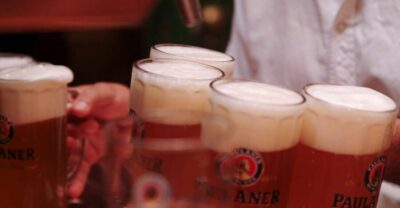
Munich’s Beer Halls and Breweries: 3-Hour Guided Tour
Read our review →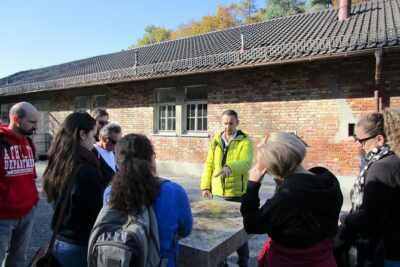
Guided Dachau Concentration Camp Memorial Site Tour with Train from Munich
Read our review →
Birthplace of the Third Reich Guided Walking Tour
Read our review →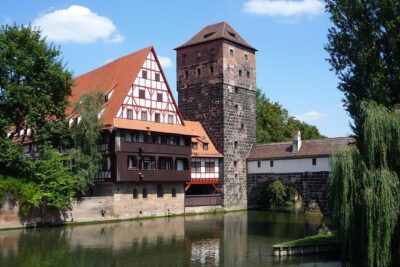
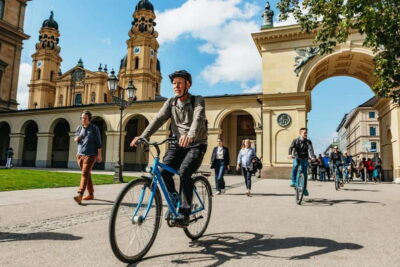
Classic Guided City Tour by Bike (English Tour Only)
Read our review →
Neuschwanstein Castle Entry Ticket and Audio Guide
Read our review →