Reviewed · THIRD REICH & WWII WALKING TOURS
Munich: Third Reich and World War II Private Guided Tour
Munich can feel like beer halls and royal squares. This tour is different. It walks you through the streets where the Nazi movement took shape, then follows the trail toward WWII’s end, including the bombing and liberation of Munich in 1945. It is history, but it is also a map of how power used public space.
I especially like how you start at Marienplatz, where propaganda gathered people in the open. I also like the stop at Königsplatz, tied to mass rallies and book burning, because it connects ideology to what the city physically did. One possible drawback is that the topic is heavy, and the pace means you will need a strong stomach and a few minutes to think after hard moments.
Recent bookings praise the guide quality, and at least one guest singled out the guide Mireya as especially good. If you want a light, casual stroll, this will not be that. If you want direct, street-level context, you will likely feel it is worth the time.
Key things I’d focus on
- Marienplatz as your starting point for understanding how Nazi propaganda worked in daily public life
- Hofbräuhaus am Platzl and the 1920 speech that links Munich to the origin of the party
- The Beer Hall Putsch route from the beer hall area through Feldherrnhalle and Odeonsplatz
- White Rose Group context and resistance against the Nazi regime, not only the perpetrators
- Führerbau and the Munich Agreement site that shows how politics shaped buildings
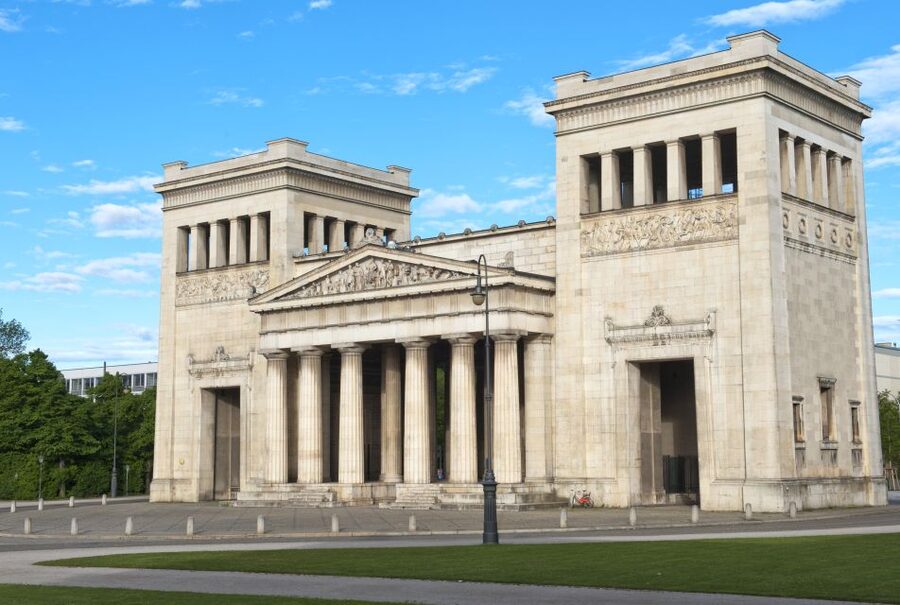
- Königsplatz for the mass rally and book burning setting, then the option to continue at the NS Documentation Center
Walking the Third Reich in Munich, without hiding the hard parts
This is a private, guided walking tour through Munich’s Old Town with a WWII history guide. You cover the rise of Adolf Hitler and the Nazi Party, the origin story of the National Socialist German Workers’ Party, and the city’s wartime arc toward 1945. The route is not random. It is built around the places where Nazi leaders spoke, made plans, and staged public messages.
What I like most is that you get context for the buildings, not just a list of names. You also get pushed to ask difficult questions about Munich’s role and the choices of its citizens, including resistance groups. That makes the tour feel honest, even when the subject is brutal.
The private format matters here. You can ask follow-ups when something feels unclear or emotionally loaded. And because it is a 3-hour walk, you still get a full evening afterward to process and do something lighter if you want.
Other Third Reich and WWII history walks in Munich:
- Munich: Third Reich & WWII Walking Tour
★ 4.6 · 6,181 reviews - Third Reich Walking Tour Munich
★ 4.5 · 4,291 reviews - Munich: Birthplace of the Third Reich Guided Walking Tour
★ 4.6 · 771 reviews
Meeting at BEYOND by Geisel and starting at Marienplatz
You meet your guide in front of hotel BEYOND by Geisel, Marienplatz 22, 80331 Munich, opposite St Peter. You do not enter the hotel. It is simply the meeting point, and the staff is not informed about the tour.
From there, the tour immediately anchors you in Marienplatz, the center of Munich’s Old Town and a place where Nazi propaganda events were held. Starting here is smart. You get orientation first, then you learn how the movement used the most visible public spaces to gather people.
You also see the Neues Rathaus (New Town Hall). The guide explains how this reconstructed landmark connects to the 1945 bombings that destroyed much of downtown. Even if you have seen photos of Munich’s recovery, it hits differently when you stand beside the building and hear how the city was shaped by the war.
Hofbräuhaus am Platzl: where speeches helped build momentum
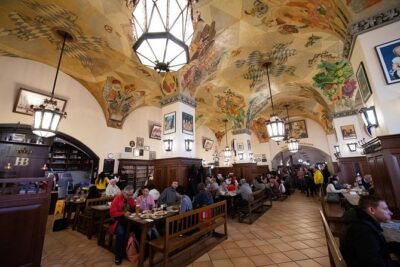
One of the key stops is Hofbräuhaus am Platzl, famous as a beer hall today. On this tour, it is also the stage for political theater. Your guide explains that Adolf Hitler made a speech there in 1920 that is tied to the founding of the National Socialist German Workers’ Party.
This is where you start to see the pattern. The Nazis were not only relying on secret meetings. They used public settings, crowd energy, and repetition to turn ideas into momentum. Hofbräuhaus is a major reason Munich matters to the Nazi origin story.
A practical note: you will be standing and walking in an Old Town setting. Wear comfortable shoes. This is not a museum where you can sit every few minutes. The best way to enjoy it is to treat it like a guided conversation on foot, with your body doing the work so your mind can stay present.
The Beer Hall Putsch route: Feldherrnhalle and Odeonsplatz
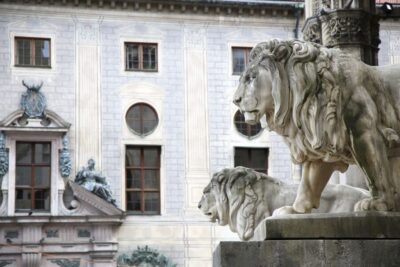
After the beer hall, you follow the route connected to the Beer Hall Putsch. The guide leads you through Feldherrnhalle and Odeonsplatz, stopping at places tied to the Nazi attempt to storm the Bavarian Defense Ministry.
This stretch is especially useful because it shows you geography as history. You are tracing movement through space, not just reading about it. When you stand near Feldherrnhalle, you get a sense of why bold actions and public standoffs could become part of the Nazi mythmaking.
At Odeonsplatz, the tour keeps tightening the story. You are learning how the Nazi project tried to seize power, then how it evolved afterward. The guide connects the attempt to the political writing that followed, so the walking route feels like a timeline you can literally follow.
Other reviewed options in Munich
- Munich Private Tour with a Local – Highlights & Hidden Gems
★ 5.0 · 469 reviews - Mike’s Neuschwanstein & Linderhof Private Tour from Munich
★ 5.0 · 197 reviews - Dachau Concentration Camp Private Tour by Train from Munich
★ 5.0 · 185 reviews - Fall in Love with Munich in a Private Old Town Walking Tour
★ 5.0 · 182 reviews
How the Defense Ministry plot connects to Mein Kampf
One of the stops and explanations centers on the Nazis attempting to storm the Bavarian Defense Ministry. Your guide tells you that this attempt inspired Hitler to write his political manifesto, Mein Kampf.
I like this part because it links street-level action to propaganda on paper. It also helps you understand why the Nazi movement spent so much effort narrating itself. Actions became stories, stories became recruitment material, and the cycle kept going.
Be ready for the tone shift this can bring. Talking about Mein Kampf is not casual. It is connected to a worldview that led to war and atrocities. You do not just learn the plot point. You learn why the connection mattered for the movement.
Munich’s resistance story: White Rose and moral choices
A balanced tour should not only teach you about the people who led the Nazis. This one includes resistance context, including the White Rose Group, led by five university students.
You visit the relevant Monument to the Victims of National Socialism as part of the broader arc. That matters because it shifts the focus from buildings and speeches to human consequences. It reminds you that the story is not only about ideology. It is also about what people suffered and what some people refused to support.
I also like that your guide talks about resistance groups as part of the city’s history, not as a footnote. That makes it easier for you to hold two truths at once: Munich played a role in Nazi growth, and there were also people who pushed back.
If you are hoping for a purely clinical explanation, you might find the moral weight lands harder than you expect. But that is also the point of standing where these events shaped reality.
Führerbau and the Munich Agreement, power written into architecture
You see former office buildings connected to the Nazi Party, including Führerbau. This is where Chamberlain and Hitler signed the Munich Agreement in 1938.
This stop is one of the most clarifying on the tour, because it shows how political decisions were translated into official, repeatable ceremonies. A building becomes a stage. Paper becomes policy. Agreements become momentum.
What I like here is how the guide uses architecture to explain propaganda logic. The Nazi project did not only use slogans. It also built authority into the look and feel of the city. When you understand that, you start noticing how governments use space in modern life too.
One consideration: you will be walking and listening for the better part of a half-day. If you tend to get information overload with complex topics, it helps to take breaks mentally. After the Führerbau explanation, give yourself a minute to step back and let it sink in before moving on.
Königsplatz: mass rallies and book burning at the edge of the story
The tour ends at Königsplatz, a site tied to Nazi party mass rallies and book burning. Your guide explains why the Nazis cared about controlling culture and public thought, not only politics.
This stop can be emotionally intense. Book burning is symbolic, and symbolism matters when you are studying how regimes enforce conformity. Standing on the ground where mass events happened gives that symbolism a physical shape.
If you only take the 3-hour option, you will leave with a strong outline. You will understand the Nazi story as it played out in Munich’s public spaces, from early speeches to staged power and the wartime end.
If you choose the longer option, you get a second layer of context, which brings me to the add-on that makes this tour feel complete.
The 4.5-hour option: NS Documentation Center for WWII context in Munich
If you pick the 4.5-hour option, your guide brings you to the NS Documentation Center for the History of National Socialism. This is the only option where the documentation center is included.
Here you get photographs, documents, and texts, along with film projections and media stations. The goal is not to replace the street story. It is to support it. You can connect what you saw on the sidewalk to deeper material, so your understanding stops being just directional and becomes anchored.
I also appreciate that the guide helps you make sense of causes and consequences. The subject is complex, and it is easy to accidentally flatten it into a simple good-versus-evil narrative. With the documentation center, you get tools to hold complexity responsibly.
If you are the type who likes to leave with something you can reference later, this add-on is the best use of your time. It turns the walk into a stronger learning arc.
Guide quality, language, and how private changes the feel
This is a private group tour, offered in multiple languages: English, German, French, Italian, and Spanish. That matters because WWII history often hinges on precise phrasing, names, and relationships. In a private setup, the guide can slow down where you need clarity.
You will also appreciate the personal pacing when the topic gets heavy. The guide is a WWII history guide, and the tour is built around asking difficult questions about Munich’s role and citizens’ choices. If you want time to ask, you get time.
One reason the rating is so strong is that guests highlighted the guide experience. At least one recent booking credited Mireya directly for doing a great job. That kind of specific praise usually means the guide is actually present, not just reciting.
Price and value: is $311 per person fair for 3 hours?
At $311 per person, the price is not the cheapest way to learn history in Munich. But it is not a random number either. You are paying for a private guide, a focused route built around key Nazi-related sites, and the time needed to connect each location to the broader story.
In a city where you can do free walking routes and self-guided museum visits, the value here comes from interpretation. Your guide makes the places click. You also get a structured arc that covers:
- the origin story of the Nazi party
- Hitler’s rise to power
- WWII events as the city faced bombing and liberation in 1945
- resistance context, including the White Rose Group
If you choose the 4.5-hour option, the value improves because the NS Documentation Center is added with expert guidance. That is the difference between seeing sites and understanding them.
If you are traveling solo or as a small group, the private format can still feel expensive, but it tends to feel worth it when the subject is hard and you want direct answers.
Who should book this Munich Third Reich and WWII tour
This is a strong choice if you:
- want history tied to specific places, not just general lectures
- care about the Nazi rise, WWII in Munich, and the end in 1945
- appreciate resistance stories, including the White Rose Group
- want to see Hofbräuhaus, Führerbau, and Königsplatz in one coherent route
It might not be the best fit if you:
- want a short, light overview with minimal emotional weight
- get overwhelmed by dense political context during walking tours
Also, if you are visiting in a group with different interests, a private tour helps you customize questions. You can ask for more context or more focus on particular sites your group finds most relevant.
Should you book it, or choose something else?
I think you should book this tour if you want Munich’s WWII history explained in a way that matches the city’s real geography. It is not about tick-box sightseeing. It is about learning how Nazi power used public life, architecture, and mass events.
Pick the 3-hour option if you want a strong route and a clear narrative from Marienplatz through the Beer Hall Putsch route, resistance context, Führerbau, and Königsplatz. Pick the 4.5-hour option if you want the added depth of the NS Documentation Center, with photographs, documents, film, and guided help connecting causes and consequences.
One final piece of advice: go in with curiosity, and also with respect for the subject. This tour asks you to look directly at the machinery of a regime and the choices people made. If you can hold that intention, you will likely come away with a much clearer, more grounded understanding of Munich’s place in the story.
FAQ
How long is the Munich Third Reich and World War II private guided tour?
The walking tour runs for 3 hours (270 minutes). There is also a 4.5-hour option that includes a visit to the NS Documentation Center.
Where does the tour meet?
Meet your guide in front of hotel BEYOND by Geisel, Marienplatz 22, 80331 Munich, Germany, opposite St Peter. Do not enter the hotel.
Is the tour private and can I bring a wheelchair?
Yes. It is a private group, and it is wheelchair accessible.
What sites are included in the walking portion?
You will see places connected to the Nazi movement and WWII history, including Marienplatz, Hofbräuhaus am Platzl, Feldherrnhalle, Odeonsplatz, the Monument to the Victims of National Socialism, Führerbau, and Königsplatz.
Is the NS Documentation Center included?
It is included only with the 4.5-hour option.
What languages are available for the live guide?
The live tour guide is available in English, German, French, Italian, and Spanish.
Can I cancel for a refund?
You can cancel up to 24 hours in advance for a full refund.
Recently added around Munich
- München: Vegetarische Viktualienmarkt-Probiertour Deutsch★ 4.8 · 6 reviews
- Private Transfer from Munich to Vienna with 2 hours for sightseeing★ 4.5 · 6 reviews
- Munich Walking Quiz: Explore and Discover the City’s Highlights★ 5.0 · 7 reviews
- Walking Tour on Resistance to Nazism in Munich★ 5.0 · 8 reviews
- 2 hour Sights Guided E-Scooter Tour in Munich★ 4.0 · 6 reviews
- Private Transfer from Munich to Salzburg with 2 hours for sightseeing★ 4.5 · 13 reviews
- From Munich: Neuschwanstein Castle and Linderhof Private Tour★ 5.0 · 13 reviews
- Paul’s Private Tour Munich Highlights★ 5.0 · 3 reviews
Third Reich & WWII Walking Tours, compared.
Birthplace of the Third Reich Guided Walking Tour
Read our review →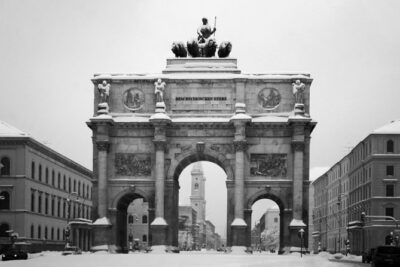
Munich World War II Sites Including Dachau Concentration Camp
Read our review →
Munich City Walking Tour, includes Third Reich & Viktualienmarkt
Read our review →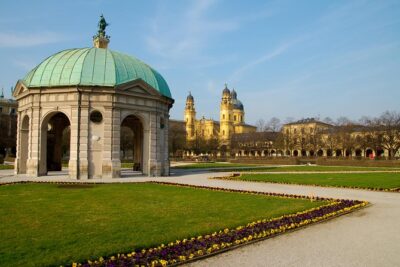
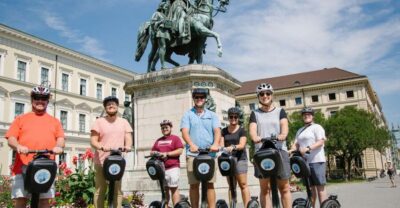
Munich 3-Hour Segway Tour: Nazi Munich & Royal Architecture
Read our review →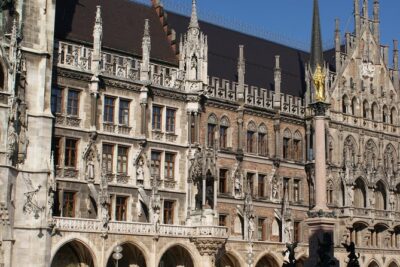
Dachau Concentration Camp Memorial Site And Third Reich Day Tour From Munich
Read our review →Browse the lists this tour appears in