Reviewed · THIRD REICH & WWII WALKING TOURS
Munich Third Reich and WWII Segway Tour
This Munich Segway tour is interesting because it lets you glide past big, politically loaded landmarks while avoiding the whole stop-and-start feel of walking. What I like is the Segway format, which keeps the pace lively, and the way your guide ties the route to the rise of Hitler and Nazi power instead of listing random buildings. One consideration: it can get cold while riding, and downtown areas can feel crowded.
You also get a practical setup for first-timers. Most people can participate, and there is time to get used to the Segway so you feel steady before the route gets more interesting.
The theme is heavy, so it helps to be in the right mindset. If you prefer light sightseeing only, this may feel intense, even though the experience is fun and fast.
Key things you will notice on this tour
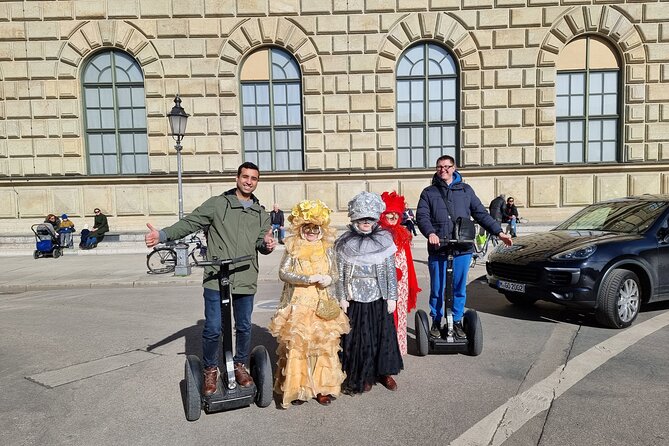
- Car-free feeling riding: you go places cars cannot, so the route feels more flexible than a normal walking tour
- Small group size: up to 20 people, which means more chance to ask questions and get help
- English commentary: the tour is offered in English with a guide who explains what you are seeing
- Nazi-era focal points: stops include places tied to the Munich political movement like Führerbau
- Family-friendly energy: people of different ages seem to enjoy the ride as much as the stories
Munich Segway sightseeing with a WWII storyline
If you want Munich fast, this is the kind of tour that makes you feel like you cracked the city code. Three hours sounds short, but the Segway changes the math. You cover a lot of ground without the constant climbing, turning, and getting stuck behind crowds the way you would on foot.
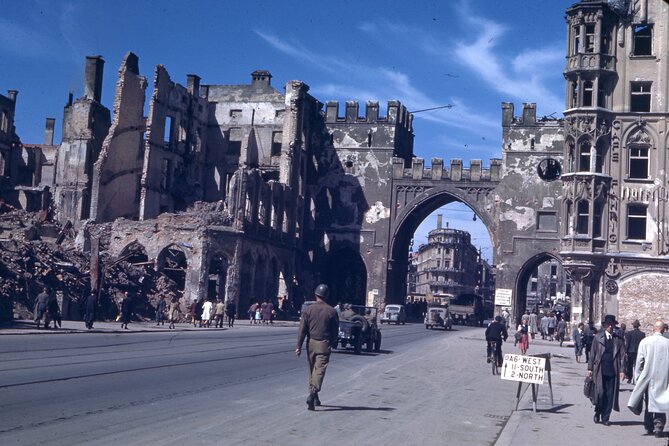
What makes this one different is the subject. You are not just doing WWII as a distant museum theme. The guide points you toward places connected to the rise of Nazi Germany and the political drama around Munich. The story starts with a young Austrian gentleman arriving in Munich in 1912 and then stretches forward to how he gained power and tried to reshape the city into the center of his movement. Along the way, you will also hear about attempts to fight the Nazi regime and why one major uprising failed.
And yes, it is still a Segway tour. You get that mix of fun movement and serious context, which is exactly what many people end up loving most.
One more practical note from the way people describe the experience: you will likely do better if you dress for wind and chill. Even if the day looks mild, you can feel cold on the Segway.
Other Third Reich and WWII history walks in Munich:
- Munich: Third Reich & WWII Walking Tour
★ 4.6 · 6,181 reviews - Third Reich Walking Tour Munich
★ 4.5 · 4,291 reviews - Munich: Birthplace of the Third Reich Guided Walking Tour
★ 4.6 · 771 reviews
Getting rolling: start time, group size, and the route tempo
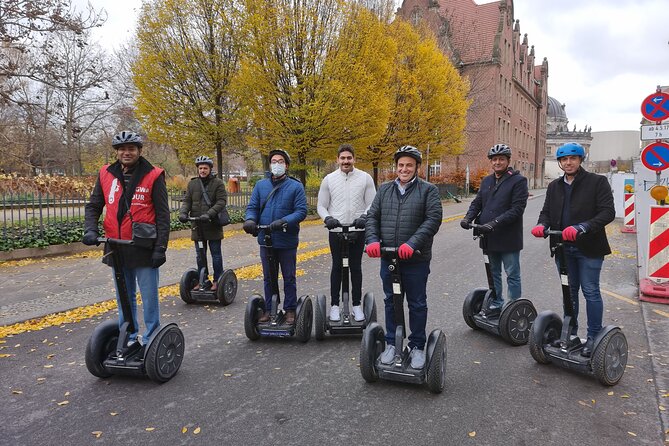
The tour runs for about 3 hours, starting at 10:00 am. It begins at Artur-Kutscher-Platz 2A, 80802 München, and ends back at the same meeting point. You ride around central Munich, so you can expect city streets and plazas to be part of the plan.
With a maximum of 20 travelers, the tour should feel manageable. That number matters because it affects how often you stop, how quickly the group regroups, and whether the guide can slow down for questions. Many tours sound “small” but still feel crowded. This one keeps the size tight enough to work.
You get a mobile ticket, and the tour is offered in English. For logistics, that combination is a win. You do not need to track down printed passes, and you can focus on the landmarks rather than translation.
Finally, the Segway side of the experience is not just extra equipment. It is the point. People describe it as easy to learn and as a big help for first-time riders. You typically get a chance to get comfortable and feel safe before you join the main route. If you are a little nervous, this kind of guided practice is the difference between a stressful start and a smooth ride.
Riding past Munich’s major squares: Alte Synagoge and Königsplatz
The route opens with a classic Munich start, where history is close to the surface. One of the first stops is the Alte Synagoge (Old Synagogue). It is an important reminder that Munich’s story includes more than one political chapter. A stop like this shifts the tone from pure spectacle to something more human, before the route turns toward Nazi-era sites.
Next you move to Königsplatz. This is one of the places where large civic space and monumental architecture shape how you read the city. On a Segway, you can take in the scale without spending your whole time watching your feet.
What I like about starting here is the pacing. You are not rushing straight to the hardest topic. You build a sense of place first, then the guide’s explanation makes the later stops feel connected instead of random.
Führerbau and Braunes Haus: the political buildings you cannot miss
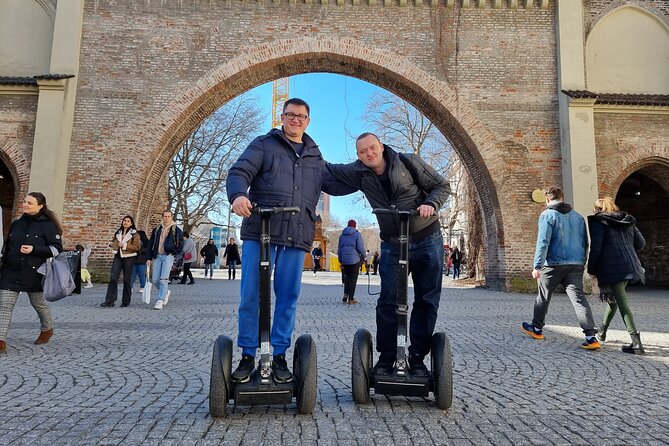
Then you hit the core of the Nazi Munich story. The route includes stops at Führerbau and Braunes Haus. These names come up again and again when people talk about how Munich became tied to the Nazi movement.
This is where your guide’s narration really matters. The theme is not only what those buildings are, but how Munich fit into the rise of power. You will hear about the political movement and the attempt to make Munich central to it, including why key moments mattered for the first and last führer of Germany.
A Segway helps here for two reasons. First, the ride keeps the group from turning into a long line of tourists staring at one facade. Second, the pace lets you actually connect the dots between what you see and what the guide tells you.
Potential drawback: these are not quiet photo corners. Expect some people, some waiting, and some noise. If you hate crowds, plan to be a little patient.
More Segway tours in Munich:
- Munich: City Highlights Guided Segway Tour
★ 4.6 · 266 reviews - Munich 3-Hour Segway Tour: Nazi Munich & Royal Architecture
★ 4.9 · 194 reviews - Munich Segway Tour
★ 5.0 · 181 reviews - Munich: City Highlights Guided Segway Tour
★ 4.5 · 161 reviews
Schelling-Salon, the White Rose stop, and how the story widens
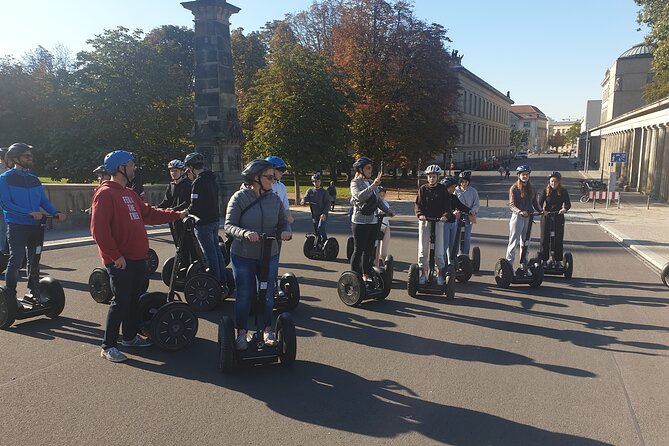
The tour also includes Schelling-Salon and a stop tied to White Rose. The value of these moments is that they widen the story beyond the rise of Nazi power. You are given context about resistance and the people who pushed back against the regime.
This is one of the best parts of the tour design: after you see buildings connected to power, you also see stops connected to opposition. It prevents the route from feeling like a one-note history lecture.
It also fits the way Munich itself works. The city does not separate “then” and “now” very neatly. On this route, you are reminded that the same streets can hold multiple layers of meaning. The guide uses that to shape your understanding instead of just handing you dates.
If you want a WWII story that is balanced, this is a big reason people end up rating the tour so highly.
Haus der Kunst and the Angel of Peace: looking at Munich’s reminders
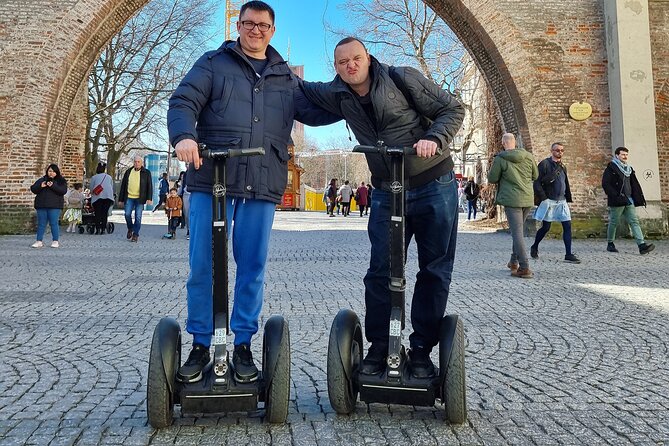
As you move along, you will pass Haus der Kunst and a stop called the Angel of Peace. These are different types of landmarks than the political buildings. They help the tour shift from propaganda-era atmosphere to the question of what remains in the city after the worst chapters.
On a practical level, this is also where the Segway feels especially fun. You get breaks in the emotional weight of the story while still learning. The guide keeps the theme moving, so it does not turn into random sightseeing.
The main consideration here is how you personally handle the topic. WWII and the Nazi era are not light subjects. If you are traveling with a child, or if you are sensitive, you might want to take a moment to breathe and watch for how the guide frames each stop.
Hitler addresses: apartments from 1933 and 1920-29
One of the most striking segments includes two separate stops for Hitler’s apartment, one noted as 1933 and another noted as 1920 to 1929. Seeing both locations as part of the route helps you grasp the timeline your guide is building.
This is where the narrative becomes very “local.” Munich is not an abstract stage. It is a set of places where decisions and daily life intersected with politics. The guide also ties in details around how Hitler wanted to reshape Munich and how key events played out there, including why the Beer Hall Putsch did not succeed.
On a Segway, you do not have to fight your way through every street on foot to connect these dots. You can focus on the guide’s storyline while the ride keeps you moving.
Practical tip: if you want photos at each stop, make sure you stay relaxed during stops and do a quick adjustment right away. People who love this tour tend to say the guides take time for picture moments, but you still want to be ready when the group halts.
Hofbraukeller, Hofbräuhaus, Residenz München, and Odeonsplatz: the city beyond the theme
The route does not only talk about Nazi sites. It also brings you through Munich’s famous identity markers. You will ride past Hofbraukeller and Hofbräuhaus, then continue to Residenz München and Odeonsplatz.
Why does this matter? Because Munich is not a history park. It is a living city with beer halls, royal architecture, and busy squares. Tying those everyday landmarks into the WWII narrative gives you a fuller sense of the city’s layers.
You get the feeling of how politics worked in the real world, not just in documents and speeches. The guide connects the stops so the city identity makes more sense, not less.
One small caution: beer hall areas can be active and crowded, even in cooler months. If you are hoping for quiet photos, be realistic. The route is built for movement, not for long still-standing museum-style viewing.
Maximilianeum and Maximilianeum Strasse: architecture in the middle of the story
You will also see Maximilianeum and Maximilianeum Strasse. These stops keep the route from becoming only “dark history.” They keep you oriented in Munich’s larger urban shape.
This helps if you are trying to get your bearings. When you return to the neighborhoods later on your own, you will remember these anchors. The Segway ride makes it easier to store the geography in your brain.
And since the tour is around three hours, it is a good match for couples and families who want to see a lot without planning multiple separate museum days.
Segway comfort, cold weather, and safety basics that actually help
Here’s the truth about Segways in Munich: even if you are excited, you want to dress right. One common tip from the way people describe the ride is to rug up, because it can feel very cold while moving. If you run cold, wear layers and consider gloves that let you keep control.
Safety wise, the tour is designed for participation by most travelers. Guides typically take time so nervous riders feel steady. People also mention how patient guides can be with first-time riders and how they help with learning the balance and control.
Still, one real-life lesson is worth stating. If a Segway has trouble or if someone is unsteady, falling can happen. The best defense is simple: listen at the start, practice your stopping and turning, and stay alert when streets get crowded. You do not need to be fearless. You need to be prepared.
Price and value: is $82.82 worth it?
At $82.82 per person for about 3 hours, you are paying for three things at once:
- a guided storyline that ties Munich to the Nazi-era “why,” not just the “what”
- a Segway setup that covers more ground than walking
- a route that includes multiple stops close together in central Munich
If you were to do it as separate pieces, you would likely spend similar money on transportation, guided time, and tickets. Here, the Segway makes the route efficient, which is why couples and families often like it. They can fit it into a half-day plan and still have energy left for dinner, a beer hall, or a second walk.
Also, the tour lists admission ticket free, which supports the idea that you are not paying extra for each stop. That helps the value story.
One timing note: it is often booked around 36 days in advance on average. That suggests popularity, so if you are traveling in peak season, booking early is smart.
Who this tour fits best, and who might want something else
This is a strong choice if you want:
- a fast, organized way to see central Munich landmarks
- a WWII storyline tied to real places, not just museum labels
- a fun delivery method that keeps young travelers engaged
It is also a great “first Munich city tour” for couples. You get movement, big sights, and a narrative that helps you understand the city’s darker chapters without needing to piece it together alone.
It might be less ideal if you:
- want a purely light sightseeing day
- hate cold weather riding and cannot layer up
- need a perfectly quiet experience with no crowd energy
Should you book the Munich Third Reich and WWII Segway Tour?
I would book it if you like getting around efficiently and you want the Nazi-era story anchored to actual Munich locations. The Segway angle makes it easier to move between key areas like Königsplatz, Führerbau, and the Hitler apartment stops within one smooth half-day block.
I would think twice if you are only interested in WWII from a museum or if you are uncomfortable with emotionally heavy themes. This tour is designed to be educational, and it does not shy away from the subject.
If you do book, do yourself a favor: dress for the cold, show up ready to learn, and come with questions. A guide who takes time to explain and help first-time riders can make this tour feel both safe and memorable.
FAQ
What time does the Munich Third Reich and WWII Segway Tour start?
It starts at 10:00 am.
How long is the tour?
The tour is about 3 hours.
Is the tour offered in English?
Yes, it is offered in English.
Where do I meet for the tour?
You meet at Artur-Kutscher-Platz 2A, 80802 München, Germany.
What is the maximum group size?
The tour has a maximum of 20 travelers.
Can I cancel for a full refund?
Yes. You can cancel up to 24 hours in advance for a full refund.
Recently added around Munich
- München: Vegetarische Viktualienmarkt-Probiertour Deutsch★ 4.8 · 6 reviews
- Private Transfer from Munich to Vienna with 2 hours for sightseeing★ 4.5 · 6 reviews
- Munich Walking Quiz: Explore and Discover the City’s Highlights★ 5.0 · 7 reviews
- Walking Tour on Resistance to Nazism in Munich★ 5.0 · 8 reviews
- 2 hour Sights Guided E-Scooter Tour in Munich★ 4.0 · 6 reviews
- Private Transfer from Munich to Salzburg with 2 hours for sightseeing★ 4.5 · 13 reviews
- From Munich: Neuschwanstein Castle and Linderhof Private Tour★ 5.0 · 13 reviews
- Paul’s Private Tour Munich Highlights★ 5.0 · 3 reviews
Third Reich & WWII Walking Tours, compared.

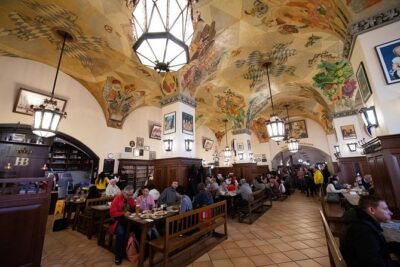

Birthplace of the Third Reich Guided Walking Tour
Read our review →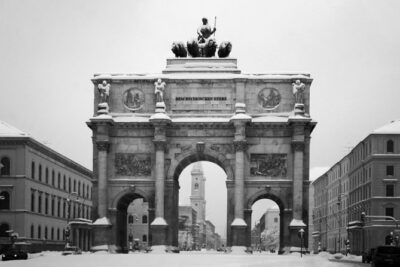
Munich World War II Sites Including Dachau Concentration Camp
Read our review →
Munich City Walking Tour, includes Third Reich & Viktualienmarkt
Read our review →
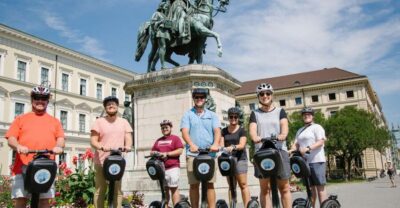
Munich 3-Hour Segway Tour: Nazi Munich & Royal Architecture
Read our review →
Dachau Concentration Camp Memorial Site And Third Reich Day Tour From Munich
Read our review →Browse the lists this tour appears in