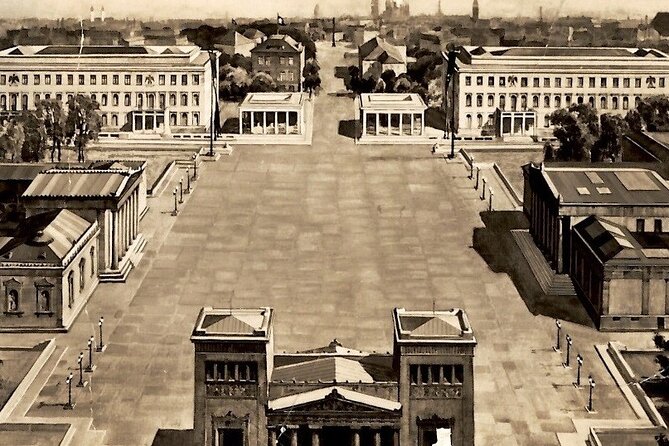
Reviewed · THIRD REICH & WWII WALKING TOURS
Munich in the 3rd Reich and WW2 private walking tour
Munich can look cheerful, especially around the river and old squares. Then this tour turns the volume way down, showing how that pretty city became the stage for the Nazi rise and the start of new horrors in Europe. It is an up-close private walk with your guide’s full attention, and I love the photos, memorabilia, and props that help the story feel real instead of like a textbook.
One heads-up: this is moderate walking for 3.5 to 4.5 hours in all weather, and the subject matter is heavy. If you want a light, fluffy history stroll, this is not it.
Key things to know before you go
- Private guide, your pace: You can ask questions and steer the focus toward what you actually want to understand.
- Visual learning: Expect photos and historical references to support the stops, not just spoken facts.
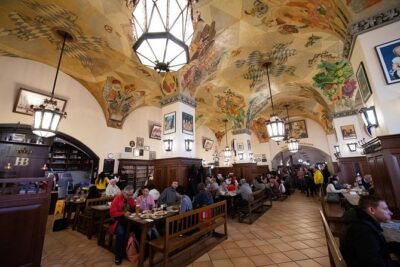
- Beer hall break option: There’s typically a pause at a beer hall tied to the era, and you can request switching to a cafe.
- Core turning points: The route covers the Treaty of Versailles, Nazi origins, the Beer Hall Putsch, Kristallnacht, the SS birthplace, and more.
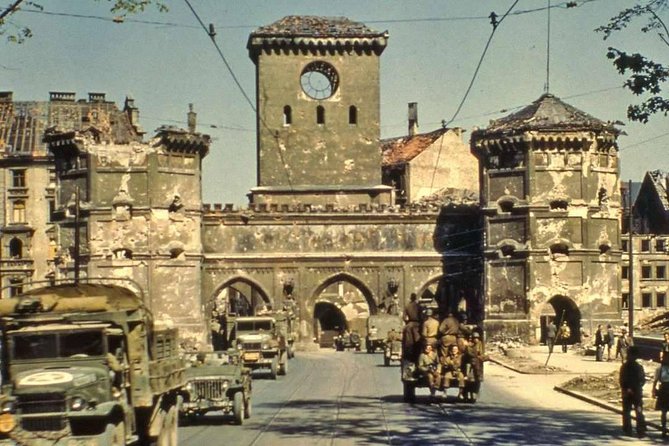
- WWII end in view: You finish with how Munich fell and what the Allied bombing and 1945 transition meant on the ground.
- Central Munich, no bus: You’ll move on foot, with a start near Isar Gate and an end at Odeonsplatz.
Third Reich Munich on foot, from Isar Gate to Odeonsplatz
You start at Isar Gate, Tal 50, 80331 München, and you end at Odeonsplatz, Odeonspl. 3, 80539 München. Odeonsplatz is a big plaza near the Residenz palace, and it is only a short walk from Marienplatz, so it is a handy ending point for planning the rest of your day.
The route is designed for walking, not driving. You are getting the city’s layout, the sightlines, and the feel of how people moved through Munich in different eras. That matters here, because Nazi power was built in public spaces as much as in offices.
Also, the tone is straightforward. You are not touring a theme park version of history. You are learning how one political movement gained traction in a time of economic stress and social chaos after the First World War.
Other Third Reich and WWII history walks in Munich:
- Munich: Third Reich & WWII Walking Tour
★ 4.6 · 6,181 reviews - Third Reich Walking Tour Munich
★ 4.5 · 4,291 reviews - Munich: Birthplace of the Third Reich Guided Walking Tour
★ 4.6 · 771 reviews
Private tour value: why paying for undivided attention helps
At $423.44 per group (up to 6 people), this is priced for a small group private experience, not a busload format. That sounds expensive until you think about what you are buying: time with a guide who can follow your questions and adjust the pacing.
A lot of history tours move like a conveyor belt. This one does not. With the private format, you can ask follow-ups when something clicks, or when a question keeps tugging at you later. In fact, some guides in the program, including Taff, have a reputation for being ready with photos and references and for tailoring the route when time or weather changes.
Price-wise, it can work out as good value if you travel as a pair or small family. Even if you split the cost, the payoff is still the same: you get a focused explanation at the places where the story happened, not a skimmed version from far away.
The 3.5 to 4.5 hour route: how the story unfolds on the streets
The tour runs about 3 hours 30 minutes to 4 hours 30 minutes depending on pace and questions. Expect a moderate amount of walking and a stop or break along the way.
What I like about the flow is that it is not only about the Nazi party as a single villain plot. It starts earlier, with why conditions in Munich after 1914 to 1918 mattered, and it connects major events to what people could see and talk about in daily life.
Here is the arc you can expect, in the order the tour themes tend to cover:
- Post-World War I trauma and the Treaty of Versailles
- The origins of the Nazi Party
- The SS origins and where the movement took shape
- The Beer Hall Putsch
- Kristallnacht and the roots of the Holocaust
- Nazi Party Headquarters and the Munich Pact
- Allied bombing and how the city’s war reality changed
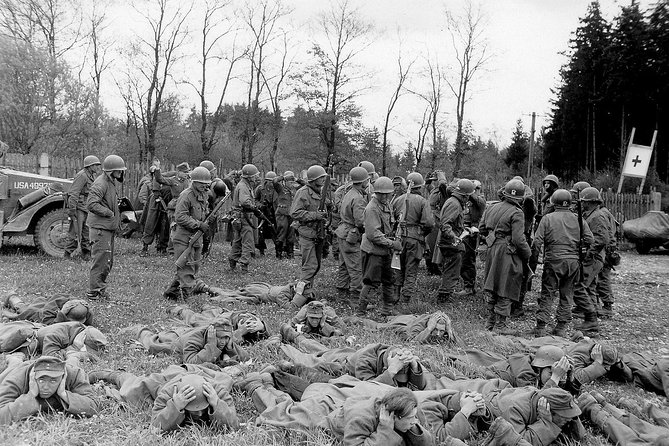
- How Munich fell to US forces in 1945
You will not just hear dates. You will connect them to places and political messaging, and you will get context for how quickly things can shift when fear, anger, and propaganda align.
Treaty of Versailles and the roots of extremism, before the slogans
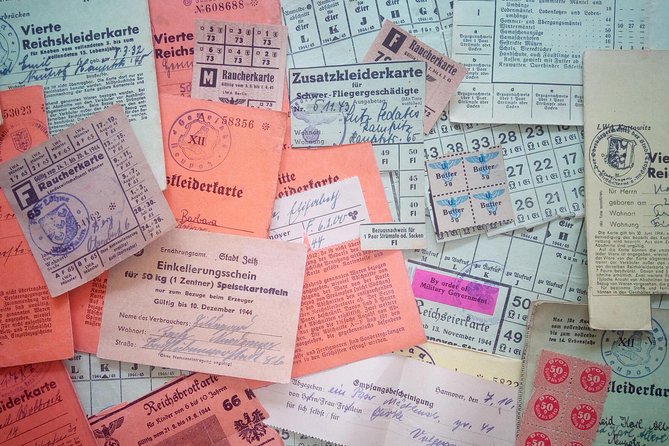
A big part of why this tour works is that it does not start with fireworks. It starts with the messy political aftermath of the Great War and the Treaty of Versailles.
That opening matters because it helps you understand why people were ready to believe extreme promises. You get the sense of a society under pressure, not a simple story of a single leader appearing out of nowhere.
If you like your history with cause and effect, this is where the tour earns its keep. It sets you up to understand the later events like the Beer Hall Putsch and Kristallnacht as steps in a chain, not isolated headlines.
More walking tours in Munich:
- Munich: Old Town & Viktualienmarkt City Walk in German
★ 4.7 · 2,304 reviews - Munich: Night Watchman Walking Tour
★ 4.7 · 2,092 reviews - Munich Ghosts and Spirits Evening Walking Tour
★ 5.0 · 1,900 reviews - Munich Old Town Walking Tour
★ 4.5 · 1,287 reviews
Beer halls and the Beer Hall Putsch: propaganda in public places
One of the tour’s practical highlights is a planned break at a beer hall connected to this history. If you would rather take the pause at a cafe, tell your guide. Refreshments are not included, but this choice gives you control over your comfort level while you keep learning.
This is also one of the most important theme zones on the walk. The Nazi movement did not only spread through speeches. It spread through settings where ordinary people gathered, listened, and talked.
You will learn about the Beer Hall Putsch, and you will see how the event ties to the idea of turning public spaces into political stages. It is chilling because it is familiar. You can recognize the pattern of persuasion even in modern life, which is exactly why the tour can hit hard.
SS origins and Kristallnacht: when policy turns into terror
Later, the tour shifts from rise and spectacle into the machinery of persecution. You cover the birthplace of the SS and the lead-up to atrocities, then you reach Kristallnacht and the origins of the Holocaust.
The value here is not just learning what happened. It is understanding how institutions and propaganda support each other, and how quickly brutality can move from harassment to systematic violence.
This section is also where having a guide who can explain with visual support really matters. Some guides, including Taff and Kevin, are known for using photos and historical references to anchor what you are hearing, which makes the timeline easier to hold in your head.
If you are traveling with teens or school-age kids, keep this in mind: one family report mentioned an 11 year old stayed engaged the whole way, but the topics still need a calm, age-appropriate tone. If you have very sensitive kids, consider chatting with the guide in advance about what to emphasize.
Nazi power in the city: headquarters and the Munich Pact
A key stop focuses on the Nazi Party Headquarters and the signing of the Munich Pact. These are the points where you see the movement operating at a higher political level, moving beyond street politics into agreements and official action.
This is where the tour helps you understand something many people miss: the Nazis did not gain power only through intimidation. They also gained power through political maneuvering and a world that, at times, did not fully act early enough.
If you care about how European diplomacy failed in the late 1930s, you’ll appreciate how this tour frames the Munich Pact inside the larger climb to war.
WWII’s turning point around Munich: bombing and the 1945 end
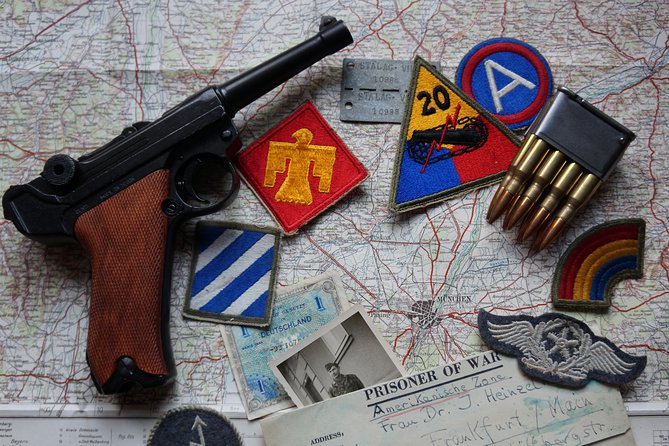
The walk also covers the Allied bombing campaign, and later how the city fell to US forces in 1945. On a map, bombing and surrender are just events. On foot through a living city, they become something else. You start thinking about streets that changed, buildings that were hit, and residents who had to adapt fast.
This part is emotionally tough, but it is also one of the most important. The tour brings you to the end of the Second World War in Munich so you do not just learn how things started. You learn what life looked like when the Nazi state was collapsing and the war reality was arriving in a very physical way.
It is also a practical gift for your future sightseeing. When you return to central areas later, you tend to notice details differently, like the distance between major squares and how people would have moved and gathered.
Guides, style, and what makes the tour feel memorable
The biggest reason people rate this tour so highly is not the subject alone. It is the way the guide delivers it.
From examples within the tour program, guides like Taff and Kevin are praised for being on time even during difficult weather, and for staying animated and clear. There are also reports of guides using props, showing pictures and memorabilia, and even acting out some moments for clarity. That theatrical touch is not for fun. It is a learning tool.
Another strong point is flexibility. In one case, a group asked to shorten the tour due to cold weather, and the guide adapted without losing the core meaning. That is useful because Munich weather can change quickly, and you are walking the whole time.
If you like asking questions and getting direct answers, a private format makes that possible. If you prefer a more structured lecture style, your guide can usually adjust too, because you are not competing with a group clock and a crowd.
Who this tour suits best, and who might skip it
This tour is best if:
- You are interested in WWII history and the rise of the Nazi party in Munich
- You want a private guide and time for questions
- You like learning through visual aids and stories tied to real spots
- You are comfortable walking for about four hours and handling serious content
You might want to skip it if:
- You want a light overview with zero heavy material
- You have mobility limits that make a 3.5 to 4.5 hour walk difficult
- You get overwhelmed by emotionally intense historical topics
One practical tip: wear good footwear and dress for the weather. The tour operates in all conditions, so your clothing is part of the experience.
Price and logistics: what $423 per group really buys
Let’s talk money with your head, not your heart. Yes, $423.44 per group is a real number. But you are paying for a private guide, a focused walking route, and time that a group tour cannot offer.
If you book as a pair or small family, you spread the cost. If you book solo, it is still worth considering if you want a more personal pace and a higher chance of getting all your questions answered.
Also, the tour uses a mobile ticket, and it is offered in English. Confirmation is typically sent within 48 hours, depending on availability, and it often gets booked around 54 days in advance on average. That means popular dates can fill, especially during peak season.
The key value is control: control of pace, control of the break spot (beer hall vs cafe), and control of what you want to learn more about.
Should you book this Munich Third Reich walking tour?
Book it if you want history that lives in the city, not history that stays in a classroom. You’ll learn the timeline from post-World War I instability through the Beer Hall Putsch, Kristallnacht, Nazi political power, and the 1945 end in a way that makes the logic feel clear.
Skip it if you need a gentle day or if walking several hours in variable weather would stress you out. Also, if you know this topic emotionally drains you, plan your rest day afterward.
If you do book, go in prepared: good shoes, a willingness to sit with difficult material, and a few questions you genuinely want answered. That is when a private guide format feels like it pays you back.
FAQ
How much does the Munich in the 3rd Reich and WW2 private walking tour cost?
It is priced at $423.44 per group, for up to 6 people.
How long is the tour?
The tour lasts about 3 hours 30 minutes to 4 hours 30 minutes.
Is the tour offered in English?
Yes. It is offered in English.
Where do we meet and where does the tour end?
You start at Isar Gate, Tal 50, 80331 München and end at Odeonsplatz, Odeonspl. 3, 80539 München. Odeonsplatz is a large plaza near the Residenz palace and a few minutes from Marienplatz.
Is this tour private?
Yes. It is a private tour/activity, with only your group participating.
Do we use a bus or car for the sites?
No. It is a walking tour with a moderate amount of walking. You do not use a car or bus to visit sites.
Will we have a break during the tour?
The tour generally includes a break in a beer hall associated with this history. If you would rather take a break in a cafe, tell your guide. Refreshments are not included.
Does it run in bad weather?
Yes. It operates in all weather conditions, so you should dress appropriately.
Is a mobile ticket provided?
Yes. The tour includes a mobile ticket.
What is the cancellation policy?
You can cancel for a full refund up to 24 hours in advance. If you cancel less than 24 hours before the start time, the amount paid is not refunded.
Recently added around Munich
- München: Vegetarische Viktualienmarkt-Probiertour Deutsch★ 4.8 · 6 reviews
- Private Transfer from Munich to Vienna with 2 hours for sightseeing★ 4.5 · 6 reviews
- Munich Walking Quiz: Explore and Discover the City’s Highlights★ 5.0 · 7 reviews
- Walking Tour on Resistance to Nazism in Munich★ 5.0 · 8 reviews
- 2 hour Sights Guided E-Scooter Tour in Munich★ 4.0 · 6 reviews
- Private Transfer from Munich to Salzburg with 2 hours for sightseeing★ 4.5 · 13 reviews
- From Munich: Neuschwanstein Castle and Linderhof Private Tour★ 5.0 · 13 reviews
- Paul’s Private Tour Munich Highlights★ 5.0 · 3 reviews
Third Reich & WWII Walking Tours, compared.
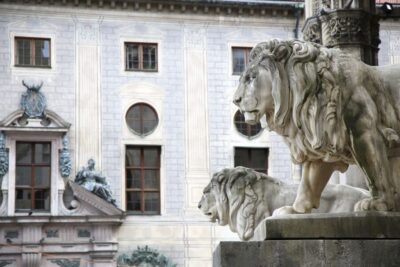

Birthplace of the Third Reich Guided Walking Tour
Read our review →
Munich World War II Sites Including Dachau Concentration Camp
Read our review →
Munich City Walking Tour, includes Third Reich & Viktualienmarkt
Read our review →
Munich 3-Hour Segway Tour: Nazi Munich & Royal Architecture
Read our review →
Dachau Concentration Camp Memorial Site And Third Reich Day Tour From Munich
Read our review →Browse the lists this tour appears in