Reviewed · THIRD REICH & WWII WALKING TOURS
Walking Tour on Origins of Nazism in Munich – English
Munich might look like it belongs in a postcard, but this walking tour follows the darker plot lines that played out there. You walk through the city spaces tied to the origins of the Nazi movement, from early propaganda to the symbols of resistance and the victims.
I really like the tight, guided structure. In about two hours you get a clear storyline, not just random stops. I also like that the route includes a mix of places you can recognize from the street, plus sites tied to propaganda, parks, and major squares.
One thing to consider: the topic is heavy, and the theme is broad. Two hours can feel short if you want to go deeper, so plan to connect it later with a museum visit if you can.
Key things you will notice on this Munich route
A guided timeline you can follow, even in 2 hours
Munich sites linked to early Nazi power and propaganda
Stops with included entry, so you do not waste time
Major public squares that show how ideology used space
A shift toward resistance and the victims memorial side of the story
A small-group max of 35, which helps questions stay real
Why Munich and Why This Route Works
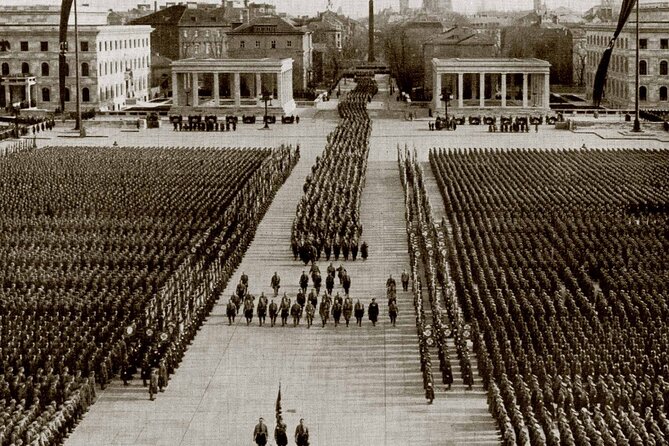
This is the kind of tour that gives you bearings fast. Munich is not only famous for beer halls and big city views. It is also where the Nazi movement found a foothold and learned how to convert attention into power.
The way this works is practical: you are not trying to memorize dates in a classroom. You walk from place to place, and your guide connects the locations to the storyline of the rise of the Third Reich. Along the way, the tour references key episodes like Hitler’s early coup attempt, Goebbels book burning, and the night of broken glass. You end up with a more usable mental map of how propaganda, crowds, and political theater played out in the real streets.
And because the tour is only about two hours, it is easier to fit into a day. You get the core ideas without turning your afternoon into a full-time study session.
Other Third Reich and WWII history walks in Munich:
- Munich: Third Reich & WWII Walking Tour
★ 4.6 · 6,181 reviews - Third Reich Walking Tour Munich
★ 4.5 · 4,291 reviews - Munich: Birthplace of the Third Reich Guided Walking Tour
★ 4.6 · 771 reviews
Start at Marienplatz, then follow the power from streets to symbols
You start at Mariensäule, near Marienplatz 22. The tour runs from 3:00 pm, and you finish at Königsplatz 1. Expect a steady walking pace with short stops, roughly 15 to 20 minutes each, so you see multiple layers of the story without long gaps.
If you are trying to understand Munich’s layout, this is a good route. It guides you from central civic space toward larger squares that were designed to stage public life on a grand scale. That is important, because the Nazi movement did not just sell ideas. It used built space to shape how people felt, where crowds gathered, and how authority looked from a distance.
Also, the group size is capped at 35 travelers. That keeps the experience from turning into a moving lecture hall where it is hard to ask questions.
Stop 1: Platz der Opfer des Nationalsozialismus
Your first stop is Platz der Opfer des Nationalsozialismus, the Square of the Victims of National Socialism. This is not an optional mood-setter. Starting here tells you the tour will not treat Nazism as a trivia topic.
What I like about opening at a victims memorial is how it changes your reading of everything that follows. When the story later moves into propaganda buildings and political showmanship, you already carry the human cost in mind.
This stop is about 15 minutes and it is free. Even if you keep it brief, it gives you a grounded point before the tour shifts into the mechanics of power.
A quick consideration: because the subject is painful, you might want a moment to step back and absorb before you keep walking. That is totally fine. There is no prize for rushing.
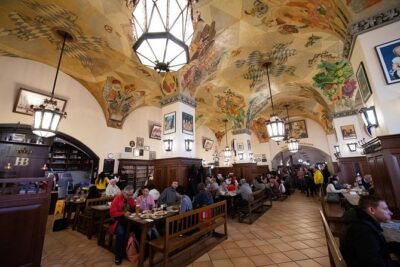
Stop 2: Staatliches Hofbräuhaus, where the party found a base
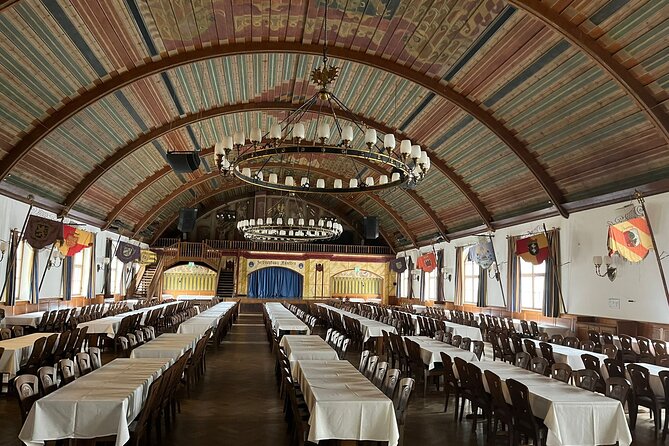
Next is Staatliches Hofbräuhaus, billed as the mother of all breweries and the place where the Nazi party established its base. This is a reminder that the movement did not grow in isolation. It built networks in mainstream public life, in spaces people already used.
This stop is also about 15 minutes, and entry is included here. For practical reasons, that matters. You do not have to figure out ticketing while your guide is setting context and you are trying to keep the storyline straight.
What to pay attention to here is the contrast. Hofbräuhaus is the kind of place people associate with Munich culture. Seeing it in a political history frame is uncomfortable, but it is also instructive. It shows how propaganda can ride on familiar settings.
If you are sensitive to dark history, it can help to approach this stop like a history lens, not a sightseeing stop. You are there for meaning first, atmosphere second.
More walking tours in Munich:
- Munich: Old Town & Viktualienmarkt City Walk in German
★ 4.7 · 2,304 reviews - Munich: Night Watchman Walking Tour
★ 4.7 · 2,092 reviews - Munich Ghosts and Spirits Evening Walking Tour
★ 5.0 · 1,900 reviews - Munich Old Town Walking Tour
★ 4.5 · 1,287 reviews
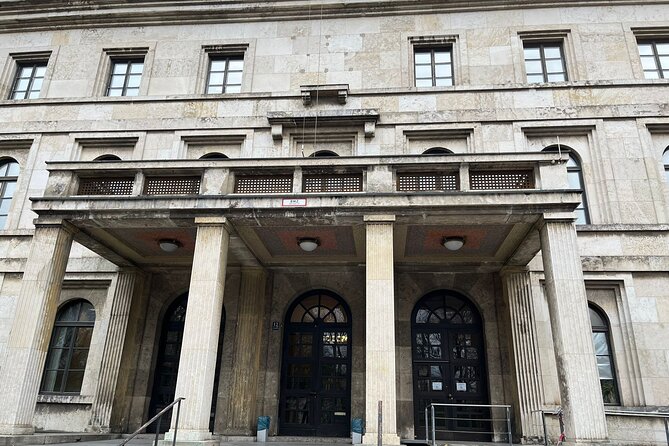
Stop 3: Haus der Kunst, a current museum with early propaganda roots
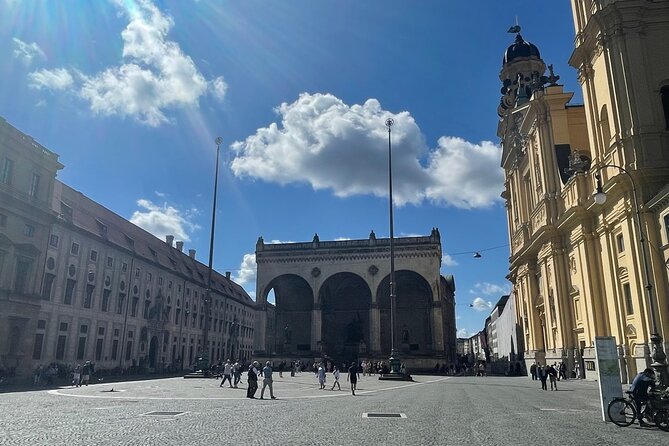
Then you head to Haus der Kunst. The tour frames it as the current museum and also as the first propaganda building of the Third Reich. That dual identity is one of the most interesting things about Munich.
This stop runs about 15 minutes with admission included. The value here is time. A “free” exterior-only tour often misses the most meaningful part. By including this museum stop, you get at least a starter set of context you can build on later.
The bigger point is how ideology used architecture and institutions. Even when the building now serves a different purpose, its early role helps you understand how power wanted to look permanent, organized, and culturally legitimate.
A consideration: museum content can vary depending on what is on view. The tour is still designed to connect the building to its role in the Nazi story, but you might notice more or less depending on the day.
Stop 4: Hofgarten, ideology meets public space
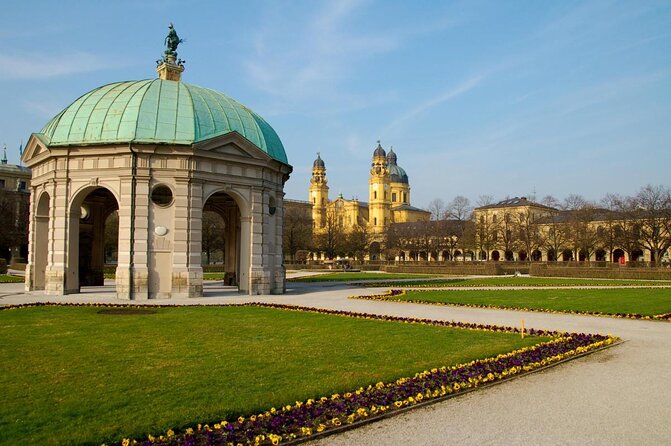
Now you move into Hofgarten, one of Munich’s most important parks. You get about 20 minutes, and entry is included.
This stop might look like a break, but do not treat it like a reset button. The tour uses parks and open space to explain how public life, leisure, and power messaging can overlap. The Nazi movement wanted to shape how people saw order and community. Outdoor civic spaces are part of that visual language.
If you need a small breath after earlier stops, this is a good moment. Still, keep your eyes open for your guide’s interpretation. Parks can teach just as much as buildings, because they show how people move through the city and where gathering feels natural.
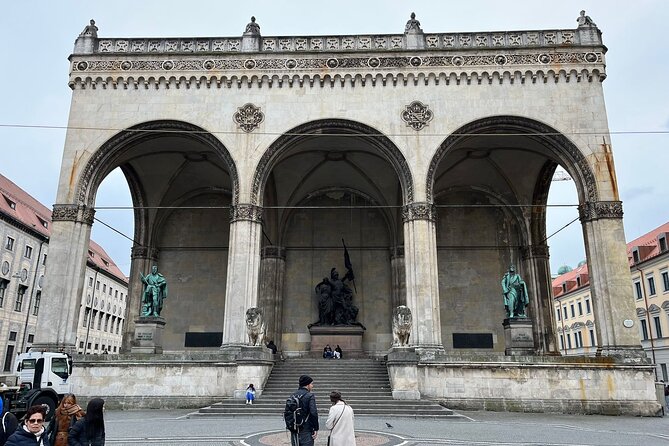
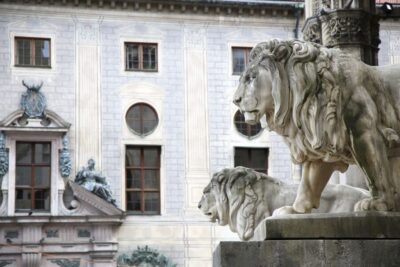
Stop 5: Odeonsplatz, a key square in Munich’s big picture
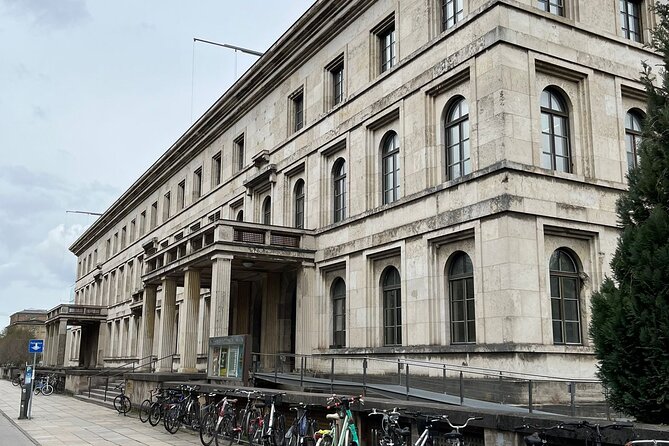
Your next stop is Odeonsplatz, one of Munich’s most important squares. It is about 15 minutes with free admission.
Squares like this matter because politics lives in sight lines. A major square is not just a backdrop. It is a stage for speeches, ceremonies, and public signaling. Your guide will connect this space to the broader story so it stops being “a nice place to stand” and becomes a place with purpose.
This is where the tour starts to feel like you are reading the city. You might find yourself noticing how wide the view is, how people naturally orient themselves, and how a central location can amplify sound and presence.
Stop 6: Königsplatz, planned space for a planned future
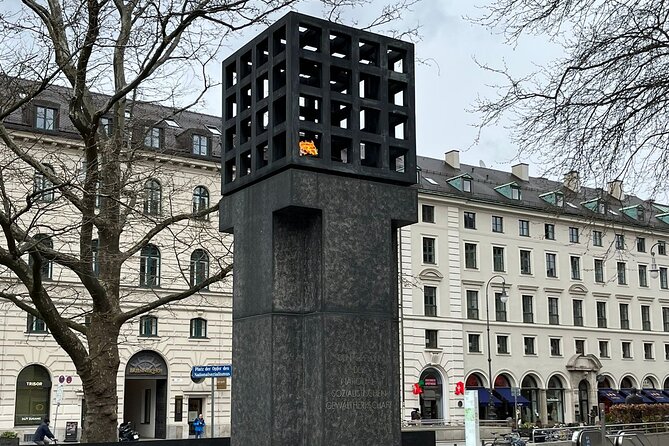
The tour finishes at Königsplatz, one of the main squares that formed the backbone of the new city designed by the Third Reich. This stop is about 15 minutes and it is free. Your tour ends at Königsplatz 1.
Königsplatz is powerful because it shows how the movement tried to control the future through city planning and monumental scale. Even if you only spend a quarter hour there, the guide’s explanation is designed to help you understand why this kind of space was useful to an ideology that wanted to look inevitable.
Another practical upside: ending here can make it easier to keep exploring. You are finishing in a major area of the city, so you can transition to your next stop without having to backtrack.
What makes the guide format especially useful
This tour includes an expert guide, and that is the engine of the experience. Walking tours about difficult history can go two ways: either they list facts, or they help you connect the dots. Here, the format is clearly aimed at connections.
You will also notice how the tour handles complexity. It covers the rise of a political movement in Munich, then ties it to consequences and to later remembrance. The goal is not just to explain what happened, but to clarify what Nazism meant and how that meaning turned into action across Europe.
One more plus: the pace leaves room for questions. With a cap of 35 travelers, you are more likely to get real answers instead of a generic, one size fits all script.
Price and value: what $20.16 gets you in Munich
At $20.16 per person, this is priced for access, not luxury. You are paying for the guide and for the structured route that connects multiple key places.
The value comes from three practical things:
- It is only about two hours, so you spend time efficiently.
- Several entries are included, including Staatliches Hofbräuhaus, Haus der Kunst, and Hofgarten.
- You get a mobile ticket, which cuts down on friction when you are managing your schedule.
If you were trying to do this on your own, you would spend time figuring out what to see, what order makes sense, and how to connect it all to a clear timeline. Even with good guidebooks, the walking route plus context saves a lot of mental effort.
The tradeoff is obvious: it is not a deep academic seminar. If you want maximum depth, you will still want museum time after the walk.
Timing and logistics that matter for a smooth day
The tour starts at 3:00 pm. That is a good time slot because you can combine it with a late afternoon plan after. It also helps you avoid the harshest parts of the morning if you are walking around in warmer months.
The meeting point is Mariensäule, Marienplatz 22. You finish at Königsplatz 1. The route is “near public transportation,” which is useful in Munich because you can plug into tram and subway options easily.
You get confirmation at the time of booking, and the ticket is a mobile ticket. That means you should have your phone charged and ready. This is basic advice, but it matters more than you think when you are standing on a street that is busy with other things.
Practical tips for a tour with a heavy topic
This is not a funny, lighthearted history walk. It deals with Nazism, the rise of the Third Reich, and episodes tied to violence and persecution. So I recommend you show up with a calm mindset.
A few practical tips that help:
- Dress for walking. It is outdoors between stops.
- Give yourself a small buffer afterward, so you are not rushing from one museum to the next while your brain is still processing.
- If you know you want more depth, plan a museum visit later that day or the next one. This route gives the outline, but it cannot hold every detail.
That echoes what makes it memorable for people who love history. You leave with clarity, but you also feel the pull to learn more.
Who should book this Munich origins of Nazism walking tour
This tour fits best if you:
- Want a guided, English overview with an easy structure.
- Prefer seeing history in the real city spaces rather than only reading about it.
- Like the mix of major squares, buildings, and parks, because it shows how ideology used everyday geography.
It might be less ideal if you:
- Only want lighter sightseeing that feels like a break.
- Need lots of time for museums right away, since this is built as a walking route with short stops.
Also, it says most travelers can participate, so it is generally approachable. Still, you should expect walking.
Should you book it? My straight answer
Yes, I think it is a smart booking for many visitors. For $20.16, you get a guided English route that connects major Munich locations to the rise of Nazism, then ties the story to remembrance of victims and resistance. The included entry stops mean you spend less time hunting tickets and more time understanding the timeline.
Book it if you want a clear beginning to Munich’s political history story and you appreciate guided context. Skip it or pair it with other learning if you are hoping for hours of museum depth in one go. The route gives direction. Then you can choose how far you want to go next.
FAQ
How long is the walking tour?
The tour lasts about 2 hours.
What is the price per person?
The price is $20.16 per person.
Is the tour in English?
Yes, it is an English tour.
Do I need a physical ticket?
No, you get a mobile ticket.
Where does the tour start and end?
It starts at Mariensäule, Marienplatz 22, 80331 München and ends at Königsplatz 1, 80333 München.
What time does the tour begin?
The start time is 3:00 pm.
What is included in the price?
The tour includes an expert guide. Some stops also include admission, while others are free.
Is lunch included?
No, lunch is not included.
How many people are in the group?
The tour has a maximum of 35 travelers.
What is the cancellation policy?
You can cancel for a full refund up to 24 hours before the experience’s start time.
Recently added around Munich
- München: Vegetarische Viktualienmarkt-Probiertour Deutsch★ 4.8 · 6 reviews
- Private Transfer from Munich to Vienna with 2 hours for sightseeing★ 4.5 · 6 reviews
- Munich Walking Quiz: Explore and Discover the City’s Highlights★ 5.0 · 7 reviews
- Walking Tour on Resistance to Nazism in Munich★ 5.0 · 8 reviews
- 2 hour Sights Guided E-Scooter Tour in Munich★ 4.0 · 6 reviews
- Private Transfer from Munich to Salzburg with 2 hours for sightseeing★ 4.5 · 13 reviews
- From Munich: Neuschwanstein Castle and Linderhof Private Tour★ 5.0 · 13 reviews
- Paul’s Private Tour Munich Highlights★ 5.0 · 3 reviews
Third Reich & WWII Walking Tours, compared.
Birthplace of the Third Reich Guided Walking Tour
Read our review →
Munich World War II Sites Including Dachau Concentration Camp
Read our review →
Munich City Walking Tour, includes Third Reich & Viktualienmarkt
Read our review →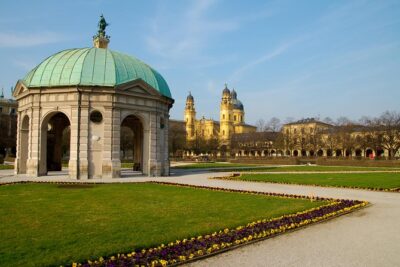
Munich 3-Hour Segway Tour: Nazi Munich & Royal Architecture
Read our review →
Dachau Concentration Camp Memorial Site And Third Reich Day Tour From Munich
Read our review →Browse the lists this tour appears in