Reviewed · THIRD REICH & WWII WALKING TOURS
Munich City Walking Tour, includes Third Reich & Viktualienmarkt
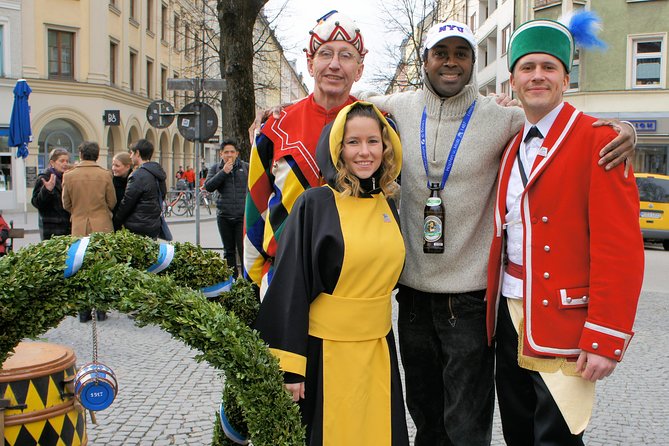
Munich on foot is interesting when it helps you read the city, not just tick off photos. This small-group walk does that by mixing big sights with practical guidance, so you leave knowing how to move around and what to notice.
I especially like the local, street-level pace and the way the guide ties history to how Munich works today. I also like the food-and-beer break at Viktualienmarkt, where you can grab a classic Bavarian bite and reset mid-tour.
One thing to consider: this is still a lot of standing outdoors between stops. If the weather is rough, you will want solid layers, gloves, and a plan to warm up.
Quick hits you’ll feel right away
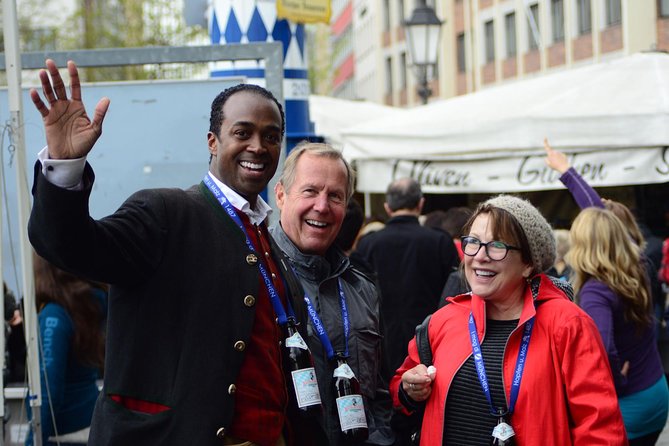
- Small group, up to 20 people, so you can ask real questions and keep up without getting lost in the crowd.
- Ozzie/Ozzy is frequently praised for clear explanations plus navigation tips that make the rest of your trip easier.
- Third Reich context is covered in a sensitive way, with the guide also connecting past to present-day realities in Germany.
- Lots of landmark variety in about 3 hours 15 minutes, from Gothic churches to medieval gates to a classic beer hall.
- Viktualienmarkt lunch stop gives you a Munich food moment, with Bavarian options and a beer pairing.
- Many sights are marked free on the route notes, so you are paying mainly for the guidance and the time-saving route.
Why this Munich walk feels local, not tour-bus
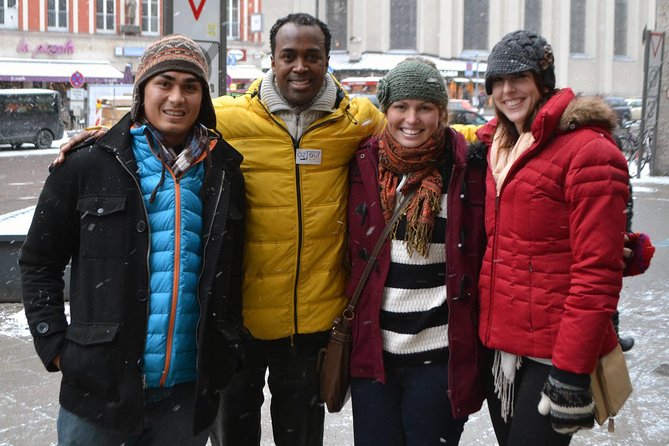
I like tours that help me act like a traveler, not a spectator. This one is built that way. You get a guided route through Munich’s most recognizable areas, but you also get tips for how to get around, what to prioritize, and how to read the city as you walk.
The guide focus is a big part of the value. In the stories you hear, Ozzie and other guides are praised for being funny, organized, and willing to answer questions as you go. That matters, because Munich is easy to love and also easy to overthink when you have limited time.
For me, the best “local” part is that the tour doesn’t stay locked in only famous buildings. You also stop in squares and viewpoints where Munich life actually happens, like Marienplatz and Karlsplatz, and then you get a break in a real market setting.
Other Third Reich and WWII history walks in Munich:
- Munich: Third Reich & WWII Walking Tour
★ 4.6 · 6,181 reviews - Third Reich Walking Tour Munich
★ 4.5 · 4,291 reviews - Munich: Birthplace of the Third Reich Guided Walking Tour
★ 4.6 · 771 reviews
Price and time: what you’re really paying for
At $31.78 per person for about 3 hours 15 minutes, this is priced like a classic guided walking experience. The math gets better because the route is packed with major stops and several are noted as admission ticket free.
Your main extra cost is optional food during the mid-tour break. The tour notes a fresh Bavarian lunch pause at Viktualienmarkt, but it is not listed as included in the base price. In other words, you are not forced into a set meal, which is nice.
Two practical points from the format:
- You’ll walk a good amount, because the tour is designed as a continuous loop through central Munich.
- You’ll stand at multiple points for explanations, so weather matters more than you might expect.
Starting at Schützenstr 11, ending at Odeonsplatz: how the route flows
The tour starts at Schützenstr 11, 80335 München, and it ends at Odeonsplatz (Odeonspl. 3, 80539 München). The route loops through the center, which is helpful because you do not end up miles away from where you’re going next.
It’s offered in English, and it caps at 20 travelers, which keeps the pace manageable. It also helps if you like asking questions without shouting over a huge crowd.
One more thing I appreciate: it is near public transportation. That makes it easier to get to the start point, and it’s also handy if you need a quick regroup option during the walk.
Frauenkirche: the twin towers that teach you Munich’s skyline

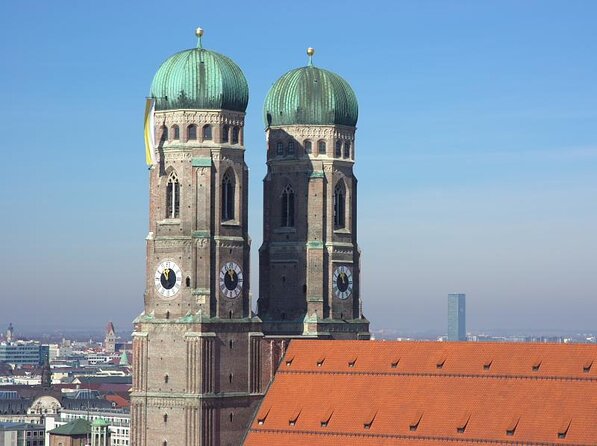
You start with one of the city’s most recognizable anchors: Frauenkirche, Munich’s cathedral with the twin-towered late Gothic profile. Built in the 15th century, it is tied to the church leadership in the region, and it gives you instant orientation.
Inside, the tour highlights the historic crypt and the Devil’s Footstep legend. Even if you do not remember the exact details later, the stop is useful because it trains your eye for how Munich blends serious architecture with old storytelling.
Time-wise, it is a short stop, about 10 minutes. That’s good if you’re balancing history and energy, but it also means you will not be doing a long sit-down inside.
More food tours around the Viktualienmarkt:
- Munich: Old Town & Viktualienmarkt City Walk in German
★ 4.7 · 2,304 reviews - Bavarian Beer and Food Evening Tour in Munich
★ 4.5 · 1,575 reviews - Munich: Viktualienmarkt Food Tour
★ 4.5 · 1,127 reviews - Munich: Beer and Food Tour with Dinner & Oktoberfest Museum
★ 4.7 · 1,086 reviews
German Hunting and Fishing Museum: the weird, specific Munich curiosity stop
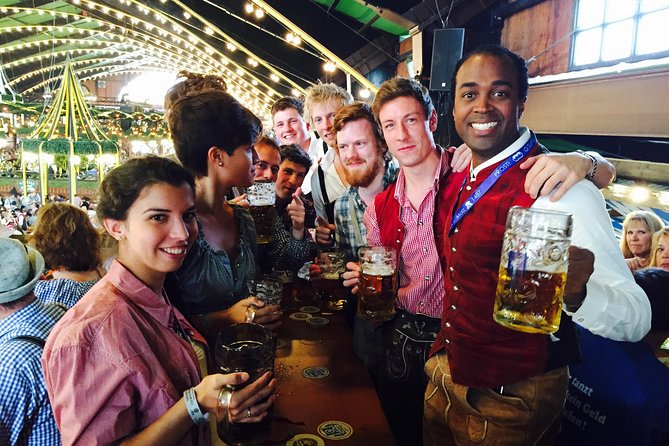
Next you visit the German Hunting and Fishing Museum, housed in a former Augustinian church. The scale is a big part of the appeal, with around 3,000 square meters of exhibits.
What makes this stop fun is the subject matter. You see stuffed wildlife, antique weapons, and the legendary Wolpertinger creatures. This is one of those places where the category sounds narrow, but the execution is oddly memorable.
Since the time on this stop is brief on the route, you should treat it like a highlight introduction. If you love odd-ball German folklore and old-world hunting culture, you might want to come back on your own for a longer look.
Hofbräuhaus at 1589: beer hall energy, explained not just shown
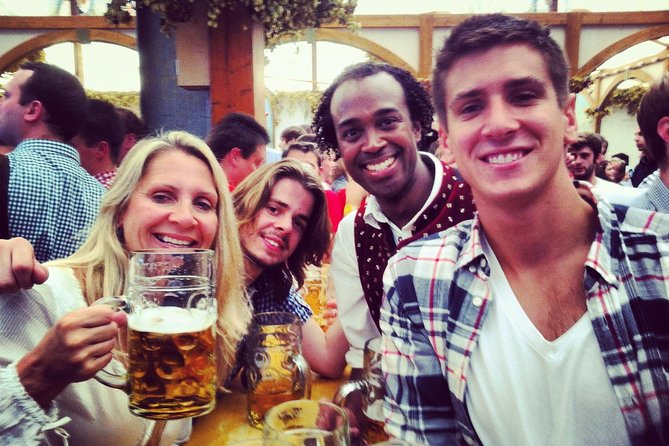
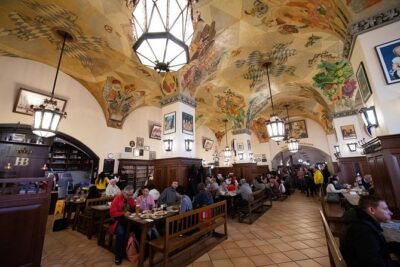
Then comes Staatliches Hofbräuhaus, the famous beer hall first brewing in 1589. The tour frames it as more than a photo stop by pointing out how it works as a real social space, not a museum.
You get a quick sense of the hall’s atmosphere, with home-brewed Bavarian beer and traditional music mentioned in the stop notes. The idea here is simple: Munich’s beer culture is part history, part everyday ritual.
Since the stop is short (about 10 minutes), I suggest you use it for atmosphere and guidance. If you want a full beer hall experience, plan to return later when you have more time to sit down.
Isartor: the medieval gate that links old Munich to modern streets
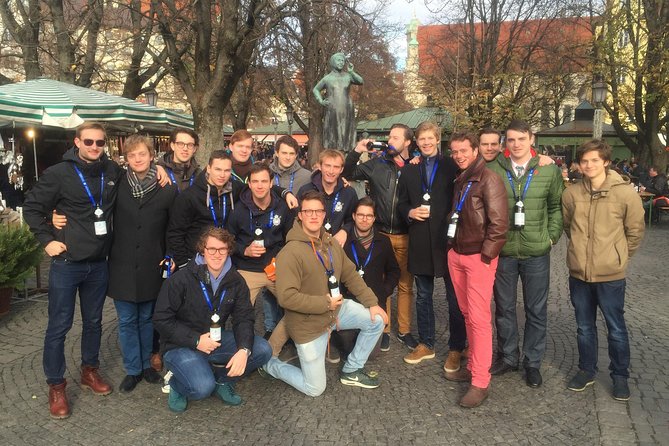
Isartor is one of Munich’s last medieval city gates, built in 1337 as part of the fortifications. You’ll notice the central tower and the presence of historic frescoes, which help you picture how the city once controlled entry.
This gate is also where the Valentin-Karlstadt Museum is located, connected to Bavarian comedy. That is a smart contrast to the darker parts of the tour content later, because it reminds you Munich is not only monuments. It has humor built into its cultural DNA.
The stop is brief, around 5 minutes, so it is more about context and orientation than deep exploration.
Marienplatz and the Glockenspiel: why this square is Munich’s living room
Marienplatz is Munich’s central square, dating back to 1158. It’s also where you feel the city’s daily rhythm. The stop includes time to look around the New Town Hall area and the famous Glockenspiel, plus the Mariensäule column nearby.
You also get a practical benefit here. This is the kind of place where small direction changes matter. From Marienplatz, you can access shopping streets and major pedestrian routes, so it’s a natural place to pause and reset your bearings.
This stop is one of the longer ones, about 25 minutes. That extra time matters because Marienplatz can be busy, and you’ll want a moment to check your bearings without rushing.
Max-Joseph-Platz: neoclassical grandeur and the culture hub feel
Max-Joseph-Platz is where Munich shifts into grand, theatrical mode. The square is linked to the National Theatre and the Munich Residenz area, and the stop highlights neoclassical architecture plus a statue connected to King Maximilian Joseph.
It’s short, about 5 minutes, but it’s a useful stop if you want to understand why Munich feels so formal in certain areas. You’re seeing the city present itself as a cultural center, not just a place to pass through.
Maximilianeum: where education turned into parliament above the Isar
The Maximilianeum is a striking palatial building perched above the Isar River. The tour notes it was founded in 1852 to support gifted students, and since 1949 it has housed the Bavarian State Parliament.
This is one of those stops where you can connect the dots between 19th-century ideas and modern governance. Even if you never go inside, the story gives the exterior meaning, and it helps you see why architecture is used as public messaging.
Platzl: the old-town square with food in its bones
Platzl is a charming historic square in Munich’s old center, known for traditional Bavarian atmosphere. It’s associated with Hofbräuhaus nearby and the Orlandohaus, with cobblestone streets and old buildings around it.
Why I like this stop: it is one of the easiest places to understand what “Munich life” means in practice. You’re near restaurants, and you’re in the kind of area where you can keep walking after the tour ends.
It’s not an “only for tourists” zone in the way some major squares can feel. It’s more like a central meeting point for people who already live in the neighborhood.
St. Michael’s Church: Renaissance scale with a royal crypt
St. Michael München is described as Munich’s largest Renaissance church, built in the late 16th century as a Jesuit center. The tour notes the facade and the barrel-vaulted ceiling, with early Baroque influences.
The standout detail here is the royal crypt. Even on a short route stop (about 10 minutes), it signals that Munich’s power and faith history is layered, not linear.
St. Peter’s Church, the Alter Peter: your quick payoff for city views
St. Peter’s Church, also called Alter Peter, dates back to the 12th century. It’s known for its 91-meter tower, and the route gives you time to appreciate the mix of Gothic, Baroque, and Rococo elements.
This stop is short, about 5 minutes. If you want the view, you’ll need to plan that as a separate activity because the tour format does not guarantee you’ll have time for everything.
Even so, the tower detail gives you a feel for where Munich’s vertical scale starts to change.
Wolfsbrunnen and Karlsplatz: Munich’s playful side between bigger monuments
Two quick sights keep the walk from turning into only solemn stops.
First is Wolfsbrunnen, an Art Nouveau fountain built in 1904 by sculptors Heinrich Düll and Georg Pezold. The fountain includes a bronze depiction of Little Red Riding Hood and a wolf, commissioned by the Wolf family to commemorate the name. That’s a specific bit of local symbolism, and it’s a fun palate cleanser.
Then you reach Karlsplatz, locally called Stachus. The tour notes it was built in the 18th century after the medieval city walls were demolished, and it includes the Karlstor gate. In summer you get the fountain vibe, and in winter it becomes an ice rink area.
Time is around 15 minutes here, which is enough to understand the square’s seasonal personality.
Odeonsplatz: the start of Ludwigstraße and the grand-architectural mood shift
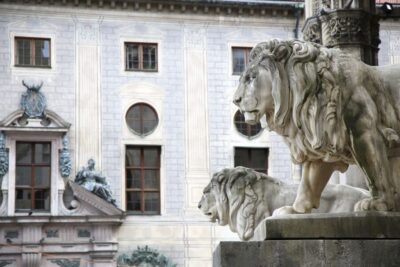
Finally, you reach Odeonsplatz, designed in the early 19th century by Leo von Klenze. The tour connects it to the Theatine Church, Feldherrnhalle, and the Residenz, with Italian-inspired architectural cues.
This is also where the walk ends, and it’s a smart ending point because Odeonsplatz puts you near other major walking corridors. It’s a “capstone” stop, not a dead end.
Viktualienmarkt lunch break: Bavarian food culture in a market setting
The best reset moment is the Viktualienmarkt break in the middle of the tour. This open-air market has been a hub since the early 19th century, with roots as a farmers market and today offering fresh produce, Bavarian delicacies, and artisanal goods.
You’ll also see the Maypole and the market’s beer garden side. The market stop notes a lunch pause and emphasizes choices without artificial additives, colors, preservatives, or fillers.
What you can plan for during the break is classic Bavarian eating. The sample menu options include a Bavarian bratwurst (regular, spicy, or cheese styles) or Bavarian potato salad with a pretzel, plus a Bavarian beer and a reusable beer bottle holder as part of that set option.
Even if you skip the exact set, you’ll still appreciate the structure: you’re not hunting for food while freezing or getting grumpy. The tour builds the meal into the schedule, which is a rare kindness on a walking route.
The Third Reich part: context with a guide you can ask questions to
Because the tour includes Third Reich coverage, I recommend treating this as a real history stop, not a side note. The route style gives you a chance to understand why the sites are there and how the city’s identity has been shaped since then.
In the guide approach, Ozzie and similar guides are praised for covering this sensitively and for adding context about how Munich and Germany relate to current realities, including notes that reach into today’s political climate (up to 2026 in guide stories). That is useful because it turns historical facts into something you can connect while you are still in the same streets.
A practical tip: if any part feels heavy, ask a question. The format works best when you use the guide’s explanations to make sense of what you’re seeing and why it mattered.
After the tour: how you’ll use what you learn
This walk is great as an arrival-day plan. You get enough orientation to navigate on your own right away, and you also learn what to save for later so you do not waste energy repeating the same areas.
In the guidance style described by guests, the guide actively helps with day-to-day decisions like:
- how to get around efficiently
- what not to stress about in advance
- how to interact with Munich in a way that makes the city feel less intimidating
- bathroom and quick breaks when you need them
This matters even more if you travel with kids or if you want to move at a calm pace rather than power through a checklist.
Who should book this walk in Munich
I think this tour is a strong fit if you:
- want a first or second day overview of Munich’s center
- like a blend of major sights plus practical street tips
- want beer and market culture built into the schedule
- appreciate history told with context, including Third Reich coverage
It may be less ideal if you:
- hate cold weather standing times, because the route is largely outdoors
- want long museum time at each stop, because several sights are brief
- need a very strict, clock-by-clock structure with minimal narrative pauses
A quick note on the weather: one of the recurring pieces of advice is to dress for outdoors. Some departures sound chilly enough that you will feel it in your hands and feet if you show up underdressed.
Should you book this Munich City Walking Tour with Third Reich and Viktualienmarkt?
I’d book it if you want a time-efficient orientation with an unusually thoughtful mix of landmarks, beer culture, and market food. The route hits major Munich anchors like Frauenkirche, Marienplatz, St. Michael’s, and Karlsplatz, then gives you a real break at Viktualienmarkt.
Book it sooner rather than later if you can. The tour is often reserved in advance, and a free cancellation option can make it easier to commit to your plan.
If your goal is only to stare at buildings without guidance or you want maximum time inside each site, you might prefer a more museum-forward plan. But for most people, especially first-timers, this is the kind of walking tour that helps you enjoy Munich on your own afterward.
FAQ
How long is the Munich City Walking Tour?
It lasts about 3 hours 15 minutes.
How much does the tour cost?
The price is $31.78 per person.
Is the tour in English?
Yes, the tour is offered in English.
What is the maximum group size?
The group size is capped at 20 travelers.
Where does the tour start and end?
It starts at Schützenstr 11, 80335 München and ends at Odeonsplatz (Odeonspl. 3, 80539 München).
Does the tour include a food break?
Yes. There is a mid-tour lunch break at Viktualienmarkt, and the tour notes a Bavarian lunch option during that pause.
Are snacks included in the tour price?
The tour states that snacks are not included. The lunch pause is part of the schedule, but you would purchase food during that break.
Are the listed attractions free to enter?
Many of the listed stops are marked admission ticket free, including places like Frauenkirche, Hofbräuhaus, Isartor, Marienplatz, St. Michael München, and St. Peter’s.
Is cancellation free?
Yes, free cancellation is available. You can cancel up to 24 hours in advance for a full refund.
Are service animals allowed?
Yes, service animals are allowed.
Recently added around Munich
- München: Vegetarische Viktualienmarkt-Probiertour Deutsch★ 4.8 · 6 reviews
- Private Transfer from Munich to Vienna with 2 hours for sightseeing★ 4.5 · 6 reviews
- Munich Walking Quiz: Explore and Discover the City’s Highlights★ 5.0 · 7 reviews
- Walking Tour on Resistance to Nazism in Munich★ 5.0 · 8 reviews
- 2 hour Sights Guided E-Scooter Tour in Munich★ 4.0 · 6 reviews
- Private Transfer from Munich to Salzburg with 2 hours for sightseeing★ 4.5 · 13 reviews
- From Munich: Neuschwanstein Castle and Linderhof Private Tour★ 5.0 · 13 reviews
- Paul’s Private Tour Munich Highlights★ 5.0 · 3 reviews
Third Reich & WWII Walking Tours, compared.

Birthplace of the Third Reich Guided Walking Tour
Read our review →
Munich World War II Sites Including Dachau Concentration Camp
Read our review →
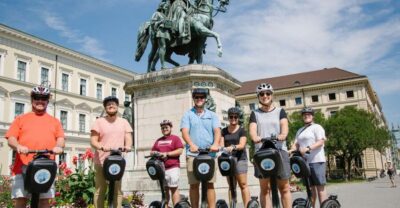
Munich 3-Hour Segway Tour: Nazi Munich & Royal Architecture
Read our review →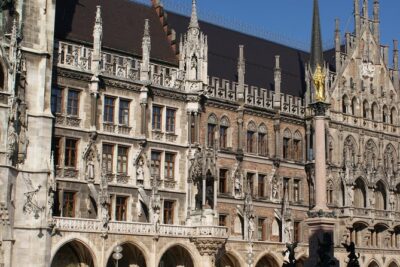
Dachau Concentration Camp Memorial Site And Third Reich Day Tour From Munich
Read our review →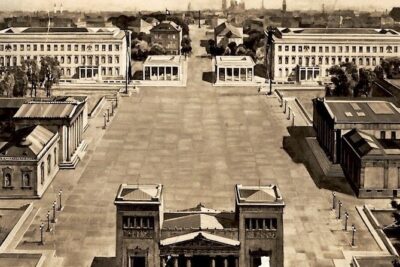
Munich in the 3rd Reich and WW2 private walking tour
Read our review →Browse the lists this tour appears in