Reviewed · THIRD REICH & WWII WALKING TOURS
Third Reich & WWII Walking Tour
Munich is not shy about its past, and this walking tour goes straight into the places where the Nazi movement took shape and where WWII-era lives played out in public. I love that it focuses on key sites like Königsplatz and Feldherrnhalle, so you can connect the story to real stone and street corners fast. I also like the small-group feel, plus the guides who bring the material with sensitivity, names like Alex, Michael, Josh, and Ulrich show up in recent guides. One drawback to plan for: it’s a heavy, serious topic, and the walk is mostly standing, so bring snacks and be ready for limited breaks.
The tour runs about 2 hours 45 minutes, in English, and you start at Marienplatz before finishing near Königsplatz, at the area tied to Hitler’s former headquarters. It is not set up for kids under 12, and in cold weather it can feel long on your feet. If you want a respectful, factual overview that actually makes Munich’s WWII role click, this is a strong choice.
Key things to know before you go
- Small-group format that keeps questions in the mix, with a cap of up to 30 per departure.
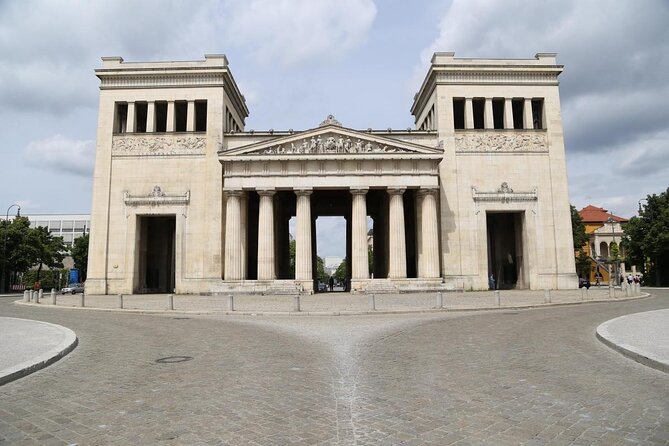
- Landmark route through Königsplatz, Feldherrnhalle, and the Hofbräuhaus, with stop time for context.
- White Rose resistance included, not as an afterthought, but as part of the Munich story.
- Professional guides who handle tragic subject matter with care and room to reflect.
- A long standing walk, so snacks and warm layers matter more than you think.
Why Munich’s Nazi-era sites work better on foot
Some cities let you view history like it is behind glass. Munich does not. The streets, squares, and monumental buildings here were made to be seen, and this tour uses that reality to explain how propaganda, politics, and public life fed each other.
This is a walking tour built around the question, How does a movement grow from meetings and speeches into state power? You see the key locations tied to early Nazi momentum, and you also hear where resistance fit into the same city.
It is also a tour where the guide matters. In multiple recent departures, guides like Alex and Michael get singled out for clear structure and strong factual storytelling. Josh is praised for managing a serious subject with sensitivity, and Ulrich gets extra credit for pacing plus thoughtful recommendations for what to do after the walk.
Other Third Reich and WWII history walks in Munich:
- Munich: Third Reich & WWII Walking Tour
★ 4.6 · 6,181 reviews - Third Reich Walking Tour Munich
★ 4.5 · 4,291 reviews - Munich: Birthplace of the Third Reich Guided Walking Tour
★ 4.6 · 771 reviews
Price and value: what $35.09 buys you
At about $35.09 per person for an almost 3-hour walk, the value is less about entertainment and more about interpretation. You are paying for a professional guide to connect multiple locations and time periods into one coherent explanation, and you are getting small-group attention rather than a big bus-lecture style.
Also, the tour covers more than just the Nazi rise. It includes WWII-era context in Munich and points you to how Germans and the city itself later remembered and processed this chapter. That kind of guided framing is hard to replicate on your own, especially when you are trying to understand why these specific sites mattered.
What you do need to budget for: food, drinks, and anything you choose to add afterward (like museums). The tour is priced as a guided walking experience, not a meal plan.
Getting started at Marienplatz, then lining up the story
Your tour begins at Marienplatz (80331 München), one of Munich’s busiest meeting points. That matters, because it means you can connect it easily with other sightseeing you might already be doing around the old city center.
From there, the walk leads you toward the major squares and buildings tied to the Nazi era. The tour includes multiple core stops, and Königsplatz is listed as the first major stop. You end at Königsplatz 1 (80333 München), at the area connected to Hitler’s former headquarters.
One useful practical note: guides often weave in suggestions along the route for nearby sights worth your time. Multiple guides are described as helpful after the tour too, including directions for the rest of your day. That can be a big deal if you only have one day in central Munich and want to avoid aimless wandering.
Königsplatz: where public space met political ambition
Königsplatz is the kind of place where you can feel the weight of planning. The tour uses it to explain how Munich’s post-World War I chaos created openings for extremist politics.
You hear the story as Germany pulled out of humiliation after World War I, with Munich tied up in hyperinflation and political unrest. This is where the Nazi movement grows out of a fertile mix of instability, anger, and opportunity.
Expect the guide to connect the physical setting to the political function. Squares like this were made for visibility, for crowds, and for spectacle. That is not just vague symbolism. It is the mechanics of how power tries to look inevitable.
This stop also sets up a major theme that runs through the whole walk: the transition from movement to regime does not happen in a vacuum. It happens in public.
More walking tours in Munich:
- Munich: Old Town & Viktualienmarkt City Walk in German
★ 4.7 · 2,304 reviews - Munich: Night Watchman Walking Tour
★ 4.7 · 2,092 reviews - Munich Ghosts and Spirits Evening Walking Tour
★ 5.0 · 1,900 reviews - Munich Old Town Walking Tour
★ 4.5 · 1,287 reviews
Hofbräuhaus: the early mass-meeting engine
The tour includes the Hofbräuhaus as part of the origin story. This is where the narrative shifts from political ideas to mass support, from private talking to public momentum.
The key idea here is crowd dynamics. The guide explains how early Nazi organizing used big public venues to gather people who were already hungry for direction, meaning, and a sense of national pride after defeat.
In practical terms, this stop helps you understand why propaganda worked. It was not only messages. It was also where and how those messages were delivered, and how people were pulled into the same room, the same rhythm, the same emotion.
If you have ever wondered why extremists can attract followers so fast, this is where the tour gives you the mechanics, not just the moral judgment.
Feldherrnhalle: a failed attempt that still reshaped history
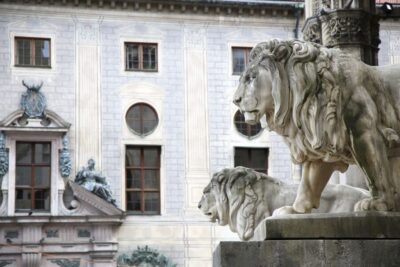
Next comes Feldherrnhalle, a site connected to the Nazi party’s failed attempt to seize power. This stop matters because it shows you the turning points that do not go the way the plotters want.
History does not move in a straight line. Even a failure can become a rallying story, a proof of commitment, and a weapon for future propaganda. The tour uses the Feldherrnhalle context to show how early actions, plans, and even setbacks can feed the movement’s myth-making.
You also get the broader WWII thread through how these early events influenced later trajectories. It is the difference between reading a timeline and understanding how people at the time interpreted what happened.
Hofgarten and the White Rose: resistance as part of the Munich story
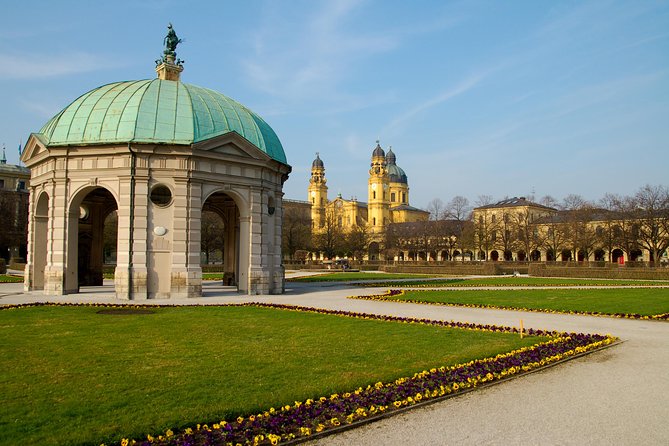
One of the strongest parts of this tour is that it does not treat resistance like a side note. The route includes time to talk about the White Rose resistance movement in the Hofgarten area.
This is important for two reasons.
First, it gives you a human scale view of opposition. People were not just swept up in events. Some chose to resist the flow.
Second, it prevents the story from feeling like only one moral direction, only one outcome. The tour frames resistance as real action inside the same city where the Nazis were building public legitimacy.
If you have any hesitation about how a tour on the Third Reich will handle tone, this White Rose component is a good sign that the guide will bring balance. Multiple guides are praised specifically for respectful handling of tragic facts and room to process what you hear.
Where it ends: Königsplatz and Hitler’s former headquarters area
You finish at Königsplatz 1, tied to Hitler’s former headquarters. Ending here is not casual. It reinforces the full arc of the tour, from early momentum to the machinery of power.
This is also where you might choose to do one more step on your own, depending on what the guide recommends. One guide, Ulrich, is specifically mentioned for suggesting you go into the document museum connected with the area you finish at, and that is a strong add-on if you want images, documents, and deeper context after the walk.
If you prefer not to linger in heavy material, you can also keep your pace light here. The tour ends at this point so you can head out for lunch or continue with gentler Munich sights.
How guides handle a heavy topic (and how you can get the most out of it)
This tour asks you to process uncomfortable history, and that is where great guiding shows. In recent departures, guides are praised for factual honesty, clear narration, and sensitivity. They also make space for reflection, including quiet moments at stops connected to remembrance.
You should also know this is not a casual chatty walk. The material is detailed enough that beginners can still enjoy it, but you will likely feel the volume. One review even calls out that the pace can feel overwhelming for someone starting from zero in WWII history.
So here is how to maximize your experience:
- Ask questions early, especially if you are new to German WWII history.
- Take notes on the names and places. This topic connects many events, and a few written anchors help your brain sort it out later.
- If you are sensitive to details, tell your guide. A good guide will adjust how they pace discussion and processing.
One more practical caveat from feedback: some people mention it can be hard to hear the guide at times, unless sound carries well. If you tend to lose audio in crowds, stand where you can see the guide’s face and mouth, and avoid drifting behind taller people.
Timing, walking comfort, and what to bring
The tour is listed at about 2 hours 45 minutes, and the experience is largely walking and standing. Even reviews that rate it excellent also point out the tiredness angle, especially in freezing weather.
Plan for limited sitting. One departure describes a short indoor break around the midpoint, roughly 15 minutes. But do not count on it as your main rest stop.
So I suggest you pack:
- A drink and a snack, because you will want a quick reset.
- Warm layers and gloves if you are traveling outside spring or summer.
- Comfortable shoes with decent grip. Munich sidewalks can be slick in winter.
Also, if you are doing this on a day when you already have multiple museum stops planned, leave some breathing room after. The ending location ties into heavy material, and your brain will appreciate a gentle decompression before the next big attraction.
Who this tour suits best
This is a good match if you:
- Want a structured overview of Nazi rise in Munich, tied directly to major sites.
- Prefer walking plus storytelling over reading a guidebook alone.
- Appreciate seeing how public spaces, crowds, and propaganda connect.
- Are open to resistance history, including the White Rose.
It is less ideal if you:
- Need a family-friendly activity, since it is not recommended for children under 12.
- Want something light and casual. This is serious, respectful education, not entertainment.
Should you book? My decision checklist
Book it if you want clarity and context tied to real locations in Munich. For the money, the key value is interpretation by a professional guide, especially if you are trying to understand how the Nazi movement grew from early organizing to power. The small-group feel also helps, and the guides named Alex, Michael, Josh, Danielle, Joel, and Ulrich show up as examples of strong narration and handling of a tragic subject with care.
Consider skipping or pairing it differently if:
- You are prone to getting overwhelmed by heavy topics, because the tour packs a lot into almost three hours.
- You know your hearing gets worse in crowds, since some departures may not have ideal amplification.
- You are short on time and prefer a shorter overview, because this is built as a full walkthrough rather than a quick hit.
If you do book, go in with a simple goal: learn why these places mattered, and what people did in that same city during those years. That mindset makes the walk hit harder in the right way, and it will help Munich feel less like a postcard and more like a real, complicated history you can actually understand.
FAQ
How long is the Third Reich and WWII walking tour in Munich?
It runs about 2 hours 45 minutes (approx.).
How much does the tour cost?
The price is $35.09 per person.
Where does the tour start and end?
It starts at Marienplatz, 80331 München, Germany, and ends at Königsplatz 1, 80333 München, Germany. The tour ends at Hitler’s former headquarters area.
What language is the tour offered in?
The tour is offered in English.
Is the tour suitable for children?
The tour is not recommended for children under 12.
What is included in the ticket price?
A professional guide is included. Admission tickets are not included (where applicable).
Is food and drinks included?
No. Food and drinks are not included. The tour also does not include hotel pickup and drop-off.
Is free cancellation available?
Yes, you can cancel for a full refund up to 24 hours in advance of the experience start time.
Recently added around Munich
- München: Vegetarische Viktualienmarkt-Probiertour Deutsch★ 4.8 · 6 reviews
- Private Transfer from Munich to Vienna with 2 hours for sightseeing★ 4.5 · 6 reviews
- Munich Walking Quiz: Explore and Discover the City’s Highlights★ 5.0 · 7 reviews
- Walking Tour on Resistance to Nazism in Munich★ 5.0 · 8 reviews
- 2 hour Sights Guided E-Scooter Tour in Munich★ 4.0 · 6 reviews
- Private Transfer from Munich to Salzburg with 2 hours for sightseeing★ 4.5 · 13 reviews
- From Munich: Neuschwanstein Castle and Linderhof Private Tour★ 5.0 · 13 reviews
- Ten Munich Old town Sights in a Private Express Walking Tour★ 5.0 · 9 reviews
Third Reich & WWII Walking Tours, compared.
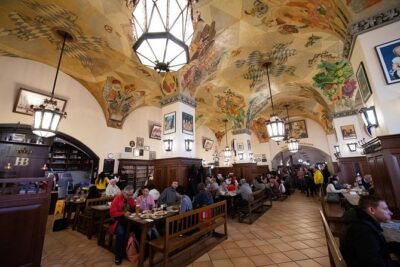

Birthplace of the Third Reich Guided Walking Tour
Read our review →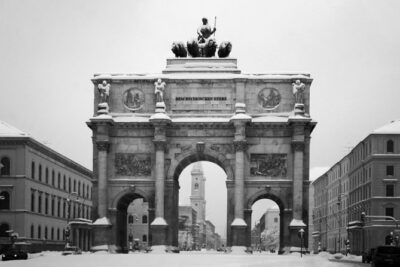
Munich World War II Sites Including Dachau Concentration Camp
Read our review →
Munich City Walking Tour, includes Third Reich & Viktualienmarkt
Read our review →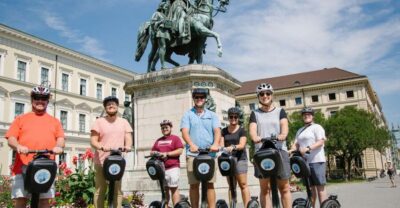
Munich 3-Hour Segway Tour: Nazi Munich & Royal Architecture
Read our review →
Dachau Concentration Camp Memorial Site And Third Reich Day Tour From Munich
Read our review →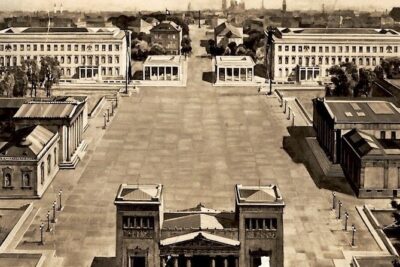
Munich in the 3rd Reich and WW2 private walking tour
Read our review →Browse the lists this tour appears in