Reviewed · THIRD REICH & WWII WALKING TOURS
Third Reich Tour Munich
This tour is interesting because it strings together several real, street-level places tied to the rise of the Nazis, right in central Munich. I like that it connects the beer halls to later political power, and I like the small group size so you can ask questions and actually get answers from guides like Kaevan and Jamie.
One consideration: the subject matter is heavy. You’ll be walking near sites tied to propaganda, persecution, and violence, then ending at Königsplatz, a dramatic example of how architecture was used for control. If that hits a little hard for you, plan a slower pace and give yourself time to process at the memorial stop.
Key Things You Will Notice on This Third Reich Tour Munich
- A tight 2.5 hour route built around major locations, not a scattershot bus tour
- Beer hall origins to regime operations, with stops that show the Nazi story in sequence
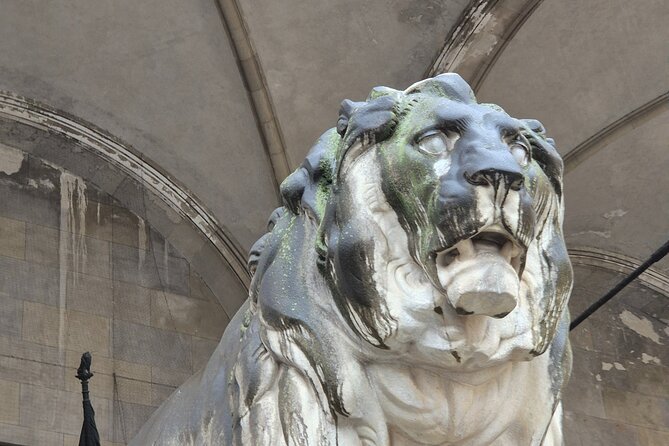
- Feldherrnhalle and the 1923 failed coup, a turning point tied to why the movement grew
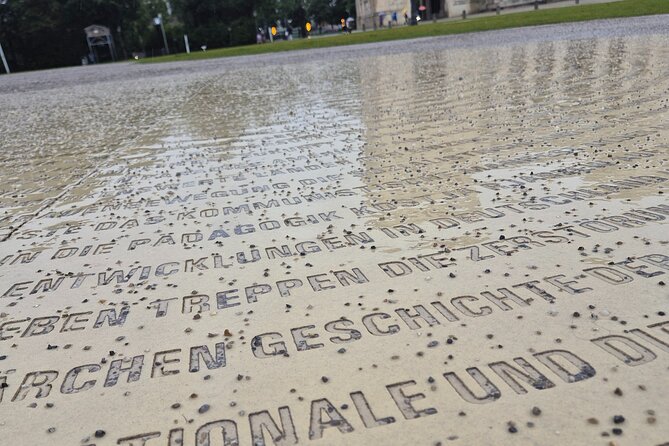
- A solemn memorial break at the Square for the Victims of National Socialism, including an eternal flame
- Königsplatz in full view, where the regime used space to stage public power
- Guides who answer questions at a good pace, with Jamie and Kaevan singled out for clarity
Why These Nazi-Era Sites Work Better on Foot Than From a Headline
Munich has a way of putting history on display. Not in a museum case. On sidewalks, in front of buildings, and in squares you can stand in and feel the scale. This Third Reich Tour Munich uses that advantage. Instead of trying to memorize dates, you learn by moving from place to place and watching how the narrative changes.
The biggest thing you’ll notice is the cause-and-effect feeling. The tour starts with early gatherings and propaganda settings, then moves toward the places where decisions were made and the public message was amplified. It’s one continuous storyline in a city you can still walk today.
And yes, you’ll need the right attitude. This is not for fun. It is for understanding. The guide keeps it grounded in what happened and what these locations were used for, including the memorial part that honors the victims.
Other Third Reich and WWII history walks in Munich:
- Munich: Third Reich & WWII Walking Tour
★ 4.6 · 6,181 reviews - Third Reich Walking Tour Munich
★ 4.5 · 4,291 reviews - Munich: Birthplace of the Third Reich Guided Walking Tour
★ 4.6 · 771 reviews
Meeting at Isar Gate, Getting Your Bearings, and Staying With the Group
The tour meets at Isar Gate, Tal 50, 80331 München. That matters because it places you in the old-city flow quickly, before you start hopping between sites. It also means you get a warm-up moment, just enough time to get oriented and hear the plan.
You’re looking at about 2 hours 30 minutes total. The pace is designed for walking plus short, focused stops. All locations are in central Munich, and the group stays together, with a maximum of 20 travelers. That small size is a real benefit here. It keeps questions from feeling like they’re taking over, and it helps the guide keep timing.
You’ll also have a mobile ticket. If you’re traveling with limited data or a dead battery, keep your ticket ready in the app or on your phone before you head out. Near public transportation too, which helps if you want to arrive early and do your own pre-walk.
Sterneckerbräu: When a Beer Hall Became a Political Startup
One early stop is Sterneckerbräu, a former beer hall linked to the early days of the Nazi Party. This is where the story turns from general resentment and politics into organized movement-building. You get about 15 minutes here, which is just long enough to understand the role of the location without turning it into a lecture that drags.
What I like about this stop is the way it explains why people gathered. Beer halls weren’t just places to drink. They were social hubs with regular crowds, and that made them useful for spreading messages. The guide ties the early meetings and planning to the later growth of the movement in Munich.
A practical note: because it is a real, functioning area of the city, you’ll likely feel the contrast between everyday life around you and the very specific historical use of the space. That contrast is part of the lesson, but it can feel unsettling if you’re sensitive to that kind of juxtaposition.
Staatliches Hofbräuhaus: Propaganda, Crowds, and Hitler’s Early Speeches
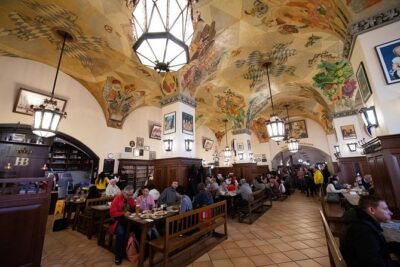
Next comes the Staatliches Hofbräuhaus, one of Munich’s best-known beer halls. You spend about 25 minutes here, and the guide uses that time to connect the dots between early Nazi Party meetings and the way speeches drew larger crowds.
This stop is valuable because it shows the mechanics of propaganda. The tour doesn’t just say speeches mattered. It explains how a familiar public venue helped the movement scale its audience. Over time, bigger gatherings meant a bigger message, and a bigger sense of momentum.
If you’ve seen big historical narratives before, this is where the tour stays grounded. You learn what people were doing and why they were doing it, in the context of a place that still looks like a place people might visit for a beer today. That’s not a reason to rush past it. It’s a reason to pay attention.
Also reviewed in and around Munich:
- From Munich: Neuschwanstein & Linderhof Castle Full-Day Trip
★ 4.5 · 12,494 reviews - Neuschwanstein & Linderhof Castle-Fairytale Day Tour from Munich
★ 4.5 · 7,275 reviews - Dachau Concentration Camp Memorial Site Tour from Munich by Train
★ 4.5 · 5,637 reviews - Neuschwanstein Castle Tour from Munich
★ 4.5 · 5,117 reviews
Feldherrnhalle and the 1923 Beer Hall Putsch: How a Failure Became a Story
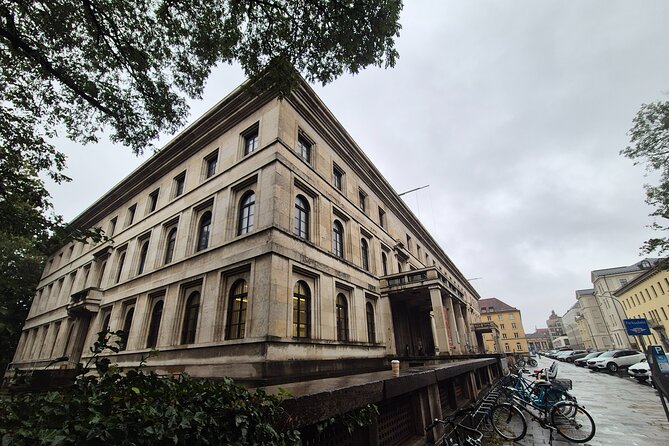
Then you go to Feldherrnhalle, with about 25 minutes. This is one of the most emotionally charged stops on the route because it is tied to the failed Beer Hall Putsch in 1923, when Hitler and supporters attempted to seize power. The guide explains what happened in the clash with Bavarian police and how the site was later used as a symbol.
Here’s the useful takeaway: movements don’t only grow from winning. They can also grow from turning defeat into a myth of sacrifice. The tour shows you how public memory gets shaped, not just by events, but by how those events are framed after the fact.
The practical drawback is that this stop tends to attract emotion quickly. If you want to ask questions, do it here while the guide is building the narrative, not at the end when your energy might be lower. The best results come when you let yourself engage, but you also give your brain time to separate facts from the emotional pull of symbolism.
Platz der Opfer des Nationalsozialismus: The Moment That Refuses to Be Only Academic
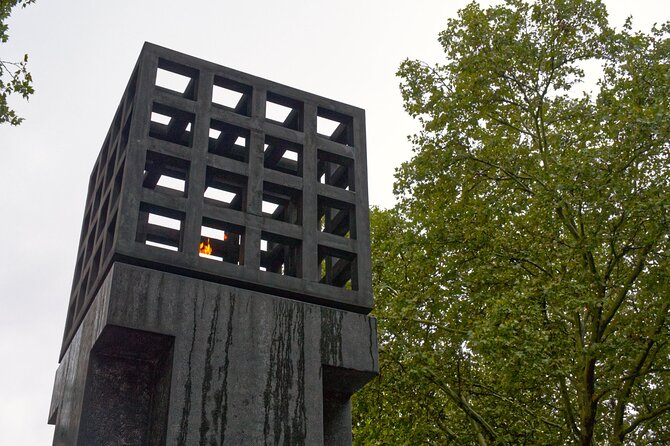
After Feldherrnhalle, you reach the Square for the Victims of National Socialism, around 20 minutes. This is where the tour becomes unmistakably about victims, not just political strategy. The eternal flame is part of the memorial, and the guide explains its significance in Munich’s effort to confront the city’s dark history.
I appreciate this stop because it resets the emotional balance. Up to this point, you’ve learned how power was pursued and promoted. Here, the focus shifts to what that power did to real people.
You don’t need to be a historian to understand the value. It is a reminder that history is not just a chain of decisions. It is a record of human suffering. If you prefer a moment of quiet, you can take it here. The tour schedule allows you to stand and reflect without feeling rushed.
Führerbau on Königsplatz: Where Meetings and Agreements Were Made
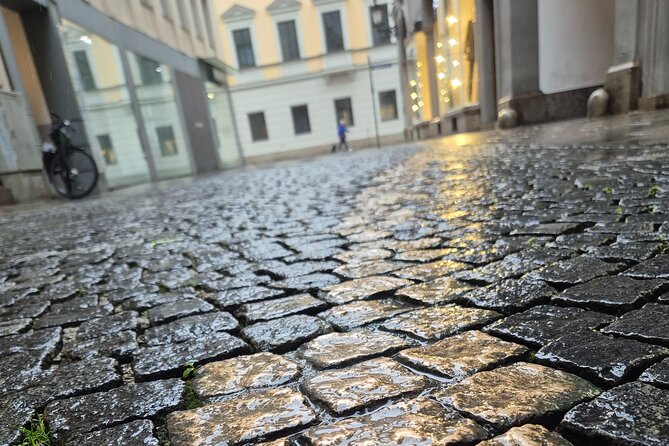
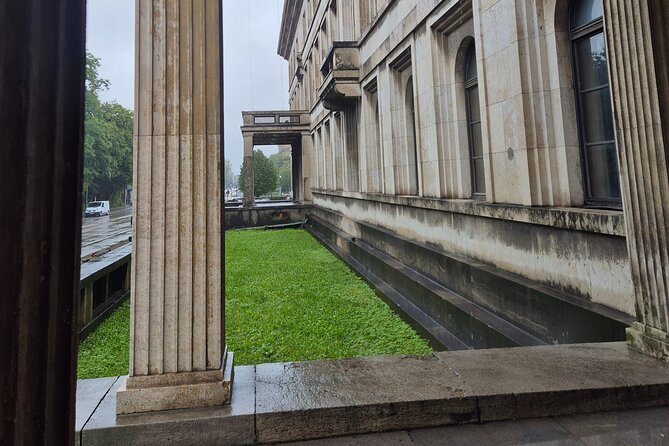
Next is the Führerbau, Hitler’s official offices in Munich. You spend about 20 minutes here, and the guide places it on Königsplatz, where Hitler met with high-ranking officials and helped orchestrate major decisions. The tour also connects the building to events like the signing of the Munich Agreement in 1938.
This stop matters because it changes the scale. Up to now, you’ve been dealing with public venues and confrontations. Now you’re looking at the machinery of power, the offices where decisions get made. The guide’s commentary keeps you from turning it into a dramatic photo stop. It’s about how bureaucracy and authority worked in practice.
A small caution: if you expect something like a museum interior experience, you might be disappointed, because your time is mostly spent in the outdoor viewing area and around the context the guide provides. But that is also why the tour is effective. You understand the location in real time, not through a display screen.
Königsplatz: When Architecture Was Used to Stage Control
The tour then shifts into Königsplatz, with about 20 minutes on site. This is a grand square, designed and used by the Nazis to create a stage for mass rallies and military parades. The guide explains how the regime used imposing architecture and public ceremonies, including actions like book burnings, to bolster support.
What I like here is that you learn to read the space. You’re not just told it was important. You stand where the regime wanted people to see it. You can feel how the square’s scale would support spectacle and reinforce authority.
The tour ends at Königsplatz 1, 80333 München. From here, returning to the city center is easy. Take the U2 U-Bahn from Königsplatz Station to Central Station, one stop, about one minute. Or use nearby buses and trams, or simply walk to Munich Old City in less than 15 minutes.
Guides, Pace, and Why Jamie and Kaevan Stand Out
The guides are a big reason this tour works. In the feedback I’ve seen, Kaevan gets praise for deep knowledge and being happy to answer questions. Jamie gets praise for being well informed and for turning the walk into a story you can follow street by street.
I also like the pacing. It is not a marathon where you’re forced to listen nonstop. The timing gives you room to absorb each stop, then move on when the details start connecting. One review highlighted that the pace encourages you to see what is included, plus pick up extra context along the way, which is exactly how I want a history walk to feel.
Group size helps too. With up to 20 people, you’re more likely to hear the guide clearly, and questions don’t disappear into silence. That makes a difference when the topic is complex and you want factual answers, not vague gestures.
Price and Value: What $34.73 Buys You in Munich
At $34.73 per person for about 2 hours 30 minutes, this is one of the more budget-friendly ways to get guided, context-rich history in central Munich. The main value isn’t only the cost. It’s the structure.
You’re paying for an experienced guide’s commentary across multiple major sites tied to the same historical arc. That beats trying to stitch together your own understanding from scattered plaques. You also don’t need paid admission for the stops, which keeps the total experience from turning into an unpredictable budget.
Also, the mobile ticket helps. You’re not juggling paper tickets or hunting for printouts. It’s a small thing, but it removes friction from a tour that already asks you to pay close attention.
Who This Tour Is Best For (and Who Might Want Another Option)
This works best if you are a history buff, a curious traveler, or someone who wants a clear, guided path through Nazi-era sites in Munich. It’s also a good fit if you like walking tours that connect the dots, instead of a checklist of monuments.
If you are easily overwhelmed by difficult topics, you should still consider it, but go in with intention. The tour includes the memorial stop for victims, and that is emotionally important. If you know you want lighter subject matter, you may want a different Munich tour instead.
For most people, it is doable. The experience says most travelers can participate, and the route is between central sites. Still, it’s a walking tour, so wear comfortable shoes and expect time standing outdoors at each location.
A Quick Practical Plan Before You Go
Because this is a focused route with short stops, you’ll get more from it if you show up with a little context. Read a couple pages on the Nazi rise to power before you arrive, or review a simple timeline. Then the guide’s connections will make more sense.
Also, bring your questions. The best moment to ask is usually when the guide is describing why a place mattered, not only what happened there. For example, you can ask how a beer hall crowd helped spread propaganda, or how a public square was meant to shape public perception.
Finally, be ready for mixed feelings. The tour covers propaganda, failed political violence, and a memorial honoring victims in the same day. That can be a lot, but it is also why the walk feels complete.
Should You Book the Third Reich Tour Munich?
If your goal is to understand Munich’s role in the Nazi story through real places, I think this is a strong booking. The route covers the origins in beer halls, the attempt to seize power at Feldherrnhalle, the shift toward official control at the Führerbau, and then the public staging of power at Königsplatz. You also get the memorial stop for victims, which keeps the experience from becoming only political theater.
Where I would hesitate is if you want a lighter historical tour or you do not handle emotionally heavy subjects well. This is a respectful look at a terrible chapter. If that’s what you’re ready for, you’ll likely find it clear, structured, and worth your time, especially with guides like Kaevan and Jamie setting the tone and answering questions at a steady pace.
If you do book it, go in prepared to walk, listen, and ask. That is how the city’s details turn into understanding.
Recently added around Munich
- München: Vegetarische Viktualienmarkt-Probiertour Deutsch★ 4.8 · 6 reviews
- Private Transfer from Munich to Vienna with 2 hours for sightseeing★ 4.5 · 6 reviews
- Munich Walking Quiz: Explore and Discover the City’s Highlights★ 5.0 · 7 reviews
- Walking Tour on Resistance to Nazism in Munich★ 5.0 · 8 reviews
- 2 hour Sights Guided E-Scooter Tour in Munich★ 4.0 · 6 reviews
- Private Transfer from Munich to Salzburg with 2 hours for sightseeing★ 4.5 · 13 reviews
- From Munich: Neuschwanstein Castle and Linderhof Private Tour★ 5.0 · 13 reviews
- Paul’s Private Tour Munich Highlights★ 5.0 · 3 reviews
Third Reich & WWII Walking Tours, compared.

Birthplace of the Third Reich Guided Walking Tour
Read our review →
Munich World War II Sites Including Dachau Concentration Camp
Read our review →
Munich City Walking Tour, includes Third Reich & Viktualienmarkt
Read our review →
Munich 3-Hour Segway Tour: Nazi Munich & Royal Architecture
Read our review →
Dachau Concentration Camp Memorial Site And Third Reich Day Tour From Munich
Read our review →Browse the lists this tour appears in