Reviewed · THIRD REICH & WWII WALKING TOURS
Munich: National Socialism Historical Tour in GERMAN
Munich has a way of turning streets into evidence, and this National Socialism walking tour uses that idea well. You start at Königsplatz and work your way toward Odeonsplatz with a professional guide, tying key events to the exact places they unfolded. I like how the route is built from specific landmarks like the former Führerbau and Feldherrnhalle, and I especially like the black and white photos the guide brings to explain what you are seeing.
One thing to consider: this is a serious, heavy subject, and it is a walking tour that runs rain or shine. If you are sensitive to that kind of material, or you struggle with walking distances, plan accordingly.
Key things I’d plan around
- A focused 2-hour walk through central Munich sites tied to National Socialism
- November 9, 1923 and 1933 are both part of the story you will hear
- Landmarks that still carry weight like the former Führerbau and Feldherrnhalle
- Black and white Munich photos from the 1920s and 30s to set the scene
- Private or group tour options so you can choose your comfort level
- German-language guiding with a live city guide throughout
A Walking Route Through Munich’s “City of the Movement”
This tour is built around one simple premise: National Socialism started in Munich, and the city’s streets still show the shape of that rise in the 1920s and 1930s. That is why the route feels more direct than a museum-only visit. You are not just hearing facts in the abstract. You are walking through a chain of locations that connect the NSDAP’s growth to real public spaces, public buildings, and the atmosphere of the time.
What I think makes this tour worthwhile is the balance between overview and location-based storytelling. You get a guide who explains the rise of National Socialism in Germany while you pass places that many history travelers recognize by name, even if they are not sure where to place them in the timeline. You will hear about Germany during National Socialism too, not just Munich’s early role.
Keep your expectations grounded. This is not about sightseeing joy. It is about understanding how ideology can take root, spread, and take over the public sphere.
Other Third Reich and WWII history walks in Munich:
- Munich: Third Reich & WWII Walking Tour
★ 4.6 · 6,181 reviews - Third Reich Walking Tour Munich
★ 4.5 · 4,291 reviews - Munich: Birthplace of the Third Reich Guided Walking Tour
★ 4.6 · 771 reviews
Finding the Tour: Staatliche Antikensammlungen and the BIG BLUE BAG
Your meeting point is in front of the main entrance of the Staatliche Antikensammlungen. This matters because the tour is a walking format, so being at the right spot at the right time keeps the whole group moving.
The guide is easy to identify. They will be wearing a BIG BLUE BAG with the white words Weis(s)er Stadtvogel on it. That is a small detail, but it saves you time when you are trying to match faces in a crowded area.
One practical note: bring comfortable shoes. The route is a city walk, and the tour runs rain or shine, so dress for wet weather and uneven sidewalks.
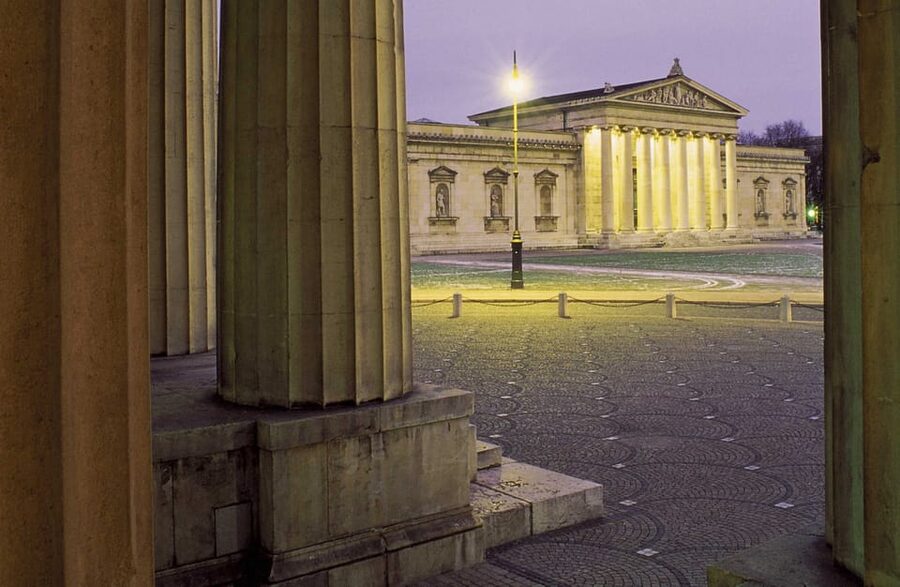
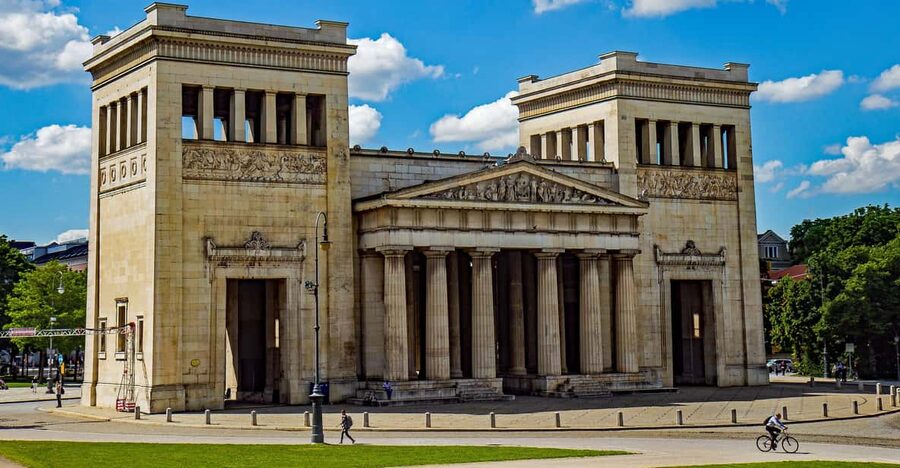
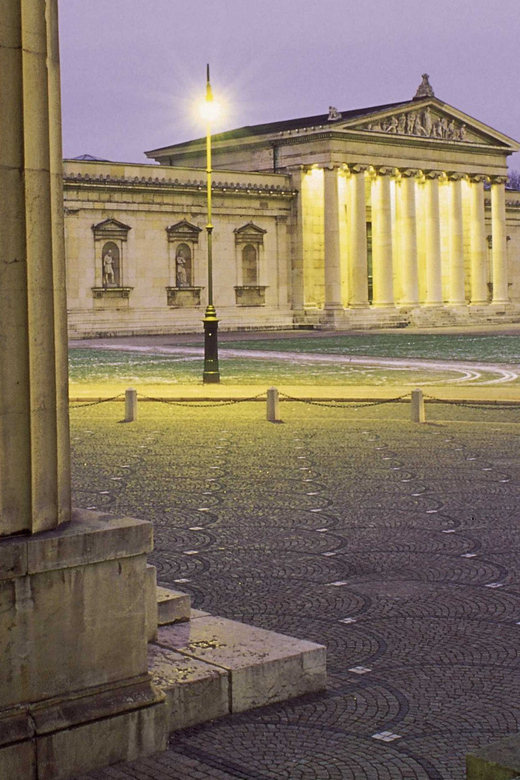
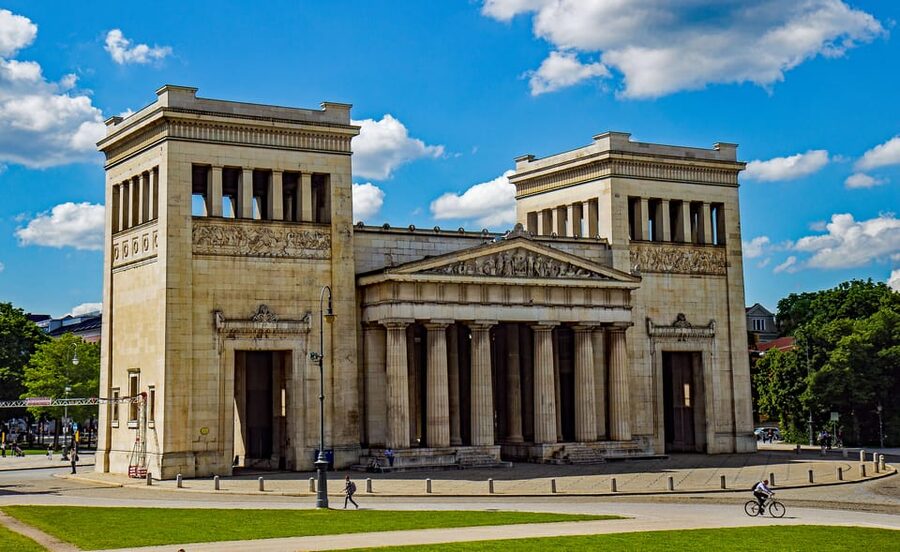
Königsplatz: Where You Start the Story in the Open Air
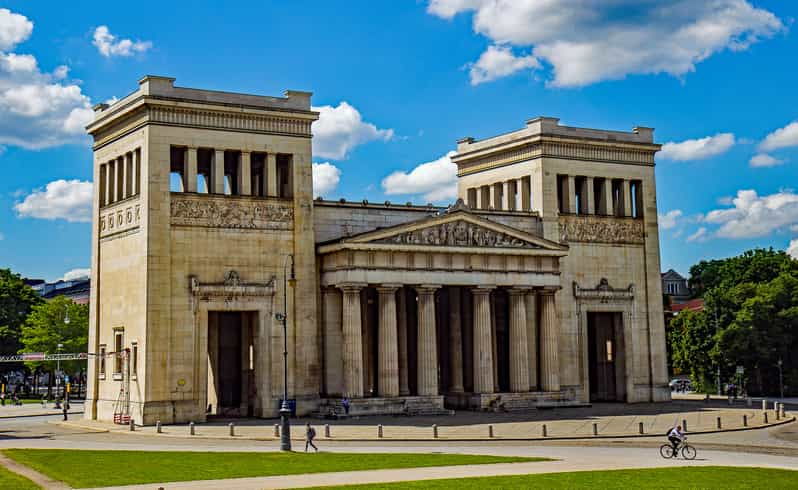
The tour begins at Königsplatz, and that choice sets the tone. Starting in a major Munich square feels important because it is a public space, not a sealed room. The early parts of National Socialism’s rise were about staging, visibility, and using prominent locations to project power. You will feel that logic as you begin the walk.
As you stand at the start point, the guide sets up the broader narrative: Munich in the 1920s and 1930s, and how the city became known as the City of the Movement. Then the route starts moving, so the story does not stall. You go from context to specific sites quickly, which helps you stay oriented.
If you want this tour to make sense fast, this is the moment to pay close attention. Once you hit the next stops, the guide will connect earlier events to the physical landmarks you are passing.
Former Führerbau and the Munich Agreement in 1938
Walking onward, you reach the former Führerbau, described as the Führer’s building. This stop is key because it sits at the intersection of two things the guide will emphasize: Munich’s role in the rise of National Socialism, and how political power became formalized in public architecture and official spaces.
From there, the walk continues toward what is today the Munich Documentation Centre for the History of National Socialism. Even if you are not going inside for an extended visit, the fact that the location is now used for documentation changes how you process what you see. The building’s past is part of the story, but the present-day educational purpose gives you a way to hold the topic responsibly.
What I like about this sequence is that it encourages you to think beyond dates. You see how decision-making places can become symbols, and how those symbols can be repurposed into learning rather than propaganda.
More history tours in Munich:
- Munich: Guided Tour of the historic Town Hall on Marienplatz
★ 4.8 · 63 reviews - Munich Craft Beer & Cultural Tour With Snack
★ 5.0 · 46 reviews - Munich History Tour: Private & Personalized with a Local Guide
★ 4.5 · 33 reviews - Munich and Nazi History Combination Day Tour Small Group
★ 5.0 · 31 reviews
Briennerstrasse: Turning Historical Explanation Into a Real Walk
Briennerstrasse is next, and this section of the tour is about the mechanics of history in a city. Streets like this are not random scenery. They are part of how people moved, how messages traveled, and how major institutions connected.
In practical terms, this segment helps you absorb what you have already heard. Instead of jumping immediately from one dramatic location to another, you get a stretch of walking where the guide can reinforce themes like growth, public influence, and the transformation of civic life.
If you tend to lose the thread during tours, Briennerstrasse is where the guide’s pacing likely helps. It gives you time to connect the dots between Königsplatz and the next heavy stop ahead.
Passing a Former Gestapo Headquarters: The Cost of Power
One of the most sobering parts of the route is passing the former Gestapo headquarters. Even without extra time inside, this is the kind of location that changes your emotional footing. Gestapo as a concept is directly tied to fear, control, and repression, and the tour does not shy away from the darker side of how the regime functioned.
This stop matters because it shifts the story from political rise to political enforcement. The guide is essentially moving you from how National Socialism gained momentum to how it maintained control. That transition is important if you want the history to feel complete rather than one-sided.
A practical tip for this portion: keep your headphones off, slow your pace, and give the guide the attention they need. This is not the time to rush ahead for photos.
Feldherrnhalle at Odeonsplatz and the November 9 Moment
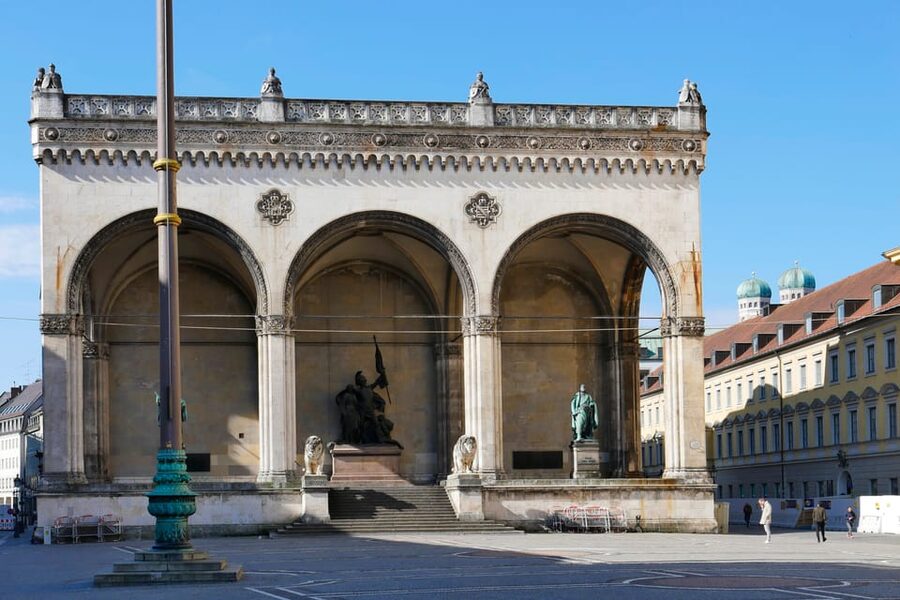
You then reach Feldherrnhalle at Odeonsplatz, which is where Hitler’s Beer Hall Putsch took place on November 9, 1933. The tour also highlights the events of November 9, 1923, so you get two versions of that date and the way it ties into the movement’s growth.
This is the kind of stop where the name matters. Feldherrnhalle is tied to a pivotal moment, and the guide will connect what you see in front of you to what happened on those November dates. The physical space helps you understand why history can feel rehearsed, even when it turns tragic and violent.
The tour’s use of historic black and white photographs supports this part especially well. Seeing old images of Munich next to the modern streets gives you a stronger sense of scale and continuity. It is easier to grasp how quickly a city can change when you can compare the visual environment across decades.
How the Guide Uses Black and White Photos to Teach the Timeline
One of the tour’s strongest teaching tools is that the guide brings historic black and white photographs depicting Munich in the 1920s and 30s. These photos are not decoration. They are there to illustrate events and topics the guide is talking about as you walk.
This works for a few reasons. First, black and white images can strip away distraction so you focus on the people, the buildings, and the urban setting. Second, photos help you bridge the gap between what you think you know and what a specific moment actually looked like.
Also, this tour is in German, so the guide’s pacing and use of photos help you follow the story even when your language skills are imperfect. The images give you extra context, and you can track key points visually.
Private vs Group: Picking the Right Comfort Level
The tour gives you a choice between a private or group tour. That option is not just about number of people. It can change how much you feel like you are moving through the story as a team versus listening at your own pace.
A group tour can work well if you want the energy of others and you like hearing the guide respond to the same shared questions. A private tour can be better if you want to ask more targeted questions, especially with a sensitive topic where you may want clarification on themes like National Socialism’s rise or what certain locations represent today.
Either way, the walk is still the walk. Comfortable shoes are still non-negotiable.
Price and Value: What $34 Buys You in 2 Hours
At $34 per person for a 2-hour walking tour, you are mainly paying for a live city guide and a structured route through key sites. The price is also reasonable because the tour includes professional guiding for a topic that benefits from explanation, not just self-guided browsing.
A key value point is what is not included. The tour does not include entrances fees, food, or hotel pickup and drop-off. That means your spending stays controlled, but it also means you should plan your own day around it. If you want museums or indoor time, you will need to handle that separately.
For me, the best value part is the blend of physical locations plus the guide’s photos. You are not just walking past names. You are getting context tied to what you are seeing.
What to Expect on Your Walk, Step by Step
Here is the practical flow in plain language. You start at the main entrance of the Staatliche Antikensammlungen, find the guide with the BIG BLUE BAG, and then head to Königsplatz. From there, you walk to the former Führerbau, where you learn about the Munich Agreement signed in 1938 and the site’s present-day role as the Munich Documentation Centre for the History of National Socialism.
Then you move along Briennerstrasse. After that, the tour passes the former Gestapo headquarters and continues on to Feldherrnhalle at Odeonsplatz, where the guide connects the events of November 9, 1923 and the Beer Hall Putsch on November 9, 1933.
All along the way, you will see historic black and white photographs the guide uses to explain topics in context.
Who This Tour Is Best For
This is best for you if you want Munich’s National Socialism story anchored in real places. It suits history-minded travelers who like clear narratives, not just a list of facts.
It is also a good fit if you want a short, structured outing. At two hours, it slots neatly into a day where you might also visit other museums or monuments.
That said, keep it grounded. It is not a light stroll. You are being taught about National Socialism, the NSDAP rise to power, and Germany during the period. Come with the right mindset.
Should You Book This Munich National Socialism Tour?
Yes, consider booking if you want a guided, place-based introduction to Munich’s role in the rise of National Socialism, and you appreciate learning supported by historic photos. The $34 price for two hours of live German guiding feels like fair value, especially since the route includes major, recognizable sites like Königsplatz, the former Führerbau, and Feldherrnhalle.
Skip or ask questions first if walking distances are a problem for you, or if you know you struggle with mobility needs. The activity is listed as wheelchair accessible, but it is also marked as not suitable for people with mobility impairments, so it is worth checking directly with Weis(s)er Stadtvogel GmbH before you commit.
If you can handle a serious topic and you bring comfortable shoes, this tour offers a strong, concentrated way to understand how the ideology began in Munich and how the city’s landmarks carry the story.
FAQ
How long is the Munich National Socialism Historical Tour?
The tour lasts 2 hours.
What language is the live guide speaking?
The live tour guide speaks German.
Where do I meet the guide?
Meet in front of the main entrance of the Staatliche Antikensammlungen.
How do I recognize the guide?
The guide will be wearing a BIG BLUE BAG with the white words Weis(s)er Stadtvogel.
What is the price, and what is included?
The price is $34 per person. The included part listed is the city guide.
What is not included in the tour price?
Food and drinks are not included. Hotel pickup and drop-off are not included. Entrances fees are also not included.
Does the tour run rain or shine?
Yes, it takes place rain or shine.
Is the tour wheelchair accessible?
It is listed as wheelchair accessible, but it is also marked not suitable for people with mobility impairments, so you should check with the provider if you have specific access needs.
Which major sites does the walking route cover?
The tour includes stops around Königsplatz, the former Führerbau (including the Munich Documentation Centre for the History of National Socialism), Briennerstrasse, the former Gestapo headquarters, and Feldherrnhalle at Odeonsplatz.
Recently added around Munich
- München: Vegetarische Viktualienmarkt-Probiertour Deutsch★ 4.8 · 6 reviews
- Private Transfer from Munich to Vienna with 2 hours for sightseeing★ 4.5 · 6 reviews
- Munich Walking Quiz: Explore and Discover the City’s Highlights★ 5.0 · 7 reviews
- Walking Tour on Resistance to Nazism in Munich★ 5.0 · 8 reviews
- 2 hour Sights Guided E-Scooter Tour in Munich★ 4.0 · 6 reviews
- Private Transfer from Munich to Salzburg with 2 hours for sightseeing★ 4.5 · 13 reviews
- From Munich: Neuschwanstein Castle and Linderhof Private Tour★ 5.0 · 13 reviews
- Paul’s Private Tour Munich Highlights★ 5.0 · 3 reviews
Third Reich & WWII Walking Tours, compared.

Birthplace of the Third Reich Guided Walking Tour
Read our review →
Munich World War II Sites Including Dachau Concentration Camp
Read our review →
Munich City Walking Tour, includes Third Reich & Viktualienmarkt
Read our review →
Munich 3-Hour Segway Tour: Nazi Munich & Royal Architecture
Read our review →
Dachau Concentration Camp Memorial Site And Third Reich Day Tour From Munich
Read our review →Browse the lists this tour appears in