Reviewed · THIRD REICH & WWII WALKING TOURS
National Socialism WWII with licensed guide – private tour
Munich is interesting here because it shows how a political movement went from speeches and street power to buildings, symbols, and terror. This private walking tour links the dots across the city, from the early rise of the Nazis to where resistance and victims are remembered today.
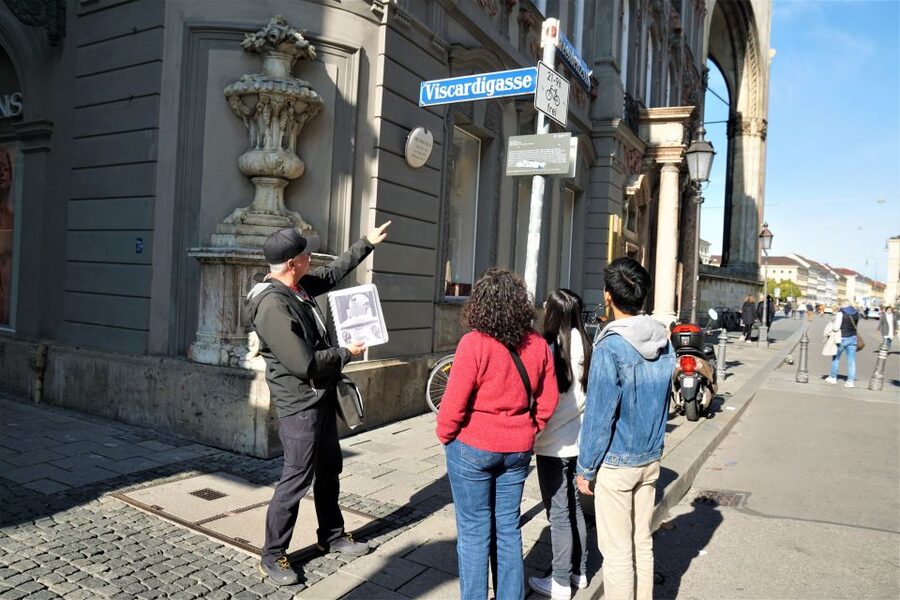
I like the focus on what you see and why it mattered, not just a list of famous facades. I also like that you walk with Wolfgang Brehm, a certified guide with 10+ years of experience, and that the route uses photo material to connect then-and-now.
A possible drawback: this is not a casual sightseeing stroll. You are covering Nazi power and persecution on purpose, so it is emotionally heavy, and it is not designed for right-wing radical or Nazi fans.
Key points to know before you go
- A tight 2-hour route from Odeonsplatz to Königsplatz, packed with key locations
- Photo material on the street, helping you visualize what stood there in the Nazi era
- Resistance gets real attention, including the White Rose at LMU
- Culture under control, with stops tied to Haus der Kunst and the Degenerate Art exhibition
- Victims are part of the story, with a dedicated stop at the Square of the Victims of National Socialism
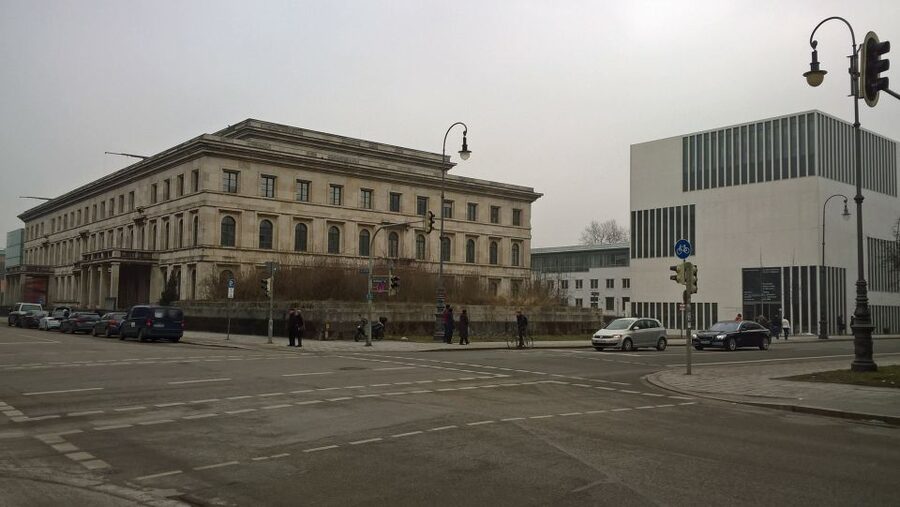
- You end at the party center zone, where you can optionally continue at the NS Documentation Centre
Munich’s Nazi Sites, Explained in Human Terms
If you come to Munich thinking you will only see monuments and street names, this tour changes that. The guide turns buildings into evidence. You learn how ideology became public policy, and how the Nazis used space, events, and art to push obedience.
You start with the question of origin: how National Socialism took root in Munich, when and why Adolf Hitler came to the city, and where he lived and made a living. From there, the story moves forward into how the NSDAP formed, what the early power plays looked like, and what happened when violence was used as a strategy.
And you keep moving. The pacing is built for a short window, so you get context fast without losing your footing on the sidewalk.
Other Third Reich and WWII history walks in Munich:
- Munich: Third Reich & WWII Walking Tour
★ 4.6 · 6,181 reviews - Third Reich Walking Tour Munich
★ 4.5 · 4,291 reviews - Munich: Birthplace of the Third Reich Guided Walking Tour
★ 4.6 · 771 reviews
How the 2-Hour Private Format Works for Real Learning
This is a private group tour that lasts about 2 hours. The price is $259 per group up to 30, which can feel surprisingly reasonable if you are traveling with others who want the same guided context instead of doing it alone and guessing your way through.
Because it is private, the guide can shape explanations to your level. If your group includes students, history buffs, or adults who just want clarity, the structure is flexible enough to keep everyone oriented.
One practical point: you will do most stops as a walking tour with short guided moments at each site. That means you should show up with comfortable shoes, and expect to read, listen, and look up as much as you walk.
Odeonsplatz and Feldherrnhalle: Where the Nazi Story Shows Its First Teeth
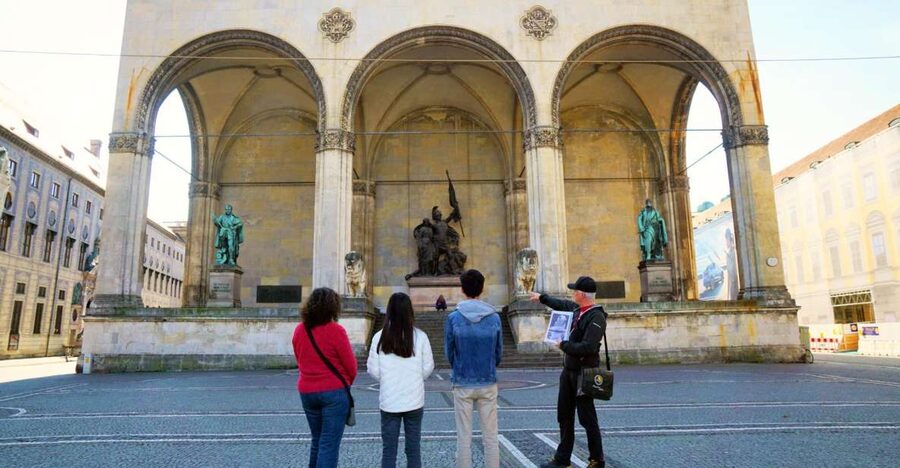
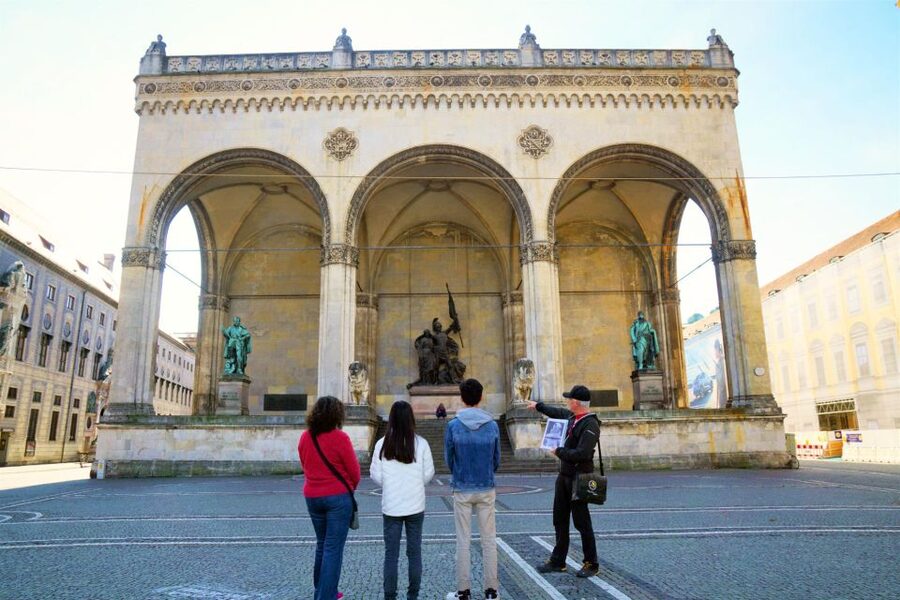
You begin around Odeonsplatz, at the steps near Feldherrnhalle. This is one of the places where the Nazi movement tried to fuse politics with spectacle, so the guide starts by setting the tone and the timing.
You get the story of why Hitler came to Munich, where he lived, and how he supported himself. Then the tour moves into the hit of the early era, including where the so-called Hitler coup ended, and the former monument erected for the deceased putschists.
From a visitor point of view, the Feldherrnhalle area can feel like just another big city square unless someone explains what the symbols were doing. Here, the guide focuses on the mechanics: how crowds were staged, how messages were delivered, and how monuments helped propaganda keep telling the same story.
The Court Garden Memory Stops, and Why Resistance Was Also on Display
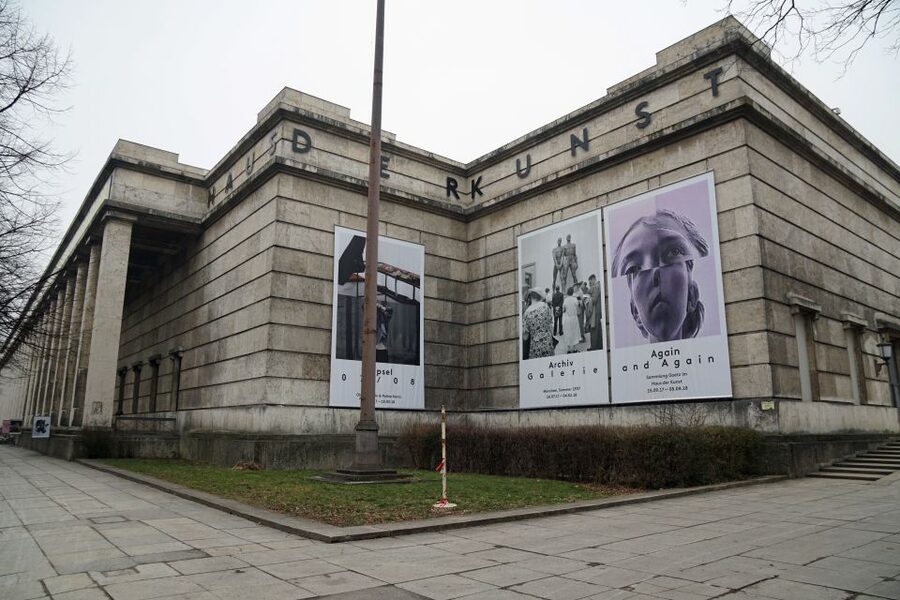
After the first landmark zone, you continue into a calmer walking stretch through the court garden area. You also explore a monument that was erected for resistance fighters.
This matters because the Nazi narrative often tried to make the regime look inevitable. By placing resistance memory in the route early, you get an immediate counterweight: not everyone in Munich accepted the system, and opposition existed even when it was dangerous.
This stop is also a reminder that public space can be used for more than one side of history. The guide uses the setting to explain how remembrance works, and why resistance is not only an abstract idea you read about later.
Other reviewed options in Munich
- Munich Private Tour with a Local – Highlights & Hidden Gems
★ 5.0 · 469 reviews - Mike’s Neuschwanstein & Linderhof Private Tour from Munich
★ 5.0 · 197 reviews - Dachau Concentration Camp Private Tour by Train from Munich
★ 5.0 · 185 reviews - Fall in Love with Munich in a Private Old Town Walking Tour
★ 5.0 · 182 reviews
LMU and the White Rose: What Dissent Looked Like in Plain Sight
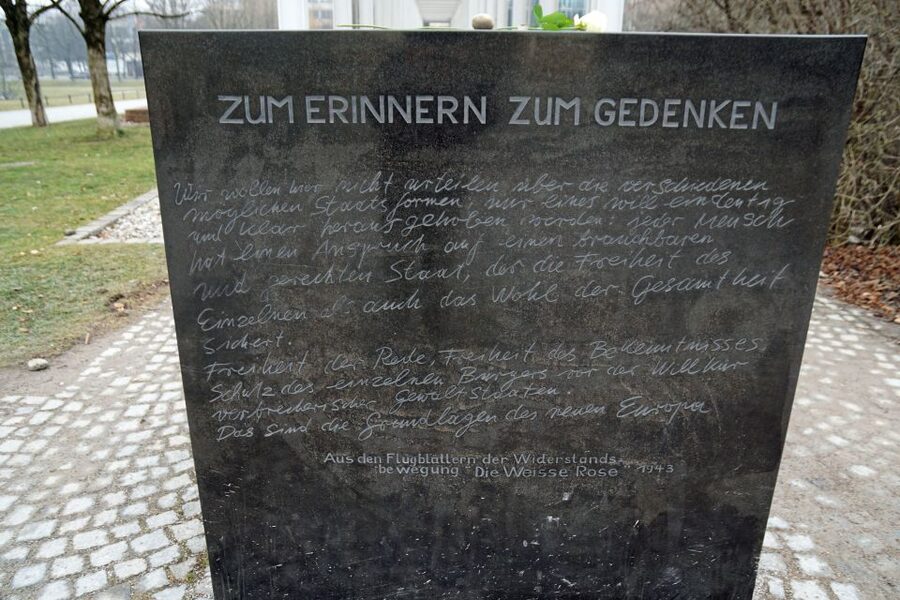
Next, you reach LMU, the largest university in Germany. The guide connects the academic setting to a very specific resistance story: the White Rose.
You learn how the White Rose created flyers, spread their message, and faced brutal consequences at the end. The details here are not sensational, they are factual and pointed, and they are delivered in a way that makes the moral choice understandable, not just tragic.
I like that this stop turns resistance into something you can picture. Flyers, students, meetings, and fear all become part of a real timeline. You are not just hearing that resistance happened. You are seeing the form it took in the city where the Nazis were building their power base.
Square for the Victims of National Socialism: The Point Where You Must Slow Down
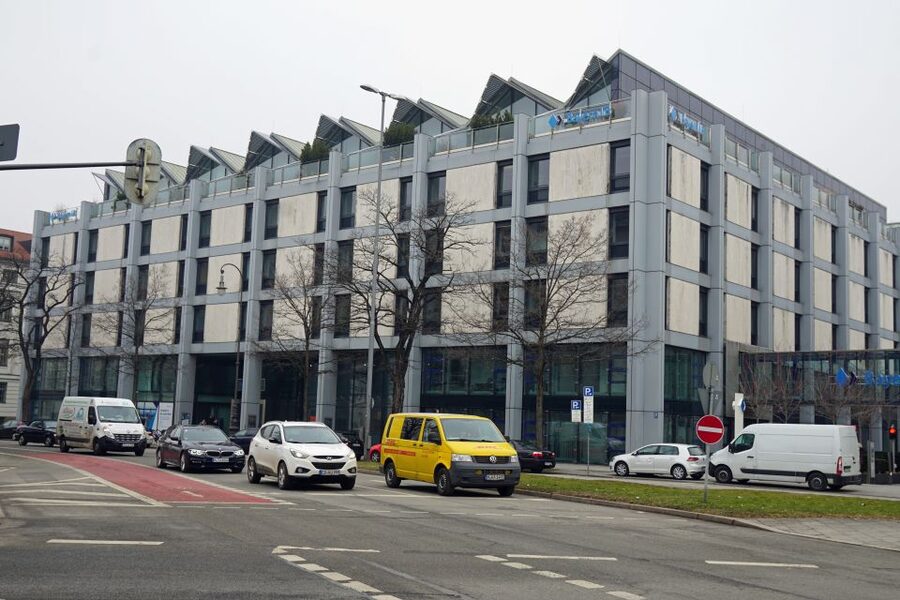
Then comes a stop that is meant to ground everything you heard so far. At the Square for the Victims of National Socialism, you find out exactly who the victims were.
This is one of those places where the guide’s job is less about storytelling fireworks and more about clarity and respect. The topic is heavy, but it is necessary, because without naming victims, the rest can turn into trivia about buildings and dates.
If your group tends to rush through memorial spaces, this stop is a good place to reset. Listen closely, take a moment, and let the information land.
House of German Art and Degenerate Art: Nazis Changing What Art Was Allowed to Mean
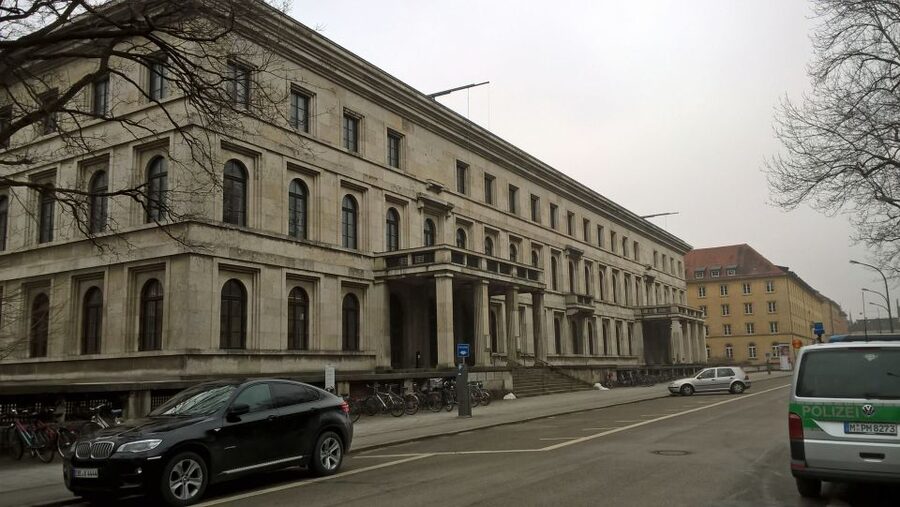
You move on to Haus der Kunst, where you learn how the Nazis influenced art. This part is often the most surprising for visitors who only associate the Nazi regime with politics and policing.
You also stop where you can still see where the exhibition Degenerate Art took place, in the area of Galeriestraße. The point is simple and uncomfortable: the regime used culture to define who belonged and what ideas were acceptable.
A helpful way to think about this section is as propaganda operating through taste. If you control what gets displayed, you shape what feels normal. The guide uses the buildings and the location to show that this was not just a museum-side story. It was part of the wider system.
Karolinenplatz and the Sponsors: Power Was Built with Help
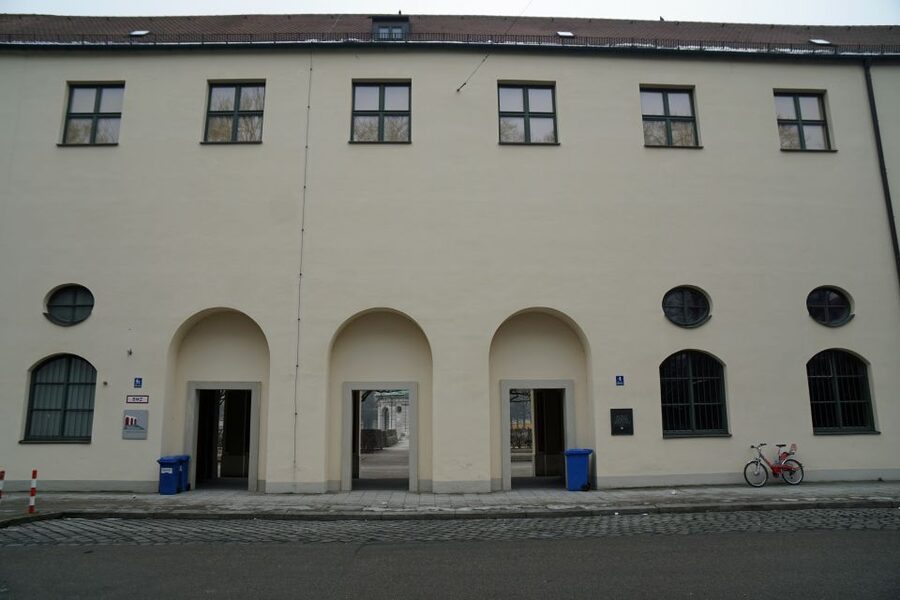
At Karolinenplatz, you get to know the main sponsors of the Nazis. This is not the part most casual guides rush through, because sponsors do not sound as dramatic as coups or offices.
But it is one of the most valuable pieces. It reminds you that ideology alone does not build political machinery. Money, influence, and institutions help turn ideology into organization, and organization into enforcement.
If you want a more complete picture of how the regime took hold in Munich, do not skip this moment. Even without a long list of names, the guide frames it so you understand the role of supporters in making the system function.
Königsplatz: Brown House, Führerbau, and the Party Center Reality Check
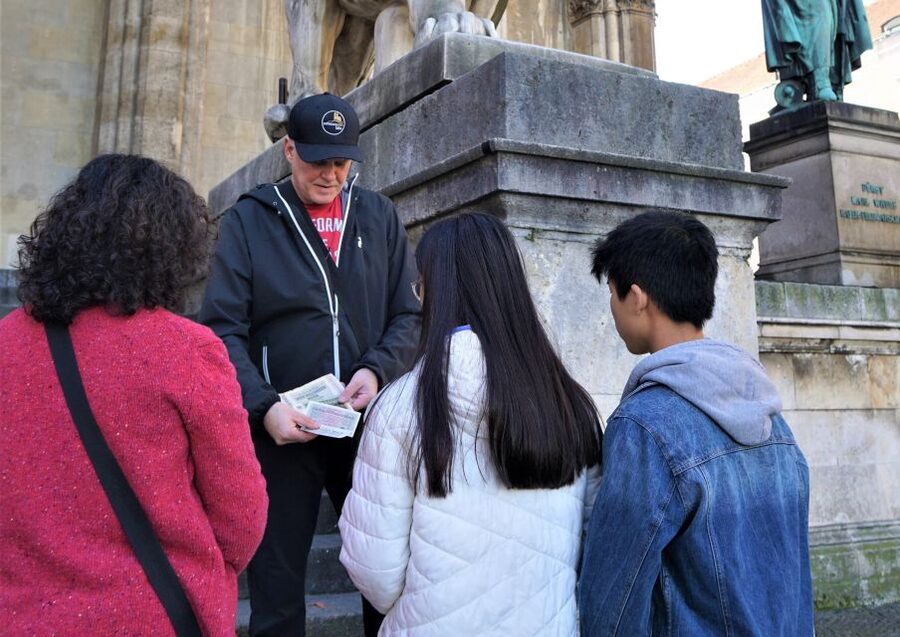
Your last major phase is around Königsplatz, the party center of the Nazis in Munich. This is where the route becomes a map of power structures.
You discover the Nazi headquarters, commonly referred to as the Brown House, and you also see the Führerbau, which relates to Hitler’s office. The guide points out the NSDAP administration presence and keeps the focus on what these buildings were for.
This area can feel strange to visitors because the architecture looks like solid civic planning. The guide tackles that discomfort head-on by connecting the clean lines of the buildings to what happened inside the system they supported.
If you are the kind of person who likes to understand how a regime worked day to day, this ending is satisfying. You leave with the sense that the Nazis did not just rule with speeches. They ruled with offices, administration, and public staging.
NS Documentation Centre: What You Can See After the Walk
The tour ends in the Königsplatz zone, where the NS Documentation Centre sits. The center opened in 2015, and you have the opportunity to visit after the tour.
Admission is not included, so you should plan for that if you want the next layer of reading and artifacts. For many people, this is the perfect follow-up, because a walking tour gives you structure and orientation, while a museum setting gives you evidence at a slower pace.
Price and Value: $259 for a Private Route That Changes How You See Munich
Let’s talk value plainly. $259 per group up to 30 for a 2-hour private tour means you are paying for guidance, context, and a curated route that would be hard to assemble on your own without turning into a scavenger hunt.
You also get two things that are hard to replicate:
- a guide who can explain why each place matters, not just where it is
- extensive photo material used during the tour to help connect what you see now with what the Nazis used back then
That photo support is a big deal on this topic. Munich has evolved. Without visual anchors, you can lose the plot fast. With them, the city becomes easier to interpret, and your takeaways stick.
Who This Tour Is Best For
This tour is a strong fit if you want:
- clear explanations of the origins of National Socialism in Munich
- a route that includes both Nazi power sites and resistance stories like the White Rose
- a cultural stop that explains how the Nazis tried to shape what art could be (Haus der Kunst and Degenerate Art)
It may be less ideal if you only want light commentary or quick photo stops. This route is built for understanding, and understanding comes with weight.
Also, if you are visiting with a student or someone preparing for history schoolwork, the structure and clarity can make the material easier to organize in your head. The guide’s delivery is set up to keep you tracking the timeline.
Should You Book It?
If your goal is to make sense of Munich’s Nazi-era places in a way that feels respectful and grounded, I think you should book. The tour’s value is in the pairing of places with explanation, plus the added support of photo material that helps you visualize the past.
You should pass only if you want a purely scenic walk or if you are looking for a “Nazi fan” type of experience. This is explicitly built for education and remembrance, and the guide maintains that tone throughout.
If you like walking routes with real context, and you want to finish at Königsplatz with a clear sense of what the regime tried to build, this one does the job in a manageable time window.
FAQ
How long is the National Socialism WWII private tour in Munich?
It runs for about 2 hours.
What is the price?
The price is $259 per group, up to 30 people.
Is this tour private?
Yes, it is a private group tour.
What languages are offered?
The live tour guide is available in English and German.
Where does the tour start?
The meeting point is the steps at Feldherrnhalle at Odeonsplatz, with the listed starting location also given as Residenstraße 1.
Where does the tour end?
The tour finishes at Königsplatz 1, 80333 München, Germany.
Is admission to the NS Documentation Centre included?
No, admission is not included. You can visit after the tour.
What are the main stops you will see?
You will visit key Nazi-related sites around Odeonsplatz and Feldherrnhalle, the House of German Art area (Haus der Kunst), the Square for the Victims of National Socialism, and the Königsplatz party center including the Brown House and Führerbau.
Is the tour wheelchair accessible?
Yes, it is listed as wheelchair accessible.
What is the cancellation policy?
Free cancellation is available up to 24 hours in advance for a full refund.
Recently added around Munich
- München: Vegetarische Viktualienmarkt-Probiertour Deutsch★ 4.8 · 6 reviews
- Private Transfer from Munich to Vienna with 2 hours for sightseeing★ 4.5 · 6 reviews
- Munich Walking Quiz: Explore and Discover the City’s Highlights★ 5.0 · 7 reviews
- Walking Tour on Resistance to Nazism in Munich★ 5.0 · 8 reviews
- 2 hour Sights Guided E-Scooter Tour in Munich★ 4.0 · 6 reviews
- Private Transfer from Munich to Salzburg with 2 hours for sightseeing★ 4.5 · 13 reviews
- From Munich: Neuschwanstein Castle and Linderhof Private Tour★ 5.0 · 13 reviews
- Paul’s Private Tour Munich Highlights★ 5.0 · 3 reviews
Third Reich & WWII Walking Tours, compared.

Birthplace of the Third Reich Guided Walking Tour
Read our review →
Munich World War II Sites Including Dachau Concentration Camp
Read our review →
Munich City Walking Tour, includes Third Reich & Viktualienmarkt
Read our review →
Munich 3-Hour Segway Tour: Nazi Munich & Royal Architecture
Read our review →
Dachau Concentration Camp Memorial Site And Third Reich Day Tour From Munich
Read our review →Browse the lists this tour appears in