Reviewed · THIRD REICH & WWII WALKING TOURS
Small-Group 2-Hour Munich and The Third Reich Walking Tour
Munich can feel like a postcard city. This tour is different. You walk past the buildings and squares tied to the rise of the Third Reich, including decision points from 1938 and the lead-up to the violence of the 1923 beer hall coup. It is a compact way to understand how ideology became policy, using the city itself as your map.
I like the small group setup, capped at 15 people, which keeps the pace thoughtful and the guide easy to hear. I also like that you start right in the Marienplatz area, so you do not waste time hunting for a meeting point before the real story begins.
One thing to consider is the tone. This is heavy subject matter, and the format is walking with short stops, so you should expect standing and moving for most of the 2-hour window.
Key highlights worth your attention
- Up to 15 people means more questions and a less chaotic street-crowd experience.
- Marienplatz to Königsplatz covers several major turning points without a long transit day.
- A professional guide from Alun Evans Personal Tour Guiding Munich keeps the story tied to real locations.
- Exterior landmark viewing keeps it practical, with stops marked as admission ticket free.
- Optional documentation time at the end, if you want to go deeper on the National Socialism theme.
- English mobile ticket and a clear central meeting point make last-minute planning easier.
Nazi landmarks in Munich: why these streets matter
This kind of tour works because Munich is not a blank stage. It is still there, with its town halls, beer hall, ceremonial squares, and the streets where clashes played out. When you stand in the places connected to 1923 and 1938, the history feels less abstract.
You also get a useful structure: the tour links public space to political decisions. That is where this experience pays off. You are not just memorizing dates. You are seeing how power used monuments, speeches, and public gatherings to recruit, intimidate, and normalize.
And yes, it is a grim topic. But the goal is clarity, not shock. You will leave with a more grounded sense of what happened and how it unfolded across key sites in Munich.
Other Third Reich and WWII history walks in Munich:
- Munich: Third Reich & WWII Walking Tour
★ 4.6 · 6,181 reviews - Third Reich Walking Tour Munich
★ 4.5 · 4,291 reviews - Munich: Birthplace of the Third Reich Guided Walking Tour
★ 4.6 · 771 reviews
Price and value: what $60.07 buys you for 2 hours
At $60.07 per person for about 2 hours, you are paying for three things: a guide, a focused route, and time saved. This is not an all-day marathon. It is a tight, organized walk that hits multiple high-impact locations.
For value, I like that:
- You get a professional guide for the full walk, not a quick intro and then people wandering.
- You do not have to arrange your own route or figure out what to look for at each stop.
- The marked stops are admission ticket free, which keeps costs predictable.
The main cost factor you should mentally plan for is personal. The tour does not include food or drinks, and it does not include transportation to and from attractions. So if you are coming by public transit, budget for that as a separate line item.
Also, the tour is popular enough that the average booking timing is about 42 days in advance. If your dates are tight, booking sooner helps you get the time slot you want.
Meeting point and pacing: a 3:00 pm walk that starts in the right place
The tour starts at 3:00 pm at Landeshauptstadt München Stadtkämmerei Marienplatz 8, 80331 München. You end back at the central meeting point, which is convenient when you want to continue exploring without recalculating a route.
The pace is straightforward: you move through the city with short, guided stops. The itinerary includes time windows like 10 to 30 minutes at key locations. That means you should plan on being on your feet most of the time. The tour also notes moderate physical fitness is required, so it is not the one for people who want a mostly seated experience.
One practical upside: it operates in all weather conditions. So you should dress for wet or cold days, and be ready for outdoor standing time.
Marienplatz: from iconic square to 1938 decision point
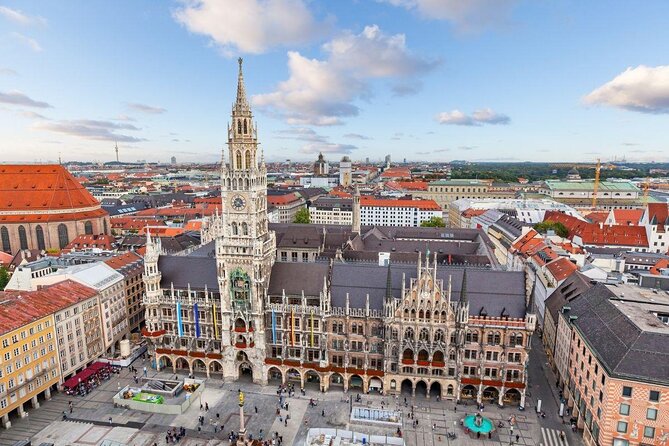
You begin at Munich Marienplatz, right by the historic Old Town Hall area in the square. The guide points out locations tied to Adolf Hitler and the Nazi party, and this is where the timeline takes a sharp turn.
A key moment here is 1938. The tour points to where a decision was made to carry out a pogrom against the Jewish population in Germany in 1938. Even if you already know the broad story, standing in the place where power was translated into action is the kind of detail that makes the past feel specific.
This is also a good first stop because Marienplatz gives you orientation fast. You are not wandering across random streets first. You start in a central, recognizable public space and then the walk becomes a guided path through the city’s most consequential political geography.
More walking tours in Munich:
- Munich: Old Town & Viktualienmarkt City Walk in German
★ 4.7 · 2,304 reviews - Munich: Night Watchman Walking Tour
★ 4.7 · 2,092 reviews - Munich Ghosts and Spirits Evening Walking Tour
★ 5.0 · 1,900 reviews - Munich Old Town Walking Tour
★ 4.5 · 1,287 reviews
Hofbräuhaus and the role of the beer hall in Nazi momentum
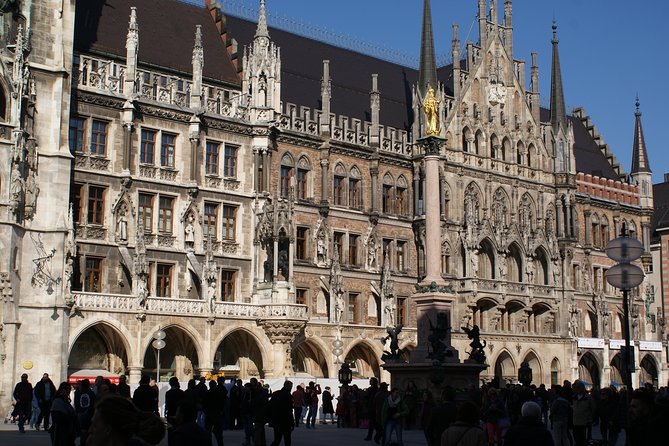
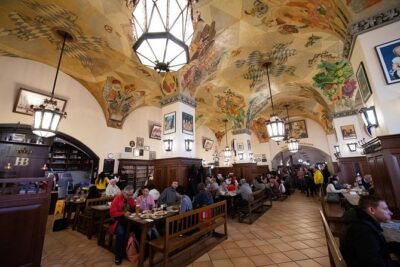
Next you pass by the Staatliches Hofbräuhaus area. The point here is not the building’s architecture alone. It is what the space was used for. Hitler regularly gave speeches in the Hofbräuhaus, and the tour connects that to the founding context of the Nazi party and the SS.
This stop is shorter, about 10 minutes, but it is designed to make a bigger point. When you hear speeches in public spaces like beer halls, you learn how movements recruit attention and normalize their messaging.
If you are the kind of traveler who likes to connect history to how people actually gathered and listened, this part lands well. You get a sense of how ordinary public life could be pulled into political performance.
Odeonsplatz and the 1923 beer hall coup gun battle
At Odeonsplatz, you see the location of a gun battle between Nazis and the Bavarian police. The event is tied to the beer hall coup of 1923.
This stop matters because it shifts the story from propaganda and persuasion into confrontation. It helps you understand that the Nazi movement did not only operate through rhetoric. It also tested force and legitimacy on the streets.
The tour keeps the stop around 15 minutes, so do not expect a long, blow-by-blow battle re-enactment. Instead, the emphasis is on placing you in the right geography so you can later picture the event without getting lost.
Königsplatz and the Munich Agreement, plus optional documentation centre time
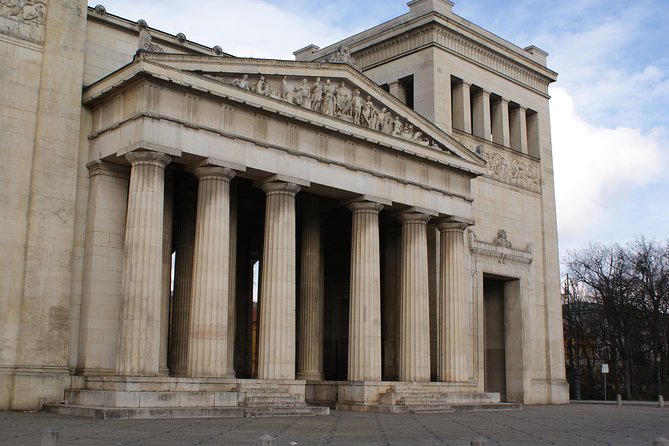
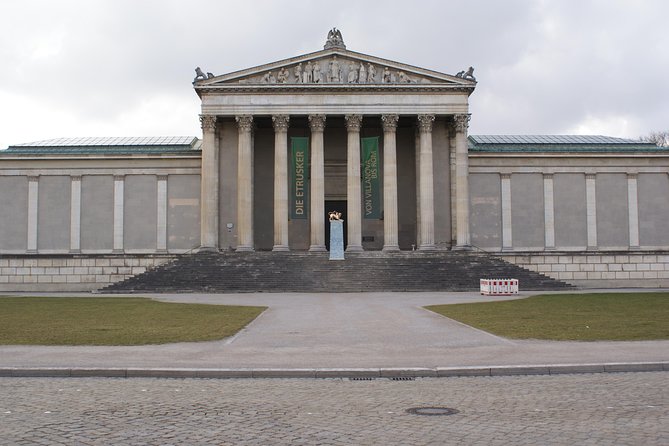
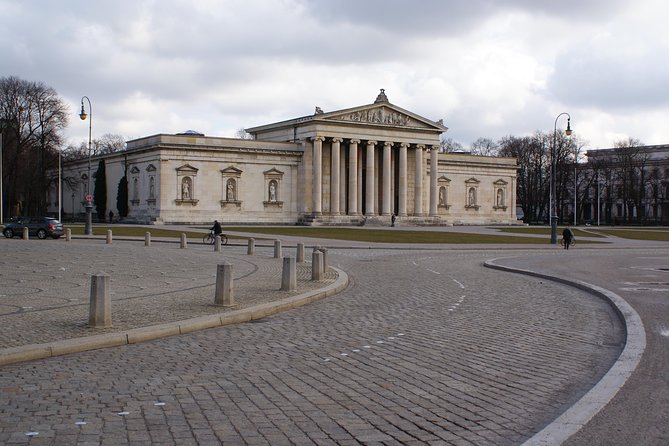
Then you reach Königsplatz, another major public stage. Here the tour focuses on the building where the Munich Agreement took place in 1938. If you have ever seen photos of pre-war European diplomacy, this stop helps you connect those negotiations to an actual location in Munich.
The tour also highlights how Nazis used the area for ceremonies in respect of the failed beer hall coup of 1923. That is a sobering idea, but it is also historically crucial. Symbols and rituals can turn a failed attempt into a propaganda tool.
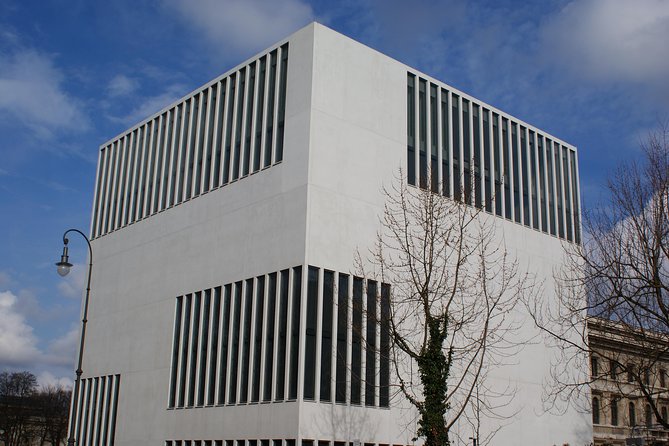
Timing for this stop is around 20 minutes, and it is also where you may get an extra option. The tour notes that you can then visit the documentation centre of National Socialism if you wish at the end of the walk. That is worth considering if you want more detail after you have already learned where the story pieces fit in the city.
Because this documentation time is optional and not listed as part of the included items, plan your schedule accordingly. If you add it, make sure you have time for it without rushing your next plans.
What the guide does that makes this work in real life
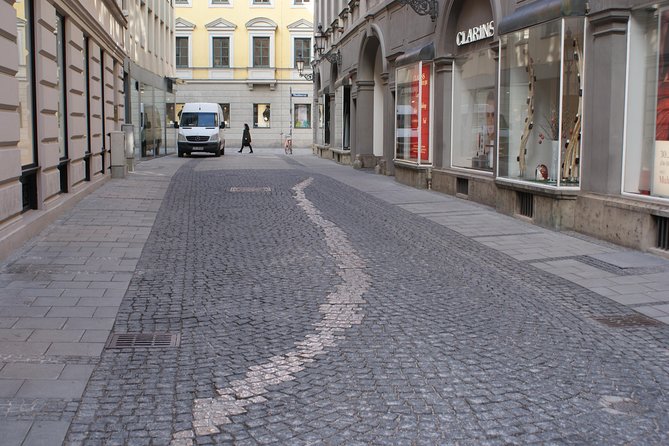
A tour like this lives or dies on tone. You need someone who can explain without glamorizing. The guiding style here tends to be both direct and sensitive to the topic, with a delivery that is clear and engaging.
I also like that the experience is set up for real conversations. The format, with a small group and a guide who answers questions, is what helps you move beyond surface facts. You can ask the follow-ups that matter to you, like why a given location mattered, or how the chronology connects across Munich.
Another detail I find useful for planning: the tour’s length and pacing have worked for families too, as long as parents can manage the walking and the content. It is still an emotionally heavy subject, so I would think carefully about age and readiness. But it is not presented as an adults-only lecture on a schedule that ignores the real needs of a group.
Getting the most from a 2-hour walk: practical tips
Here are the small choices that can make a big difference for this type of tour:
- Bring a warm layer. The tour runs in all weather, and you will be outside for the full length of the walk.
- Wear shoes you can stand in. This is a moderate-fitness walking format, with short stops rather than long breaks.
- If you want to learn fast, arrive a few minutes early at Marienplatz so you start focused, not flustered.
- If you plan the documentation centre add-on, leave time for it. The tour’s walk ends back at the central meeting point, so you can transition easily.
Also, since food and drinks are not included, I suggest you handle meals before the tour starts or after it ends. This keeps you from thinking about food while you are trying to follow the history.
Who should book this Munich Third Reich walking tour
This is a great fit if you:
- Want a tight introduction to Munich’s Nazi-era sites without hopping buses.
- Like learning history in a place-based way, using squares, buildings, and streets.
- Prefer a small group format where you can ask questions and stay oriented.
It may be less ideal if you:
- Need frequent seating or long pauses. The stops are short and the experience is mostly walking.
- Are looking for a lighter, purely sightseeing tour. This walk focuses on Nazi landmarks and WWII-related context, so expect seriousness.
If you are traveling with someone who wants mostly architecture, beer halls, and scenic strolls, you may need to manage expectations. The landmarks are famous for a reason, but the story here is about ideology and its consequences.
Should you book this tour?
If you want a focused, small-group way to understand how Munich connects to the rise of the Third Reich, I think this is an excellent choice. The route hits major public locations, the guide is described as both engaging and appropriately sensitive, and the practical setup makes it easy to fit into a normal afternoon in the city.
Book it if you enjoy historical walking tours and you are prepared for a heavy topic. Skip it if you want something light, or if two hours of mostly standing and walking is tough for you. In the right mood, this is the kind of Munich experience that makes the city’s history feel real, not distant.
FAQ
How long is the Small-Group 2-Hour Munich and The Third Reich Walking Tour?
The tour lasts about 2 hours.
What language is the tour offered in?
The tour is offered in English.
How many people are in the group?
The maximum group size is 15 travelers.
Where is the meeting point, and where does the tour end?
You meet at Landeshauptstadt München Stadtkämmerei Marienplatz 8, 80331 München, Germany. The tour ends back at the meeting point.
What time does the tour start?
The start time is 3:00 pm.
What is included in the price?
The price includes a professional guide and pickup from the designated meeting point. The tour finishes at a central location (back at the meeting point).
Are there paid admissions during the stops?
The stops listed for the tour are marked as admission ticket free.
Is there a free cancellation window?
Yes. You can cancel for a full refund up to 24 hours before the experience starts.
Recently added around Munich
- München: Vegetarische Viktualienmarkt-Probiertour Deutsch★ 4.8 · 6 reviews
- Private Transfer from Munich to Vienna with 2 hours for sightseeing★ 4.5 · 6 reviews
- Munich Walking Quiz: Explore and Discover the City’s Highlights★ 5.0 · 7 reviews
- Walking Tour on Resistance to Nazism in Munich★ 5.0 · 8 reviews
- 2 hour Sights Guided E-Scooter Tour in Munich★ 4.0 · 6 reviews
- Private Transfer from Munich to Salzburg with 2 hours for sightseeing★ 4.5 · 13 reviews
- From Munich: Neuschwanstein Castle and Linderhof Private Tour★ 5.0 · 13 reviews
- Paul’s Private Tour Munich Highlights★ 5.0 · 3 reviews
Third Reich & WWII Walking Tours, compared.

Birthplace of the Third Reich Guided Walking Tour
Read our review →
Munich World War II Sites Including Dachau Concentration Camp
Read our review →
Munich City Walking Tour, includes Third Reich & Viktualienmarkt
Read our review →
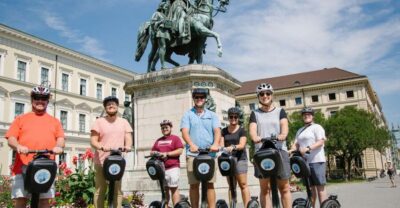
Munich 3-Hour Segway Tour: Nazi Munich & Royal Architecture
Read our review →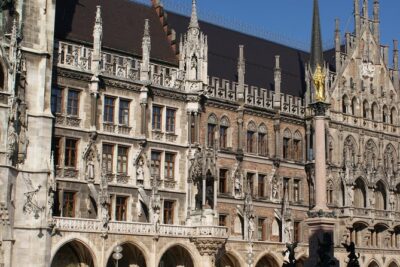
Dachau Concentration Camp Memorial Site And Third Reich Day Tour From Munich
Read our review →Browse the lists this tour appears in