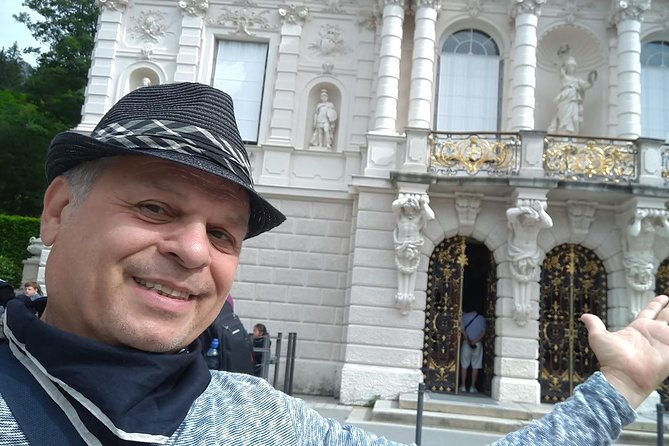
Reviewed · THIRD REICH & WWII WALKING TOURS
Third Reich – Facts about WWII : Small Group Walking tour
This tour is interesting because it turns Munich street corners into real, name-checked WWII storylines tied to the Third Reich, Hitler, and resistance. I like that you cover major stops in a tight 2 to 3 hours, and I also like the small-group feel, especially with guide Paul Riedel pacing it to what you want to focus on. One consideration: a few sights on the route require admission tickets that are not included, so you may want to plan for that.
You’ll walk through places such as Konigsplatz, the NS-Dokumentationszentrum, the Justice Palace, and the art and architecture linked to Nazi-era power. The subject matter is heavy, so it helps if you are ready for serious history rather than a “light” sightseeing stroll. Also, with many quick stops, comfort and timing matter, since you’re moving through the city on foot.
Key highlights at a glance
- Small group size (max 15) keeps the experience personal
- A professional guide, Paul Riedel, with energetic pacing that matches your interests
- Konigsplatz book burning and propaganda details you can see where they happened
- A route that links power, persecution, and resistance across multiple sites
- Traffic-free walking that helps you check major WWII locations without planning
Why Munich’s Third Reich Story Fits in One Walking Route
Munich is one of those cities where the past is not locked behind museum walls. It is in the architecture, the squares, the institutions, and the streets you pass every day. This tour takes that idea and gives it structure. Instead of reading about the Third Reich in isolation, you move through the geography of influence, from propaganda staging areas to places tied to trials and persecution.
You’ll spend a couple of hours moving between sites, which is a big advantage if your schedule is tight. The pacing matters here: the route is designed for short visits that still feel purposeful. You do not just “see” buildings. You get the what-and-why behind them, including how the Nazi story played out in public spaces and how resistance stories (like the White Rose) are tied to specific locations.
Other Third Reich and WWII history walks in Munich:
- Munich: Third Reich & WWII Walking Tour
★ 4.6 · 6,181 reviews - Third Reich Walking Tour Munich
★ 4.5 · 4,291 reviews - Munich: Birthplace of the Third Reich Guided Walking Tour
★ 4.6 · 771 reviews
Price and What You Really Get for $109.86
At $109.86 per person, the value comes less from any one landmark and more from the guided connection between them. You are paying for a professional guide and a plan that already solves the hardest part of this kind of history: knowing what you are looking at, and why it matters.
Also, the group limit is 15 travelers, which is the sweet spot for a walking tour. You can hear what is being said without constantly losing the guide in a crowd. And because you walk key streets instead of sitting through traffic, you gain time and reduce stress. That is not glamorous, but it is genuinely useful in a city with lots going on.
One more value point: the tour uses a mobile ticket. That is small, but it usually means fewer hassles once you’re in Munich.
Where You Meet, Where You End, and How the Timing Works
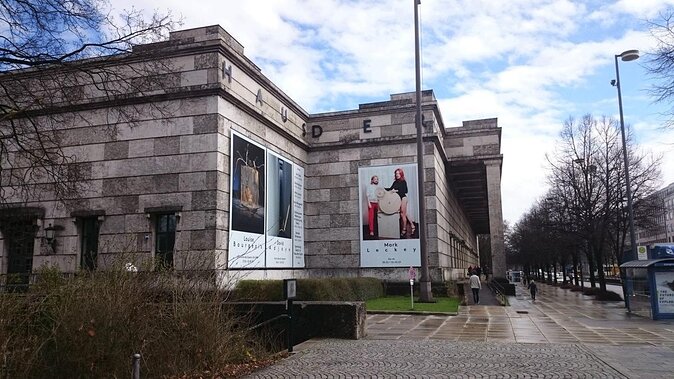
The tour starts at KarlstorNeuhauser Str., 80331 München and begins at 1:00 pm. It ends at Haus der Kunst, Prinzregentenstraße 1, 80538 München.
That start-to-finish line is practical. You’re not doing a backtrack loop, and you’re finishing near a cultural hub. You’ll also want to factor in the “walk plus stops” rhythm: the route is listed as 2 to 3 hours (approx.), with most stops around 5 to 15 minutes. It is long enough to build a story, short enough to keep momentum.
If you like history tours but hate being stuck in one spot, this format tends to work well. If you need long explanations at each site, you may want to pair this with a museum visit later on your own.
Stop 1: Konigsplatz and the Reality of Propaganda on a City Square
You begin at Konigsplatz, and that’s a smart choice. Squares are where ideology becomes public theater, and this one has strong visual cues tied to the Nazi era.
The tour focuses on details like the book burning and how major filmmakers such as Leni Riefenstahl used camera positions from the square. That matters because it shows propaganda as a craft, not just a slogan. You are also told about the granite plates over the square, which helps you connect the physical layout to what played out there.
A practical consideration: the stop is short (about 10 minutes). If you like to take photos or read everything at street level, give yourself a minute to slow down. This is one of the places where your brain will want more time, even though the tour keeps moving.
More walking tours in Munich:
- Munich: Old Town & Viktualienmarkt City Walk in German
★ 4.7 · 2,304 reviews - Munich: Night Watchman Walking Tour
★ 4.7 · 2,092 reviews - Munich Ghosts and Spirits Evening Walking Tour
★ 5.0 · 1,900 reviews - Munich Old Town Walking Tour
★ 4.5 · 1,287 reviews
Stop 2: The Paul von Trost Nazi-Era Twin Buildings
Next you’ll step near the Museum fur Abgusse Klassischer Bildwerke, where the spotlight is on the twin buildings designed by Paul von Trost. The key idea is how architecture was used during the Nazi period, not just as background, but as part of a system.
This kind of stop can be easy to skim if you are focused only on big names. Here, the value is in the explanation. You learn how the same structures that feel “classical” or formal can also be part of a political message machine.
Drawback to keep in mind: the visit is brief (around 5 minutes), and the admission ticket is not included. Even if you do not go inside, the exterior orientation makes more sense when you know what the buildings were built for.
Stop 3: NS-Dokumentationszentrum, the Brown House, and Organized Control
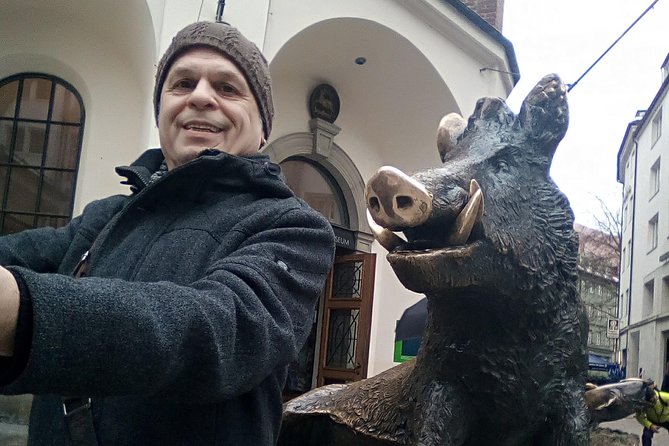
At the NS-Dokumentationszentrum Muenchen, the tour shifts from architecture and squares into systems of power. You hear about the Brown House and how Hitler helped organize the NSDAP.
This stop also includes a less comfortable detail: the involvement of the church in WWII. That is a notable part of the tour because it expands the story beyond Hitler and direct party officials. It frames how influence can spread through institutions in ways people do not always connect when they think about “the Nazis” as one group.
Admission is not included at this stop, and it’s also a short stop (about 5 minutes). If you’re the type who needs to spend time reading exhibits, this is the moment to decide if you want a longer museum visit later.
Stop 4: Karolinenplatz and the Bruckmanns’ Role in Hitler’s Rise
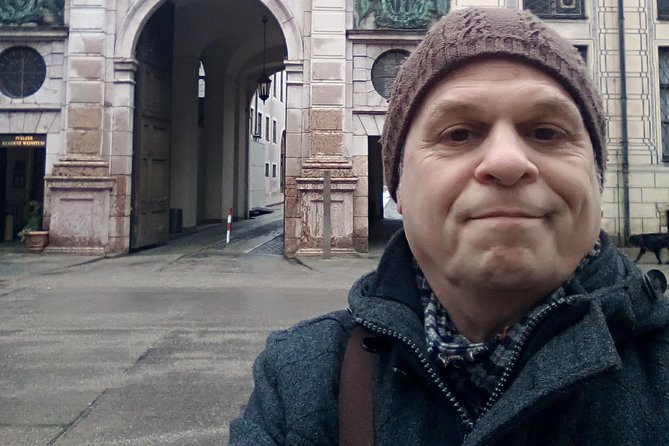
At Karolinenplatz, the tour moves into social connections. You learn about the couple Bruckmanns and why they mattered in how Hitler gained standing in society, including that they helped introduce him.
This is an important angle because it reminds you that political movements do not rise only through speeches and marches. People with social influence can accelerate who gets access and credibility. The tour uses this point to make the “how did this happen?” question feel concrete.
Admission is free here, and the stop is only about 5 minutes. If this topic pulls you in, you may want to read more later, because the tour keeps the pace moving.
Stops 5 and 10: Justice Palace, the Scholl Sisters, and the White Rose
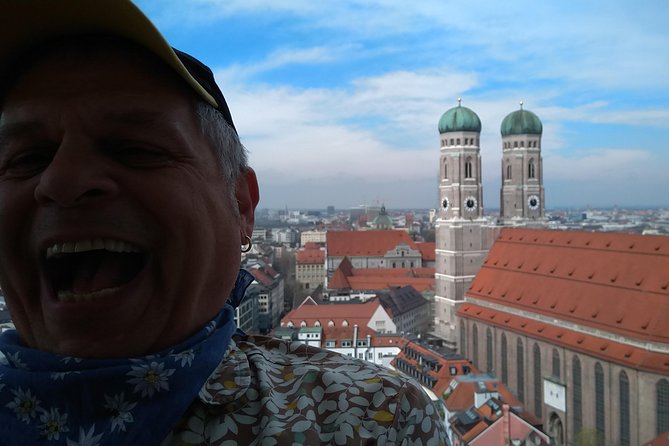
Next comes the Justizpalast, where the tour highlights trials connected to the sisters Scholl and Nazi-era proceedings. This stop helps you grasp what the Nazi state did not just to its enemies, but to legal and moral boundaries.
Later, at Ludwig Maximilian University, you hear more about the White Rose resistance and again tie it to the Scholl story. The university setting gives the resistance story a different tone. It’s not only about punishment. It’s about students and ideas meeting the machinery of repression.
These two stops work together in your head, even though they appear separated on the walk. You start to see resistance as something tied to specific places, not just a name in a history textbook.
Both stops are admission free in the format described, which helps keep the tour flowing without extra ticket juggling.
Stop 6: Briennerstrasse 7 and Haus der Deutsche Ärzte
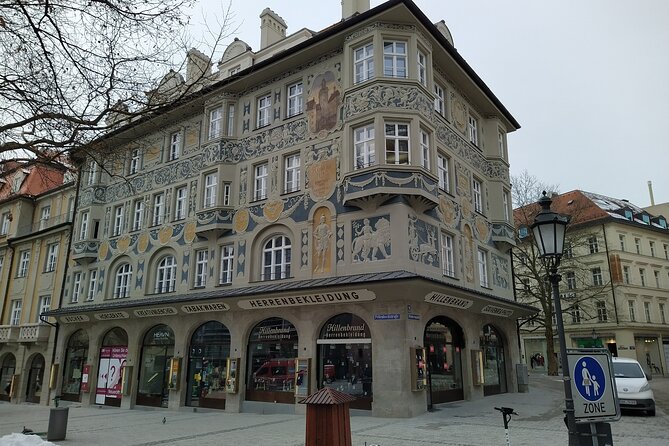
At Briennerstrasse 7, you hear about Haus der Deutsche Ärzte at number 23. The focus is blunt: doctors decided about life and death of many.
This stop is heavy. It also adds an extra layer to the Third Reich story. When you think “Nazi crimes,” it is easy to picture uniformed enforcement. Here you see how professional authority can be weaponized.
The stop is short, about 5 minutes, and admission is free. If you are sensitive to very dark topics, go slowly. This is one of those places where your reaction is part of the experience, not something you need to rush past.
Stops 7: Platz der Opfer des Nationalsozialismus and Gestapo Power
At Platz der Opfer des Nationalsozialismus, the tour uses contrast. Before you reach the monument, you see the earlier Wittelsbacher Palais, described as central for the Gestapo. After that, you see the monument to victims associated with the NSDAP.
That sequence is useful. It prevents the “all tragedy, no context” problem. You see where state terror had its roots, then you see the memorial that anchors memory and grief.
This is another free stop (about 10 minutes). It is also one of the best places for a reflective moment. You’re not just learning facts. You’re standing in a place designed to remember.
Stop 8: Residenz Munchen and a Nazi Presence in a Royal Space
At Residenz Munchen, you’ll hear that a Nazi figure once lived there, even though it is a residence associated with Bavarian kings and dukes. The tour also mentions the night of the amazones.
Even with short time, this stop does something valuable: it shows how the regime mixed itself into familiar power symbols. When authority occupies palaces, it sends a message that it is legitimate, permanent, and part of the state’s “real” story.
Admission is not included at this stop, and it is about 10 minutes. That means you’ll likely stay mostly in the exterior or viewing areas. If you want deeper detail, plan another visit later when you have more time.
Stop 9: Hofgarten and Degenerated Art
Next is Hofgarten, where the tour brings up the label Degenerated Art tied to an exhibit involving expressionist artists.
This is one of the ways the tour broadens the Third Reich story beyond politics into culture. You learn how art could be targeted, framed as dangerous, and controlled by labeling it “degenerated.” It also helps you understand why architecture, public propaganda, and cultural censorship often traveled together.
This stop is admission free (about 10 minutes). It’s short, but it’s a strong counterpoint to the darker stops. Not “happy,” but it gives you a sense of what the regime feared and tried to silence.
Stops 11 and 13: Odeonsplatz, the Hitler Putsch, and Public Turning Points
You return to Odeonsplatz for the Hitler Putsch, described as an exiting chapter from a tragedy, plus other major events in the Nazi campaign.
The value here is repetition with expansion. Odeonsplatz comes back more than once. That helps you build a mental map of the timeline and makes the space feel like a stage for turning points.
It is another free stop, with one segment around 10 minutes and another around 15 minutes. If you remember only one thing from the Odeonsplatz parts, let it be this: public squares were not passive backdrops. They were where campaigns gained momentum and where the regime tried to rewrite public memory.
Stop 12: Haus der Kunst and Paul von Trost’s Architectural Role
At Haus der Kunst, the tour points out another work by Paul von Trost and talks about art in the building.
This is where the architecture thread returns. Earlier you saw Trost’s buildings tied to the Nazi period. Here, the focus is on how art spaces could serve the regime’s messaging needs. Even if you do not go inside, the tour gives you enough context to connect the building to what it represented.
Admission is not included, and the stop is about 10 minutes.
Stop 2 and 9 Tie Together: Art, Style, and Control
One thing I liked about how this route is put together is that art shows up in more than one way. You get propaganda staging at Konigsplatz, cultural labeling at Hofgarten, and architectural framing in Trost-linked spaces.
When you connect those dots, you start to see the regime as a system that controlled more than bodies. It also controlled images, reputation, and public taste. That makes the walk more than a list of buildings.
Practical Tips to Make This Dark Walking Tour Feel Worth It
Here’s how to get the most out of it without turning your day into a headache.
Wear comfortable shoes. The tour is on foot and the stops are short, so you’re spending your time moving, not lingering.
Bring a little mental space. The topic includes trials, persecution, and a doctor-led “life and death” story. You do not need to force strong emotions. Just be ready for serious material.
Plan for admissions where needed. Some stops are listed as admission free, and others are not included (you’ll see that before you reach them). If you hate surprises, check your schedule and money buffer so you are not stuck at a ticket counter mid-tour.
Use the guide as your filter. The route is packed, and the guide’s job is to keep it readable. The best version of this tour is when you ask questions about what you see, especially if something about Konigsplatz, the White Rose, or the Brown House is grabbing you.
And yes, this is designed for real people. The tour notes that most travelers can participate, service animals are allowed, and you’ll be near public transportation.
Should You Book This Third Reich Walking Tour?
I’d book it if you want a focused introduction to Munich’s WWII footprint without doing your own planning. The route hits major sites in a short window, and the value is strongest when you care about how history shows up in specific places.
I’d hesitate if you need a long museum-style pace. The stops are brief, and a few admissions are not included. If you want to read every label and spend an hour in each place, you might find the walk moves too fast.
It’s also a great choice if you enjoy guided storytelling. The experience stands out for its up close and personal feel, and for the way guide Paul Riedel reportedly keeps the tour energetic and tuned to your interests.
If your goal is to understand how the Third Reich used Munich as a stage for power, propaganda, and control, this is a practical way to do it in one afternoon.
Recently added around Munich
- München: Vegetarische Viktualienmarkt-Probiertour Deutsch★ 4.8 · 6 reviews
- Private Transfer from Munich to Vienna with 2 hours for sightseeing★ 4.5 · 6 reviews
- Munich Walking Quiz: Explore and Discover the City’s Highlights★ 5.0 · 7 reviews
- Walking Tour on Resistance to Nazism in Munich★ 5.0 · 8 reviews
- 2 hour Sights Guided E-Scooter Tour in Munich★ 4.0 · 6 reviews
- Private Transfer from Munich to Salzburg with 2 hours for sightseeing★ 4.5 · 13 reviews
- From Munich: Neuschwanstein Castle and Linderhof Private Tour★ 5.0 · 13 reviews
- Paul’s Private Tour Munich Highlights★ 5.0 · 3 reviews
Third Reich & WWII Walking Tours, compared.
Birthplace of the Third Reich Guided Walking Tour
Read our review →
Munich World War II Sites Including Dachau Concentration Camp
Read our review →
Munich City Walking Tour, includes Third Reich & Viktualienmarkt
Read our review →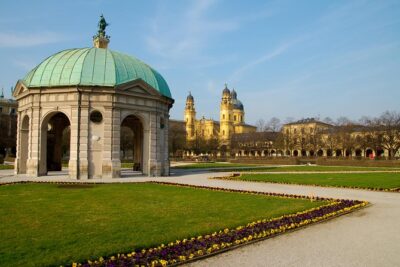
Munich 3-Hour Segway Tour: Nazi Munich & Royal Architecture
Read our review →
Dachau Concentration Camp Memorial Site And Third Reich Day Tour From Munich
Read our review →Browse the lists this tour appears in